

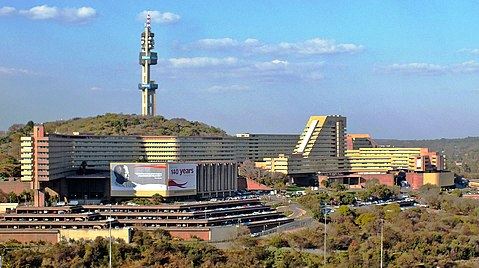
Planning your finances is a crucial step when preparing for higher education. For students considering distance learning, the University Of South Africa UNISA Fee Structure is often a deciding factor. As the largest open distance learning institution in the continent, UNISA provides educational opportunities to thousands of students both in South Africa and abroad.
Understanding the costs involved helps you budget effectively and avoid registration delays. The 2026 academic year brings specific fee structures for undergraduate qualifications, honours degrees, and postgraduate diplomas. This guide provides a clear, detailed breakdown of what you can expect to pay, when payments are due, and how to complete your transactions correctly.
Unlike traditional universities, UNISA operates on a module-based fee system. This means you pay per module rather than a set annual tuition fee, offering flexibility to manage your study load and spread the cost according to your financial situation .
Why Study at UNISA
Before examining the specific numbers, it is worth considering what makes UNISA a unique educational environment. For many, the appeal lies in its accessibility. You do not need to relocate or attend daily lectures, making it possible to balance work, family, and studies .
The institution is designed for self-motivated individuals. It offers a wide range of accredited qualifications across various fields, from Humanities and Law to Science and Engineering. Because the University Of South Africa UNISA Fee Structure is module-based, you have control over your academic pace. You can register for fewer modules if your budget is tight or take a full load if you wish to complete your degree faster.
Furthermore, studying via Open Distance e-Learning (ODeL) reduces indirect costs. You save on commuting, on-campus accommodation, and other incidental expenses associated with attending a residential university. The funds you save can then be allocated toward your prescribed textbooks or a reliable internet connection, which are essential for your studies.
University Of South Africa UNISA Fee Structure for 2026
The fees for 2026 are structured according to your level of study—undergraduate or honours—and the specific subject group of your chosen modules. Fees are generally divided into two main categories: undergraduate studies (usually first-year to third-year level) and honours & fourth-year studies .
General Payment Rules for 2026
There are a few universal rules that apply to all students registering for 2026. First, a minimum amount is payable at registration. This must be received by UNISA before the closing date for your specific module or qualification; otherwise, your registration will not be processed .
Second, all fees must be paid into the university’s official bank accounts using your correct student number and an allocation code as a reference. If the reference is incorrect, the payment may be delayed, which could jeopardize your registration .
Finally, note that miscellaneous fees—such as those for study material delivery or foreign student levies—are also payable at registration where applicable .
Undergraduate Fee Structure for 2026
For undergraduate students (typically higher certificate, diploma, and degree students not yet at honours level), the cost is determined by the subject category. The tables below outline the prescribed fees per module type for the 2026 academic year .
1. Subjects in Education; Law; Psychology; and Public Management and Services
If you are pursuing a qualification in these fields, your fees fall into this category. The pricing varies depending on whether you take a semester module or a year module.
-
Half Module (Semester 1 or 2): R1,145.00
-
Module / Paper (Semester 1 or 2): R2,290.00
-
Module (Semester 1 or 2): R4,455.00
-
Year Module: R4,455.00
2. Subjects in Business Economics and Management Studies; Communication; Computer Science; Languages; Social Sciences
This category covers a large number of popular qualifications. The fees are slightly adjusted compared to the Law and Education group.
-
Half Module (Semester 1 or 2): R1,130.00
-
Module / Paper (Semester 1 or 2): R2,240.00
-
Module (Semester 1 or 2): R4,370.00
-
Year Module: R4,370.00
3. Subjects in Architecture; Engineering; Mathematics and Statistics
Students in these technical fields will find their fees listed here. These modules often require more specialized materials.
-
Half Module (Semester 1 or 2): R1,100.00
-
Module / Paper (Semester 1 or 2): R2,230.00
-
Module (Semester 1 or 2): R4,335.00
-
Year Module: R4,335.00
4. Subjects in Agriculture; Health Professions; Life and Physical Sciences
The fees for science and health-related qualifications are structured to accommodate the nature of these rigorous programs.
-
Half Module (Semester 1 or 2): R1,060.00
-
Module / Paper (Semester 1 or 2): R2,130.00
-
Module (Semester 1 or 2): R4,135.00
-
Year Module: R4,135.00
Honours and Fourth-Year Fee Structure for 2026
Once you progress to honours level or fourth-year modules, the fee scale increases to reflect the advanced nature of the study material and the higher credit values. The University Of South Africa UNISA Fee Structure for 2026 at this level is also grouped by subject discipline .
1. Subjects in Education; Law; Psychology; Public Administration
-
Half Module (Year): R1,640.00
-
Module (Semester 1 or 2): R3,275.00
-
Module / Paper (Semester 1 or 2): R6,440.00
-
Year Module / Paper (36 credits): R9,505.00
2. Subjects in Economics; Management; Communication; Computer Science; Philosophy
-
Half Module (Year): R1,560.00
-
Module (Semester 1 or 2): R3,140.00
-
Module / Paper (Semester 1 or 2): R6,115.00
-
Year Module / Paper (36 credits): R8,945.00
3. Subjects in Engineering; Architecture; Mathematics; Statistics
-
Half Module (Year): R1,560.00
-
Module (Semester 1 or 2): R3,140.00
-
Module / Paper (Semester 1 or 2): R6,115.00
-
Year Module / Paper (36 credits): R8,945.00
4. Subjects in Agriculture; Visual & Performing Arts; Health Professions
-
Half Module (Year): R1,560.00
-
Module (Semester 1 or 2): R3,140.00
-
Module / Paper (Semester 1 or 2): R6,115.00
-
Year Module / Paper (36 credits): R8,945.00
Key Payment Dates for 2026
It is not enough to simply pay the required amount; you must pay it by the correct deadline. UNISA has a staggered payment system to help students manage their cash flow. The “minimum amount payable on registration” must be in the university’s account by the registration closing date. After that, the balance is split into installments .
For semester modules, payments are typically split between registration and a due date halfway through the semester. For year modules, the payment plan extends further into the year.
-
31 March 2026: First installment due for specific year modules.
-
15 May 2026: Second installment due for year modules; also a cutoff for semester module payments.
-
15 August 2026: Final installment due for many year modules.
Miscellaneous and Additional Fees
Beyond tuition, there are other costs to consider. These are often overlooked by first-time students but are essential for a smooth academic journey .
-
Application Fee: For the 2026 academic year, the online application fee is approximately R160.00. This fee is non-refundable, even if your application is unsuccessful .
-
Supplementary Exams: If you need to write a supplementary, special, or aegrotat exam, the fee is R355.00 per study unit.
-
Remarking of Papers: Requesting a remark of an examination script costs R615.00 per script.
-
Access Card (Smart Card): New students requiring a physical access card will pay R90.00. This card is activated automatically for returning students who already have one .
-
Foreign Student Levy: International students are subject to an additional levy.
-
Category A (Africa): R3,905.00 per year module / R1,950.00 per semester module.
-
Category B (Rest of the World): R7,470.00 per year module / R3,730.00 per semester module .
-
How to Pay Your Fees in 2026
UNISA operates as a cashless institution. You cannot pay fees in cash at any UNISA office. All payments must be made via the approved banking channels .
Online Credit Card Payments
The fastest method is using the official UNISA web payment link. UNISA accepts Visa and MasterCard. This is a real-time transaction, so your fees are allocated to your student account instantly .
Bank Deposits and EFT
You can deposit funds at FNB or ABSA branches, or use Electronic Funds Transfer (EFT). When doing so, the reference field must be completed with your 8-digit student number, a space, and the specific allocation code .
-
Study Fees:
[Student Number] 5400374721 -
Application Fee:
[Student Number] 5370810030 -
SBL Student Fees:
[Student Number] 3000774039 -
Library Fees:
[Student Number] 5400374225 -
Access Card:
[Student Number] 5400315164
Important Banking Details
If you are paying via EFT, here are the relevant account details :
FNB Account (for student deposits)
-
Account Name: Unisa Student Deposits
-
Account Number: 627 9963 0382
-
Account Type: Cheque
-
Branch Code: 210554
ABSA Account
-
Account Name: Unisa Student Deposit
-
Account Number: 4097930634
-
Account Type: Cheque
Planning your studies at UNISA for 2026 requires a clear understanding of the financial commitment involved. The University Of South Africa UNISA Fee Structure is designed to be flexible, allowing you to pay per module and in installments. However, it demands careful attention to detail.
