Category: Application Guide

  • Common Job Application Mistakes and How to Avoid in South Africa 2026

    Common Job Application Mistakes and How to Avoid in South Africa 2026

    If you have been applying for jobs in South Africa, you probably already know that a strong CV and relevant qualifications matter. However, even qualified candidates can lose opportunities because of small mistakes such as sending a generic CV, missing documents, ignoring instructions, or entering incorrect information. In this guide, you will learn the most common job application mistakes in South Africa in 2026 and exactly how to avoid them before submitting your next application.

    What Are the Most Common Job Application Mistakes in South Africa?

    A job application mistake is an avoidable error in a CV, application form, supporting document, communication, or interview that can reduce a candidate’s chances of progressing in the recruitment process. These mistakes can happen before, during, or after an application is submitted.

    For example, a candidate may have the right qualification for an advertised position but upload the wrong CV, omit a required document, or submit the application after the closing date. In some recruitment processes, these errors can prevent an application from being considered even before the candidate’s experience is assessed.

    South Africa’s competitive labour market makes application accuracy particularly important. Statistics South Africa reported an official unemployment rate of 32.7% in Q1 2026, with approximately 8.1 million unemployed people. — Source: [Statistics South Africa, 2026]

    Moreover, the youth labour market is especially competitive. In Q1 2026, unemployment stood at 60.9% among people aged 15–24 and 40.6% among those aged 25–34. — Source: [Statistics South Africa, 2026]

    Therefore, avoiding preventable mistakes cannot guarantee a job, but it can help ensure that your application accurately represents your qualifications.

    Why Do Job Application Mistakes Matter to South African Employers?

    Job application mistakes matter because they can make a qualified candidate appear careless, unsuitable, or non-compliant with the advertised recruitment requirements. Recruiters often need to assess many applications against specific criteria, so missing information can make that assessment difficult.

    For example, a government vacancy may require a particular application form, CV, reference number, qualification, or supporting document. If the advert says that applications using an incorrect form will not be considered, submitting another format can result in disqualification.

    Recent South African Department of Employment and Labour vacancy notices illustrate how strict these requirements can be. Some adverts state that applicants must complete and sign the current Z83 form, submit an updated CV, follow the specified document requirements, and meet the closing deadline. — Source: [South African Department of Employment and Labour, 2026]

    Furthermore, competition means employers have little reason to overlook easily preventable errors when an application does not meet the advertised requirements.

    The most common job application mistakes include submitting a generic CV, making spelling errors, providing incorrect information, missing required documents, ignoring application instructions, and failing to prepare for the interview.

    What Are the Most Common CV Mistakes Job Seekers Make?

    The most common CV mistakes are using a generic CV, including irrelevant information, making errors, using poor formatting, providing outdated details, and failing to demonstrate relevant achievements. Your CV should make it easy for a recruiter to understand why your background matches the advertised position.

    Should You Use the Same CV for Every Job Application?

    You should not use exactly the same CV for every job because different vacancies prioritise different qualifications, skills, experience, and terminology. A master CV can contain your complete career history, but the version you submit should focus on information relevant to the specific vacancy.

    For example, an administration position may emphasise Microsoft Office, customer service, scheduling, record management, and communication, while an entry-level IT position may prioritise programming, databases, technical projects, and troubleshooting.

    A tailored CV is a CV that highlights the qualifications, skills, experience, achievements, and relevant terminology that directly match the requirements of a specific job vacancy.

    How Can You Avoid Making Mistakes on Your CV?

    You can avoid CV mistakes by comparing your CV against the vacancy before every submission. Start by identifying the employer’s essential requirements, then make sure your CV clearly demonstrates the qualifications, skills, experience, and achievements that satisfy those requirements.

    For example, if an advert requires three years of project-management experience, your CV should clearly show relevant project responsibilities and measurable outcomes rather than simply saying “responsible for projects.”

    A useful CV review should check:

    CV Area Common Mistake Better Approach
    Profile Generic introduction Match the profile to the role
    Skills Long unrelated list Prioritise vacancy-relevant skills
    Experience Duties only Show responsibilities and achievements
    Contact details Old phone/email Use current professional details
    Education Missing qualification details List relevant qualifications accurately
    Formatting Difficult-to-read design Use clear headings and consistent formatting
    File type Wrong format Follow the vacancy instructions
    Keywords Missing relevant terms Use job-specific terminology naturally

    Furthermore, avoid exaggerating qualifications, employment history, technical skills, or achievements. False information can damage your credibility if an employer verifies your background.

    What CV Formatting Errors Should You Avoid?

    CV formatting errors occur when the document is difficult to read, unnecessarily long, inconsistent, or incompatible with the employer’s requested format. A professional CV should use clear headings, consistent spacing, readable fonts, and logical sections.

    For example, a graduate applying for an internship usually does not need a lengthy CV containing unrelated school activities from many years earlier. Relevant academic projects, qualifications, technical skills, volunteering, internships, and achievements may provide stronger evidence.

    Also, do not assume that an attractive graphic-heavy CV is automatically better. When an application is processed electronically, simple formatting can make important information easier for recruitment software and human reviewers to identify.

    What Are the Most Common Online Job Application Mistakes?

    The most common online job application mistakes are incomplete forms, incorrect information, wrong document uploads, missed deadlines, and failure to follow the employer’s application process. Online applications should be treated as carefully as paper applications because small errors can affect eligibility.

    What Should You Check Before Submitting an Online Application?

    You should check every required field, attachment, reference number, deadline, and contact detail before clicking submit. Save a copy of the completed application or confirmation page whenever the platform allows you to do so.

    For example, if an employer requests a CV and a specific application form as one PDF attachment, uploading three separate files may fail to meet the stated instructions.

    Successful online job applications require candidates to follow the employer’s instructions, complete all required fields, submit the requested documents, and verify their information before the deadline.

    Government recruitment provides a clear example of why this matters. Some South African public-sector adverts explicitly state that incomplete forms, missing documents, late applications, or failure to comply with the stated instructions may result in an application not being considered. — Source: [Department of Employment and Labour, 2026]

    What Documents Should You Check Before Submitting a Job Application?

    You should check the exact documents requested in the vacancy advert rather than attaching every document you own. Requirements vary between employers, industries, and recruitment processes.

    Depending on the vacancy, the requested documents may include:

    • Updated CV
    • Application or motivation letter
    • Cover letter
    • Application form such as Z83
    • Academic qualifications
    • Academic transcripts
    • Identification documents
    • Driver’s licence
    • Proof of professional registration
    • Work permit or permanent residence documentation where applicable
    • Portfolio or professional certificates

    For example, some Department of Employment and Labour vacancies specify that only certain documents should accompany the initial application, while additional certified documents may be requested from shortlisted candidates. — Source: [Department of Employment and Labour, 2026]

    Therefore, never assume that every vacancy has the same document requirements.

    What Cover Letter Mistakes Can Hurt Your Job Application?

    The biggest cover letter mistakes are using the same generic letter everywhere, failing to connect your skills to the vacancy, making unsupported claims, and writing an unnecessarily long letter. A cover letter or motivation letter should explain why your background is relevant to the specific opportunity.

    How Should You Tailor a Cover Letter?

    You should tailor a cover letter by connecting two or three of your strongest qualifications directly to the employer’s requirements. The goal is not to repeat your entire CV but to provide context for your application.

    For example, instead of writing “I am hardworking and passionate,” explain what you have done that demonstrates those qualities.

    A simple structure is:

    1. State the position you are applying for.
    2. Mention your most relevant qualification or experience.
    3. Give one concrete achievement or example.
    4. Explain why the organisation or role interests you.
    5. Close professionally and request consideration.

    What Is the Difference Between a Cover Letter and a Motivation Letter?

    A cover letter generally introduces your suitability for a particular job, while a motivation letter places greater emphasis on your reasons, motivation, and fit for the opportunity. The exact expectation depends on the employer and vacancy advert.

    For example, a company may ask for a short cover letter explaining your professional fit, while a graduate programme may request a motivation statement explaining why you want to join the programme.

    As such, always follow the terminology and instructions used in the vacancy instead of automatically submitting the same document.

    How Do ATS Systems Affect Job Applications in South Africa?

    Applicant Tracking Systems, or ATS platforms, are recruitment technologies that can help employers collect, organise, search, and manage job applications electronically. A CV that is difficult to parse or lacks relevant terminology may be harder to evaluate in systems that use automated processing.

    What ATS CV Mistakes Should You Avoid?

    You should avoid confusing layouts, excessive graphics, unusual headings, unreadable text, and unnatural keyword stuffing when preparing an ATS-friendly CV. Instead, use standard section headings such as Professional Summary, Work Experience, Education, and Skills.

    For example, if a vacancy repeatedly requires “customer relationship management,” you can use that terminology naturally when your experience genuinely includes it.

    However, ATS optimisation does not mean copying every keyword from the advert. Your CV should remain truthful, readable, and relevant to the role.

    What Interview Mistakes Should Job Seekers Avoid?

    The most common interview mistakes are arriving late, failing to research the employer, giving vague answers, speaking negatively about previous employers, and failing to prepare examples. A strong application can lead to an interview, but poor preparation can prevent the process from progressing.

    How Can You Prepare for a Job Interview?

    You can prepare for a job interview by researching the employer, reviewing the vacancy, preparing examples from your experience, and practising answers to likely questions. Your preparation should focus on demonstrating how your skills can solve the employer’s problems.

    For example, prepare a specific story showing how you handled a difficult customer, completed a project, improved a process, solved a technical problem, or worked successfully in a team

    What Communication Mistakes Should You Avoid After Applying?

    You should communicate professionally after submitting an application or attending an interview, particularly when responding to employer messages. Avoid repeated messages, informal language, pressure, or sending multiple follow-ups within a short period.

    For example, a concise thank-you message after an interview can confirm your continued interest while maintaining professionalism.

    How Can You Tailor Your CV to a Job Description?

    You can tailor your CV by matching the employer’s essential requirements with your strongest qualifications, skills, experience, and measurable achievements. The process should begin with the vacancy rather than with your existing CV.

    Use this five-step method:

    1. Read the entire advert and identify essential requirements.
    2. Highlight relevant keywords such as qualifications, software, technical skills, licences, or industry terminology.
    3. Match your experience to the employer’s responsibilities.
    4. Rewrite your professional summary around the position.
    5. Move the strongest evidence higher in the CV.

    For example, if an employer seeks “a graduate with Excel, data analysis, and reporting skills,” place relevant academic projects, work experience, and technical skills where the recruiter can quickly find them.

    Moreover, tailoring should never involve inventing experience. Relevant keywords should describe skills you genuinely possess, because employers may test or verify them later.

    What Tools and Examples Can Help Improve a Job Application?

    The most useful job application tools are a vacancy-matching checklist, CV proofreading process, document checklist, application tracker, and interview preparation worksheet. These simple tools reduce avoidable mistakes without requiring expensive software.

    Job Application Pre-Submission Checklist

    A pre-submission checklist helps job seekers verify the most important application details before sending an application.

    Use this checklist:

    • Correct job title

    • Correct reference number

    • Correct employer

    • CV tailored to vacancy

    • Professional email address

    • Current phone number

    • Required qualification included

    • Required application form completed

    • Required documents attached

    • File names are professional

    • Correct file format used

    • Spelling and grammar checked

    • Application deadline confirmed

    • Application instructions followed

    • Confirmation of submission saved

    Job seekers can reduce application errors by using a pre-submission checklist that verifies the vacancy requirements, CV details, supporting documents, contact information, application format, and deadline before submission.

    Useful South African Career Resources

    South African job seekers can use official employment services and reputable career platforms to find opportunities and understand application requirements. The Department of Employment and Labour’s Employment Services of South Africa allows registered work seekers to create profiles and search for opportunities. — Source: [Department of Employment and Labour, ESSA, 2026]

    For example, candidates can also check official employer career pages when a vacancy directs applicants to apply directly through the organisation.

    Custom Visual Recommendation

    A job application error-checking flowchart can visually show candidates how to review an application before submission.

    This visual can help readers understand that successful applications depend on a process rather than a single perfect CV.

    What Should You Do After Fixing Your Job Application?

    After fixing your application, you should apply selectively, track every submission, prepare for interviews, and review patterns in your results. Improving your application is an ongoing process rather than a one-time task.

    How Can You Improve Your Chances of Being Shortlisted for a Job?

    You can improve your chances of being shortlisted by applying for suitable positions, tailoring each application, meeting essential requirements, and presenting accurate evidence of your skills. Avoid applying indiscriminately to jobs where you do not meet mandatory requirements.

    For example, if a vacancy requires a specific professional registration that you do not possess, spending time repeatedly submitting the same CV is unlikely to solve the underlying eligibility issue.

    At the same time, do not reject yourself unnecessarily when you meet most requirements but lack a non-essential preference. Read the distinction between essential and desirable criteria carefully.

    How Should You Track Your Job Applications?

    An application tracker helps you identify where you applied, which CV you used, the closing date, the status, and any follow-up action required. A simple spreadsheet is enough.

    Track:

    Information Example
    Employer ABC Company
    Position Graduate Administrator
    Date applied 9 August 2026
    Closing date 20 August 2026
    CV version Administration CV
    Documents CV + Cover Letter
    Application method Company portal
    Status Submitted
    Follow-up Check after stated period

    Furthermore, tracking prevents you from accidentally sending the wrong CV or repeatedly applying to the same vacancy.

    What’s Next After Avoiding Common Job Application Mistakes?

    The next step is to turn your corrected application into a repeatable job-search system. Instead of starting from zero every time, maintain a master CV, several targeted CV versions, a professional cover-letter framework, and an application tracker.

    First, update your CV whenever you gain a new qualification, certification, project, or measurable achievement. Second, review your professional online profiles so that your employment history and qualifications remain consistent.

    Third, prepare an interview evidence bank containing examples of teamwork, leadership, problem-solving, customer service, technical skills, and achievements. Fourth, review applications that do not produce interviews and look for recurring issues.

    South Africa’s Q1 2026 labour-market data shows why persistence and preparation matter: 16.8 million people were employed while 8.1 million were unemployed during the quarter. — Source: [Statistics South Africa, 2026]

    Finally, remember that unemployment figures describe the broader labour market, not your individual chances. A stronger application can improve the quality of your presentation even though no CV can guarantee selection.

    Conclusion

    You can avoid most common job application mistakes in South Africa by prioritising accuracy, relevance, preparation, professionalism, and strict compliance with the employer’s instructions. A tailored CV, complete application, correct documents, professional communication, and interview preparation can help you present your qualifications more effectively.

    Moreover, successful job searching is not simply about sending the largest number of applications. Every application should be treated as a targeted opportunity, with your CV and supporting documents adjusted to demonstrate genuine suitability for the position.

    Finally, use the checklist in this guide before submitting your next application. Review the vacancy, tailor your CV, verify every document, proofread your information, save your submission confirmation, and prepare for the interview.
  • How to apply at the University of Free State UFS online 2027 | Full Guide

    How to apply at the University of Free State UFS online 2027 | Full Guide

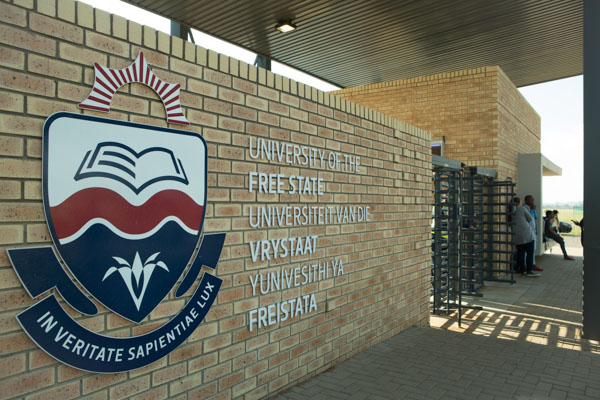
    The transition from high school to higher education, or the decision to pursue postgraduate studies, is a significant milestone. For the 2026 academic year, the University of the Free State (UFS) continues to streamline its admissions process, allowing students to manage their applications from the comfort of their homes.

    Understanding how to apply at the University of Free State UFS online for 2026 is the first step toward joining a vibrant academic community in South Africa. Known affectionately as “Kovsies,” the UFS is spread across three campuses—Bloemfontein, South Park, and Qwaqwa—each offering a unique blend of academic rigor and cultural diversity.

    This guide provides a detailed, step-by-step walkthrough of the online application process. Whether you are a first-time freshman, a transfer student, or an international applicant, this article will help you navigate the requirements with confidence. We will cover essential deadlines, required documents, and what to expect after submission to ensure your journey to becoming a Kovsie is as smooth as possible.

    Why Study at the University of the Free State?

    Before diving into the technicalities of how to apply at the University of Free State UFS online, it is worth understanding what makes this institution a compelling choice. The UFS is not just about lectures and exams; it is about shaping well-rounded graduates ready to contribute to society.

    The university is structured into seven faculties, offering a vast range of undergraduate and postgraduate programs. From the Humanities to Health Sciences, and from Law to Natural and Agricultural Sciences, the curriculum is designed to meet the demands of a changing world. In fact, the UFS continues to innovate; for the 2026 academic year, it is introducing new, future-focused programs such as the Bachelor of Engineering (BEng) in Agricultural and Biosystems Engineering and Africa’s first postgraduate degrees in Ecological and Nature-based Engineering Sciences . This commitment to innovation ensures that students are equipped with skills relevant to global challenges like sustainability and food security.

    Beyond the classroom, student life is rich with opportunity. With over 22 sport disciplines and a strong artistic community, students can find their niche outside of their studies. The university takes pride in its alumni and “international stars,” including Olympian Wayde van Niekerk and former Miss World Rolene Strauss, reflecting an environment that nurtures excellence . Furthermore, with access to nearly 700,000 library books and extensive digital resources, students have the tools they need to succeed academically.

    Understanding the 2026 Application Timeline

    Timing is critical when dealing with university admissions. The application window for the 2026 academic year at UFS opens on 1 April 2025 . While the closing dates can vary depending on the specific program (some high-demand courses close earlier than others), prospective students should target submitting their applications as soon as possible after this date.

    It is important to note that space in residence halls and certain popular programs is limited. Applying early does not guarantee admission, but it ensures that your file is evaluated in a timely manner and increases your chances of securing on-campus accommodation. For specific programmes, like the distance-learning options offered by certain schools, the closing date is strictly set. For instance, some programs have a final closing date of 15 January 2026, after which late applications will not be considered . Always check the faculty-specific requirements for your chosen course.

    Step-by-Step: How to apply at the University of Free State UFS Online 2026

    The online application system is designed to be user-friendly. By following these structured steps, you can ensure that your application is complete and error-free. The process revolves around the official UFS application portal: https://apply.ufs.ac.za.

    Step 1: Check Admission Requirements

    Before you open the application form, you must confirm that you meet the academic criteria for your chosen program.

    • Undergraduate Applicants: Your admission is typically based on your National Senior Certificate (NSC) results and your Admission Point (AP) score. Different faculties have different score requirements.

    • Postgraduate Applicants: You will need a completed undergraduate degree with the appropriate academic standing.

    • International Applicants: You must hold a school-leaving certificate equivalent to the South African NSC. In many cases, you will require a Universities South Africa (USAf) Certificate of Exemption, which you can apply for via UFS .

    Step 2: Gather Your Documents

    One of the most common reasons for application delays is missing documentation. Before you start the online form, prepare digital copies (scanned as PDF or JPEG) of the following:

    • A certified copy of your ID (for South African citizens) or passport (for international students).

    • Certified copies of your final Grade 11 results or latest Grade 12 results.

    • If you have already left school, a certified copy of your Senior Certificate or equivalent.

    • For transfer students: a certificate of conduct and an official academic record from your previous tertiary institution .

    • For postgraduate and international applicants: Certified copies of previous qualifications and, if applicable, a SAQA verification certificate for international qualifications .

    Step 3: Complete the Online Application Form

    Navigate to the application portal. You will be asked to register as a new user if you have never applied to UFS before.

    • Personal Information: Fill in your details exactly as they appear on your official ID or passport.

    • Programme Choice: You may apply for up to two academic study choices. If one of your choices is a selection program (like certain performing arts or specialized degrees), list it as your first choice .

    • Housing and Funding: The application will ask whether you require on-campus accommodation or financial aid. Indicate your needs clearly here, as it triggers the necessary processes in those departments.

    Step 4: Upload Documents and Submit

    Once the form is complete, you will upload the certified documents you gathered in Step 2. Ensure the files are clear and legible. After uploading, review your information for accuracy. Inaccurate details can lead to processing delays.
    After submission, you will immediately receive a reference number. Keep this number safe. Within a few days, you should receive an acknowledgment email from the university containing your formal UFS student number .

    What Happens After You Apply?

    Submitting the form is just the beginning. Knowing how to apply at the University of Free State UFS also means knowing what to do after you click “submit.”

    • Application Tracking: You can monitor the progress of your application by logging into the UFS self-service portal. This allows you to see if your documents have been received and if your application is being evaluated.

    • Conditional Offers: Based on your Grade 11 results or interim Grade 12 results, you may receive a conditional offer. This means the university is reserving a place for you, pending the release of your final matric results .

    • Final Offers: Once your final results are released in January 2026, the university will make final admission decisions. If you are successful, you will receive a final offer letter.

    • Acceptance: You must accept this offer online within the specified timeframe. Failure to do so may result in the offer being withdrawn and given to another applicant .

    Fees, Funding, and Registration

    Once your offer is accepted, the focus shifts to finances and registration. For the 2026 academic year, the UFS has moved to a fully online registration process, meaning you do not need to visit the campus to complete your enrollment .

    Financial Planning

    • First Payment: A minimum first payment is required to finalize your registration. This amount is usually due at least five working days before you register .

    • Outstanding Balances: Returning students must have a zero balance on their 2025 account before they can register for 2026 .

    • Bursaries and NSFAS: Students funded by NSFAS or other bursaries are exempt from the initial payment, provided the funding is confirmed and covers all costs.

    • International Fees: International students must pay the required first payment regardless of external funding, and must have valid medical aid registered in South Africa .

    Online Registration Process

    The UFS will communicate registration instructions via SMS and email. You will log in to the student self-service portal (PeopleSoft) to:

    1. Confirm your personal details.

    2. Select your modules for the year (with guidance from faculty advisers if needed).

    3. Accept the university’s terms and conditions.

    4. Upload any final outstanding documents (for international students, this includes visa copies) .

    Once these steps are completed and the first payment is verified, your registration is official. You will then be able to download your Proof of Registration and access your modules on Blackboard, the university’s online learning platform .

    Special Instructions for Specific Applicant Groups

    The pathway to enrollment can look different depending on your background. Here is how specific groups should approach how to apply at the University of Free State UFS online.

    International Applicants

    UFS has a proud international community. If you are applying from outside South Africa, start by contacting the Office for International Affairs (OIA). You will need:

    • A valid study visa for the duration of the academic year.

    • Certified copies of your passport and school-leaving certificate.

    • A SAQA verification for any tertiary qualifications.

    • Proof of South African medical aid .
      Your conditional offers may be based on your home country’s equivalent of Grade 11 results .

    Transfer Students

    If you are moving from another university or university of technology, you must submit a certificate of conduct along with your official academic record. This helps the faculty determine which credits, if any, can be transferred toward your UFS degree.

    First-Time Entering Students (FTEN)

    As a first-year, your journey includes more than just registration. After you register online, you will need to sign up for the compulsory Academic Literacy test (unless you are in an extended program) and register for specific first-year modules like UFSS1504, which is a graduation requirement . You will also collect your official student card from the Card Division once on campus.

    Key Deadlines to Remember for 2026

    To ensure you don’t miss out, keep this timeline in mind:

    • Application Opening: 1 April 2025 .

    • Programme-Specific Closings: Varies, but some close as late as 15 January 2026 .

    • First Payment Due: At least 5 working days before your specific registration date .

    • Online Registration (First Semester): 2 January – 6 February 2026 .

    • Classes Begin: 9 February 2026 .

    Navigating the university admissions process requires organization and attention to detail, but it does not have to be stressful. By understanding how to apply at the University of Free State UFS online for 2026, you have taken the most important step toward securing your future.

    Remember to start early, prepare your documents in advance, and double-check all the information you enter on the portal. Whether you are drawn to UFS for its academic innovation, its vibrant campus life, or its commitment to research, the online application is your gateway to opportunity.

    Once your application is submitted, keep a close eye on your email and the self-service portal for updates. Should you encounter any technical issues or have specific questions, the university’s Student Admin team and the Chatbot (available at +27 87 240 6370) are there to assist you.

    Read Also

  • How to Apply at University of Western Cape for 2027: Step-by-Step Guide

    How to Apply at University of Western Cape for 2027: Step-by-Step Guide

    The transition from high school to university is a significant milestone, and choosing the right institution is the first big decision. If you are considering higher education in South Africa, the University of the Western Cape (UWC) likely features on your list. Known for its rich history and academic diversity, UWC attracts tens of thousands of applicants each year.

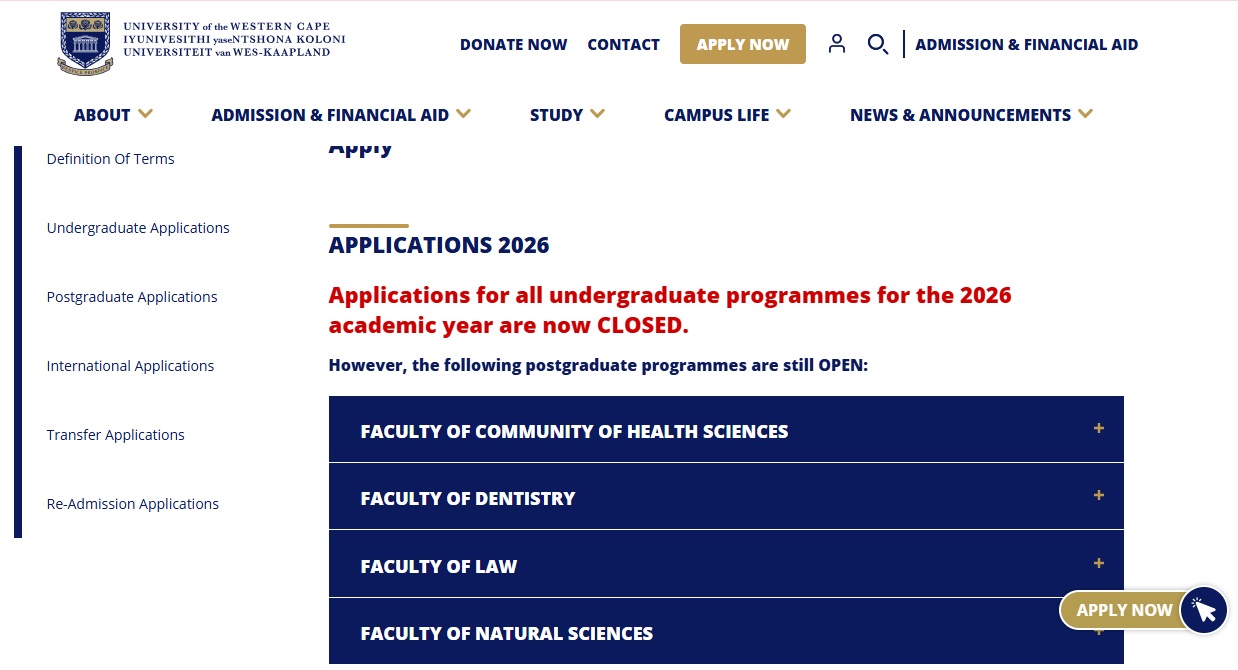
    Given the high volume of applications, understanding how to apply at University of Western Cape for 2026 is crucial. The process is entirely online, and missing a single step could mean a delay or disqualification. This guide provides a clear, step-by-step walkthrough of the application process, important deadlines, and what you need to prepare to secure your spot for the 2026 academic year.

    We will cover everything from the initial search for courses to the moment you accept your offer, ensuring you have all the information you need to apply with confidence.

    Introduction to UWC Online Applications

    The University of the Western Cape has streamlined its admissions process to be fully digital. For the 2026 academic year, all prospective students—whether local or international—must submit their applications through the official UWC online portal . There is no longer a need to visit the campus to collect or drop off paper forms; the entire journey from application to registration is managed online.

    The move to an online system is designed to make the process more efficient and transparent. Once you submit your application, you can track its status, receive communications, and ultimately accept your offer through the same platform . However, because the system is centralized, it is also strict. Late submissions are typically not considered, and incomplete applications are automatically disqualified. This is why familiarizing yourself with the process well in advance is essential.

    For the 2026 intake, the primary deadline to keep in mind is 30 September 2025 for most undergraduate programs . Some postgraduate programs may have earlier cut-offs, so verifying the specific deadlines for your chosen faculty is always recommended .

    Why Study at the University of the Western Cape?

    Before diving into the logistics, it is worth understanding what makes UWC a distinct choice. Located in the vibrant city of Cape Town, UWC is not just another university; it is an institution with a powerful legacy.

    UWC has a long-standing reputation as a place of intellectual and political freedom. Historically, it played a pivotal role in the anti-Apartheid movement, and today, it maintains a strong focus on equity, transformation, and social justice . This ethos creates a unique campus culture where students are encouraged to think critically about society.

    Academically, UWC offers a wide array of programs across seven faculties: Arts and Humanities, Community and Health Sciences, Dentistry, Economic and Management Sciences, Education, Law, and Natural Sciences . Whether you are interested in pursuing a degree in public health, pursuing law, or exploring natural sciences, the university provides a robust curriculum.

    Furthermore, the campus itself offers more than just lecture halls. It boasts a nature reserve and provides panoramic views of the Cape Peninsula and Stellenbosch mountains . For students interested in history, the UWC-Robben Island Mayibuye Archives—one of the largest collections documenting the anti-apartheid struggle—is located on campus, offering resources you won’t find anywhere else .

    How to Apply at University of Western Cape for 2026

    Now, let us get into the core of the matter: the application procedure. To ensure your application is successful, follow these steps in chronological order.

    Step 1: Research Your Programme and Check Requirements

    The first step in learning how to apply at University of Western Cape is knowing exactly what you are applying for. You cannot apply without a clear target. Visit the official UWC website and navigate to the “All Programmes” section. Here, you can browse through the undergraduate and postgraduate offerings .

    Pay close attention to the specific entry requirements for your chosen degree. Entry requirements are the minimum academic standards the university requires for consideration. However, meeting the minimums does not guarantee a place, as competition for spots is fierce . For example, programs in the Faculties of Dentistry, Community and Health Sciences, and Law are particularly competitive, so it is wise to keep your options open by selecting a second choice program on your application form .

    Step 2: Prepare Your Supporting Documents

    A smooth application depends on having your documents ready before you start filling out the online form. For the 2026 application, you will likely need the following:

    • Certified Copies of Your ID: South African applicants need a copy of their ID. International students need a copy of their passport.

    • Academic Records:

      • Current Matriculants: If you are still in Grade 12, you do not need to upload your final certificate immediately, but you may need your latest results .

      • Already Matriculated: You will need a certified copy of your matric certificate or foreign school-leaving certificate.

      • Transfer Students: If you have attended another tertiary institution, you need a certified copy of your academic record and a certificate of good conduct, stamped by the previous institution’s registrar .

    • SAQA Verification (International Students Only): All students with international qualifications must have their certificates evaluated by the South African Qualifications Authority (SAQA). Your application will not be processed until this verification is received .

    • Motivation Letter: For some programs, particularly at the postgraduate level, a motivation letter is required. This 1-2 page letter should explain why you are interested in the course .

    Having these documents scanned and saved as PDFs on your computer will make the upload process much faster.

    Step 3: Complete the Online Application Form

    When you are ready to apply, head to the official UWC online application portal (student.uwc.ac.za) . Here is a simple breakdown of the process:

    1. First-Time Access: Click on the link for first-time applicants. You will be asked to register an account and provide a valid email address.

    2. Fill in Your Details: The form will ask for personal information, educational background, and programme choices. You are allowed to apply for a maximum of two programme choices .

    3. Terms and Conditions: Read the terms and conditions carefully. Your application will not be considered complete until you have entered “ACCEPT” at the end of this section .

    4. Consent for Minors: If you are under 18 at the time of application, you must have a signed consent form from a parent or guardian. This form is typically emailed to you upon completion of the application if you indicate you are a minor .

    Step 4: Upload Your Documents and Submit

    After completing the form, you will need to upload your supporting documents. For most undergraduate applicants, documents can be uploaded directly via the student portal at studentdocumentupload.uwc.ac.za . Ensure that all documents are clear and certified where required.

    Important Note: There is no application fee payable for applying to UWC . If any website asks you for a fee to process your UWC application, you are likely on a fraudulent site.

    Step 5: Track Your Application and Respond to Offers

    Once your application is submitted, you will receive an acknowledgment letter via email. This letter contains your applicant number, which you must use in all future communication with the university .

    You can log back into the portal to check your application status. Successful applicants will receive an offer via email. If you receive a firm offer, you must accept it within the designated time frame. Failing to accept the offer on time may result in you forfeiting your place, although you can contact the UWC Contact Centre to inquire if the spot is still available .

    Important Deadlines for 2026

    Timing is everything when applying to a university as competitive as UWC. For the 2026 academic year, the University of the Western Cape received over 177,000 applications for just over 4,700 first-year spots . This level of competition means that missing a deadline is not an option.

    • Undergraduate Application Closing Date: 30 September 2025 .

    • Postgraduate Application Closing Date: 30 September 2025 (Note: Selected programmes close earlier) .

    • Late Applications: UWC does not accept late or walk-in applications. The university has stated that, given the demand, doors are firmly closed to late entries .

    It is highly recommended that you submit your application at least a week before the deadline to avoid any technical issues or last-minute stress.

    Frequently Asked Questions (FAQs)

    Can I apply to UWC if I am currently in Grade 12?
    Yes, current matriculants are encouraged to apply. You do not need to upload your final matric certificate at the time of application. Your admission will be conditional based on your final results .

    How much does it cost to apply?
    There is no cost. The University of the Western Cape does not charge an application fee .

    What if my contact details change after I apply?
    It is vital that you keep your details updated. If your cellphone number or email address changes, you must contact the UWC Contact Centre immediately to update your records .

    Can I change my degree choice after applying?
    If you change your mind about your choice of study, do not submit a new application. Instead, check with the UWC Contact Centre to see if it is possible to change your programme choice .

    Applying for university can feel like a daunting process, but breaking it down into manageable steps makes it far less stressful. Knowing exactly how to apply at University of Western Cape for 2026 gives you a significant advantage. By researching your course early, preparing your documents, and adhering to the 30 September 2025 deadline, you place yourself in the best possible position for admission.

    The University of the Western Cape offers a unique educational experience grounded in a commitment to social justice and academic excellence. Take your time with the application, double-check your details, and submit well before the cutoff. With the right preparation, you are one step closer to joining the UWC community in Cape Town for the 2026 academic year.

    Read Also

  • Univen Late Application 2026/2027 Opening Date

    Univen Late Application 2026/2027 Opening Date

    If you missed the main deadline to apply to the University of Venda (Univen) for the 2026 academic year, you might still have a pathway to secure your spot. The institution often opens a brief window for late applications, specifically for programs that still have space available after the initial selection process. This article provides all the current information regarding the univen late application 2026 opening date, the application process, requirements, and what you need to prepare to submit a successful application .

    Why Consider Studying at the University of Venda?

    Before diving into the details of the late application process, it helps to understand what makes Univen a distinct choice for higher education. Located in Thohoyandou, Limpopo, the University of Venda is a public institution known for its specific focus on community engagement and sustainable development. It’s not just about earning a degree; the university’s curriculum is often tailored to address the socio-economic challenges of the region and the continent at large .

    Students are drawn to Univen for its intimate campus environment and its dedication to research that has a tangible impact. The university is organized into four main faculties, offering a wide spectrum of undergraduate and postgraduate programs :

    • Faculty of Science, Engineering and Agriculture
    • Faculty of Health Sciences
    • Faculty of Humanities, Social Sciences and Education
    • Faculty of Management, Commerce and Law

    Graduates from Univen are often recognized for their practical skills and their readiness to contribute meaningfully to their communities, making it a compelling option for students who want their education to have a broader purpose . For those who missed the initial cutoff, the late application period represents a final, valuable opportunity to become part of this academic community. Univen Late Application 2026 Opening Date

    Understanding the univen late application 2026 opening date

    This is the core information most prospective students are searching for. It is important to distinguish between the main application cycle and the late application period. The main application cycle for the 2026 academic year at Univen officially opened in April 2025 and closed on 30 September 2025 .

    However, for the 2026 intake, Univen is reported to have opened a late application window specifically for programs that were not fully subscribed during the main cycle. Based on the latest updates from various educational admission platforms, the univen late application 2026 opening date is 19 January 2026. This window is short, typically lasting until 31 January 2026, or until all available spaces are filled .

    It is crucial to understand that this is not a second main application period. It is a supplementary round with limited capacity. The university’s official registration guide for 2026 confirms that while applications closed in September, late registration for admitted students occurs in February, but this particular window in January is for new, late applications where space exists .

    Who is Eligible for Late Application?

    Late applications are not open to everyone; they target specific groups of students who meet the basic criteria. You are eligible to apply during this window if you fall into one of the following categories :

    • First-time applicants: Students who have just completed or are about to complete their Grade 12 (Matric) and did not submit an application before the September deadline.
    • Transfer students: Individuals currently studying at another university or college who wish to transfer to Univen for the 2026 academic year.
    • Returning students: Those who may have taken a gap year or previously studied at Univen and are now seeking re-admission to a program.
    • Postgraduate candidates: Students applying for Honours, Master’s, or Doctoral degrees, provided their specific program has not yet reached capacity .
    • International applicants: Students from outside South Africa who meet the entry requirements and have the necessary documentation .

    Step-by-Step Guide to Applying During the Late Window

    Applying during the late window requires speed and accuracy. Because spaces are limited, a delayed or incorrectly filled application could cost you a place. The entire process is online; Univen does not accept manual or walk-in applications for late entry .

    Step 1: Prepare Your Documents

    Before you even visit the application portal, gather all your necessary documents. Having them ready as scanned PDFs will allow you to complete the form without interruption. You will typically need :

    • A certified copy of your South African ID or passport (for international students).
    • Your final Grade 11 results or, if available, your Grade 12 June/September results.
    • A copy of your National Senior Certificate (if you have already matriculated).
    • Academic transcripts and a certificate of conduct (if you are a transfer student from another tertiary institution).
    • A SAQA evaluation certificate (for international applicants with foreign qualifications).
    • A valid email address and cellphone number.

    Step 2: Access the Official Portal

    Go to the official University of Venda website at www.univen.ac.za. Navigate to the “Admissions” or “Apply” section. There is no separate “late application” link; you use the same online application portal. If the late window is active, the system will allow you to proceed with an application for the 2026 intake .

    Step 3: Register and Complete the Form

    You will need to register as a new user. This typically involves creating a 5-digit PIN and using your ID number and email address. Fill in the online application form with your personal details, academic history, and chosen programs. You may be allowed to select up to two course preferences, so ensure both are programs that still have space .

    Step 4: Upload and Submit

    Upload all the certified documents you prepared in Step 1. Double-check that the scans are clear and legible; blurry or uncertified documents are a common reason for application delays or rejections . Once uploaded, review your entire application for any errors, then click submit.

    Step 5: Save Your Reference Number and Pay the Fee (if applicable)

    After submission, you will receive a student or reference number. Save this number immediately, as you will need it to track your application status . Regarding fees, there is conflicting information. Some sources state that Univen applications for 2026 are free , while others mention a fee of R100 for South African students and up to R200 for international students during late applications . To be safe, check the official portal for a payment prompt and keep proof of payment if required.

    Programs and Faculties Open for Late Applications

    Not every program will be available during the late application period. Admission during this time is strictly subject to the availability of space. Generally, if a program was highly competitive (like Law or certain Health Sciences) and filled up during the main application cycle, it will likely not appear in the late window.

    However, reports indicate that several faculties may have spaces available across various departments. These often include :

    • Faculty of Science, Engineering & Agriculture: Look for programs in Agriculture, Biotechnology, Information Technology, and Environmental Science.
    • Faculty of Management, Commerce & Law: Opportunities may exist in Human Resource Management, Marketing, Logistics, and Financial Information Systems.
    • Faculty of Humanities, Social Sciences & Education: Programs in Communication Studies, Tourism Management, and various education streams (like BEd) might be open.
    • Faculty of Health Sciences: While often highly subscribed, some foundational courses or related health programs may have limited space.

    When you access the online portal during the univen late application 2026 opening date, the system will only display programs that are still accepting applications, so your choice will be guided by real-time availability .

    Admission Requirements and Selection

    Meeting the minimum academic requirements is essential, but it is not a guarantee of admission, especially during the late cycle where competition for the remaining spots is high .

    • For degree programs: You generally need a National Senior Certificate (NSC) with a Bachelor’s pass and a minimum Admission Point Score (APS) that meets the specific program’s threshold, often around 26 or higher .
    • For diplomas: An NSC with a Diploma pass and the required subject combinations are necessary .
    • Specific subjects: Many programs require specific achievement levels in subjects like Mathematics, Physical Science, or English. For example, Engineering programs will have higher Maths and Science requirements than Humanities programs .

    The selection process during this period is based on academic merit and the number of spaces available. If you meet the requirements, your application will be considered alongside others, and offers will be made until the spaces are filled .

    How to Track Your Application Status

    After submitting your late application, you don’t just wait by the phone. You should actively monitor your application status. Univen provides an online portal for this purpose. You can track your application by :

    • Returning to the Univen website and logging into the student portal (often called “My Access”) using your student number and the PIN you created.
    • Checking the status updates, which may change from “Application Received” to “Under Review” and finally to “Offer Made” or “Declined.”
    • Keeping an eye on the email address and cellphone number you provided, as the university will send official communication regarding your admission status and any next steps .

    What to Do If You Miss This Window

    The late application window in January 2026 is likely the final opportunity for admission to the 2026 academic year. If you miss the univen late application 2026 opening date or the subsequent deadline of 31 January 2026, the application portal for the 2026 intake will close entirely .

    If this happens, your best course of action is to prepare for the next intake. The main application cycle for the 2027 academic year typically opens around April 2026 . Use this time to ensure your documents are in order, improve your Matric results if necessary, and research your program choices thoroughly so you can apply as early as possible when the new cycle opens.

    The univen late application 2026 opening date in January provides a crucial second chance for students who missed the main deadline. While this window is short and spaces are limited, it is a viable route to securing a place at a university known for its community-focused education and academic rigor. By preparing your documents in advance, applying immediately when the window opens, and carefully tracking your application, you maximize your chances of joining the University of Venda for the 2026 academic year. For the most authoritative and real-time information, always refer to the official Univen website at www.univen.ac.za .

    Read Also

  • Wits Online Application Guide 2026/2027: How to Apply

    Wits Online Application Guide 2026/2027: How to Apply

    Are you planning to study at the University of the Witwatersrand (Wits University) during the 2026/2027 academic year? If yes, understanding the Wits Online Application Guide 2026/2027 is the first step toward securing your admission.

    Wits University is among South Africa’s most respected public universities, attracting thousands of local and international applicants each year. Since applications are submitted online, every applicant must understand the admission process, required documents, eligibility requirements, and how to submit a successful application.

    This comprehensive guide explains everything you need to know about the Wits Online Admission System for 2026/2027.


    About Wits University

    The University of the Witwatersrand (Wits University) is a leading research-intensive institution located in Johannesburg, South Africa. Established in 1922, Wits is internationally recognized for excellence in teaching, innovation, and research.

    The university offers qualifications in numerous disciplines, including:

    • Health Sciences
    • Engineering
    • Commerce
    • Humanities
    • Science
    • Law
    • Education
    • Architecture
    • Built Environment
    • Arts

    Each year, thousands of students from South Africa and around the world apply for undergraduate and postgraduate programs.


    Wits Online Application 2026/2027

    The Wits Online Application System allows prospective students to apply for admission electronically without visiting the university.

    The online platform enables applicants to:

    • Create an application profile
    • Choose preferred study programmes
    • Upload supporting documents
    • Submit applications online
    • Track application progress
    • Receive admission updates

    The online admission system simplifies the application process and reduces paperwork.


    Who Can Apply?

    Applications are open to:

    • South African citizens
    • Permanent residents
    • International students
    • First-time undergraduate applicants
    • Transfer students
    • Returning students
    • Postgraduate applicants

    Wits Admission Requirements 2026/2027

    Admission requirements vary depending on the programme.

    Generally, applicants should have:

    Undergraduate Applicants

    • National Senior Certificate (NSC) or equivalent qualification
    • Required Admission Point Score (APS)
    • Required subject combinations
    • English language proficiency
    • Programme-specific minimum requirements

    International Applicants

    International students must provide equivalent secondary school qualifications recognized in South Africa.

    Some programmes may require additional assessments or evaluations.


    Documents Required

    Before beginning your application, prepare clear scanned copies of the following documents.

    South African Applicants

    • Certified copy of ID
    • Grade 11 results (if currently in Grade 12)
    • National Senior Certificate (if completed)
    • Academic transcripts (where applicable)

    International Applicants

    • Passport
    • School certificates
    • Academic transcripts
    • English proficiency documents (if required)
    • Study permit (when applicable)

    Additional documents may be requested depending on the programme.


    How to Apply Through the Wits Online Application System

    Follow these steps carefully.

    Step 1: Visit the Official Application Portal

    Go to the official Wits online application portal.

    Step 2: Create an Account

    Register using your:

    • Email address
    • Personal details
    • Password

    Use an active email address because all communication will be sent electronically.


    Step 3: Verify Your Account

    You may receive a verification email.

    Click the activation link before continuing.


    Step 4: Log In

    Sign in using your registered credentials.


    Step 5: Complete the Online Application Form

    Provide accurate information, including:

    • Personal details
    • Contact information
    • Academic history
    • School information
    • Programme choices

    Always ensure the information matches your official documents.


    Step 6: Upload Supporting Documents

    Upload all required certified documents in the specified format.

    Ensure every document is:

    • Clear
    • Readable
    • Complete
    • Correctly certified where required

    Step 7: Review Your Application

    Before submitting:

    • Check spelling
    • Verify programme choices
    • Confirm uploaded documents
    • Review contact details

    Mistakes can delay admission decisions.


    Step 8: Submit Your Application

    After reviewing your application, submit it through the online portal.

    Save or print your application confirmation for future reference.


    Wits Application Fee

    Some applicants may be required to pay an application fee depending on their applicant category and programme.

    Always check the latest fee requirements before submitting your application.


    Wits Application Deadline 2026/2027

    Application closing dates differ by faculty and programme.

    Competitive programmes such as:

    • Medicine
    • Health Sciences
    • Architecture
    • Fine Arts
    • Law

    often have earlier deadlines.

    Applicants are strongly encouraged to submit applications well before the official closing date to avoid disappointment.


    How to Check Wits Application Status

    After submitting your application, you can monitor its progress online.

    Generally, you will:

    1. Visit the application portal.
    2. Log into your account.
    3. Open the application dashboard.
    4. View your current admission status.

    Possible status messages include:

    • Application Received
    • Documents Outstanding
    • Under Review
    • Provisionally Accepted
    • Offered Admission
    • Unsuccessful

    Continue checking your email regularly for important updates.


    Tips for a Successful Wits Online Application

    To improve your chances of admission:

    • Apply early.
    • Upload clear certified documents.
    • Meet all programme requirements.
    • Double-check your application before submission.
    • Use a valid email address.
    • Keep your login details secure.
    • Respond promptly to requests for additional information.

    Common Mistakes to Avoid

    Many applicants experience delays because they:

    • Submit incomplete applications
    • Upload incorrect documents
    • Miss application deadlines
    • Enter inaccurate personal details
    • Use inactive email addresses
    • Ignore application notifications

    Avoiding these mistakes can make your application process much smoother.


    Why Choose Wits University?

    Wits University is known for:

    • Globally recognized qualifications
    • Strong research reputation
    • Modern learning facilities
    • Experienced academic staff
    • Excellent graduate employability
    • Diverse student community
    • Extensive industry partnerships
    • Vibrant campus life

    Graduates from Wits are highly regarded by employers both within South Africa and internationally.


    Frequently Asked Questions (FAQs)

    Is the Wits application completed online?

    Yes. Most applications are submitted through the university’s online admission system.

    Can international students apply online?

    Yes. International applicants can complete and submit their applications through the online portal.

    Can I edit my application after submission?

    Depending on the application stage, some changes may be possible. Check your applicant portal or contact the admissions office if updates are needed.

    How do I know if my application has been received?

    After successful submission, you should receive an application confirmation and be able to view your application status online.

    When will admission decisions be released?

    Admission decisions are released after applications have been reviewed. The timeline varies by programme and faculty.

  • UCT Prospectus 2027 PDF download

    UCT Prospectus 2027 PDF download

    If you’re planning to study at one of Africa’s top universities, accessing the University of Cape Town (UCT) Prospectus 2027 PDF is your first essential step. This guide will walk you through everything you need to know—from downloading the prospectus to understanding its contents and using it to secure your admission.

    What is the UCT Prospectus 2027?

    The University of Cape Town (UCT) Prospectus 2027 is an official document that provides detailed information about:

    • Available undergraduate and postgraduate programs
    • Admission requirements
    • Application procedures
    • Tuition fees and funding options
    • Campus life and facilities

    It serves as a roadmap for prospective students who want to join UCT in the 2027 academic year.

    Why You Should Download the UCT Prospectus 2027 PDF

    Downloading the UCT prospectus is crucial because it helps you:

    1. Understand Course Requirements

    Each program has specific subject and grade requirements. The prospectus outlines these clearly so you can assess your eligibility.

    2. Explore Study Options

    UCT offers a wide range of courses in fields such as:

    • Engineering & Built Environment
    • Health Sciences
    • Humanities
    • Commerce
    • Law

    3. Learn About Application Deadlines

    Missing deadlines can cost you your admission. The prospectus ensures you stay informed.

    4. Plan Financially

    You’ll find information about:

    • Tuition fees
    • Scholarships
    • Financial aid opportunities

    How to Download UCT Prospectus 2027 PDF

    Follow these simple steps:

    1. Visit the official UCT website
    2. Navigate to the “Admissions” section
    3. Look for “Prospectus 2027”
    4. Click on the download link
    5. Save the PDF to your device

    Click here to download the UCT Prospectus 2027:

    Tip: Always download from the official website to ensure you get the latest and accurate version.

    Key Sections Inside the UCT Prospectus

    Here’s what you’ll find inside:

    Admission Requirements

    • Minimum APS (Admission Point Score)
    • Required subjects for each course

    Faculties and Courses

    Each faculty is explained in detail with course descriptions.

    Application Process

    Step-by-step instructions on how to apply online.

    Fees and Funding

    Includes:

    • Tuition estimates
    • Bursaries and scholarships

    Student Life

    Information about:

    • Accommodation
    • Campus facilities
    • Student support services

    Tips for Using the Prospectus Effectively

    • Highlight courses you’re interested in
    • Check minimum requirements carefully
    • Note important deadlines
    • Prepare required documents early

    Frequently Asked Questions (FAQs)

    Is the UCT Prospectus 2027 free?

    Yes, it is completely free to download.

    Can international students apply?

    Absolutely. UCT welcomes students from across the globe.

    When should I apply?

    Applications usually open early in the year—check the prospectus for exact dates.

    Final Thoughts

    The University of Cape Town (UCT) Prospectus 2027 PDF is more than just a document—it’s your gateway to one of Africa’s most prestigious universities. By downloading and studying it carefully, you increase your chances of a successful application.

    If you’re serious about studying at UCT, don’t delay—download the prospectus today and start planning your academic future.

  • University of the Western Cape (UWC) Online Application 2027 Now Open – Apply Today

    University of the Western Cape (UWC) Online Application 2027 Now Open – Apply Today

    The University of the Western Cape (UWC) Online Application 2027 Now Open marks the official start of the admission period for the 2027 academic year. Prospective students from South Africa and around the world can now access the online portal to submit their applications for undergraduate degrees, postgraduate diplomas, master’s programs, and doctoral studies.

    UWC, located in Bellville, Cape Town, has built a strong reputation for academic excellence, social justice, and research innovation. Whether you are a first-time university applicant or a working professional seeking further qualifications, understanding the application process thoroughly will help you avoid mistakes and meet critical deadlines.

    This guide provides a complete, neutral, and factual breakdown of everything you need to know about the UWC online application for 2027. We will cover why UWC stands out, step-by-step application instructions, document requirements, fees, important dates, and answers to frequently asked questions. By the end, you will have a clear roadmap to submit a successful application.

    Why Study at the University of the Western Cape (UWC)?

    Before diving into the application mechanics, it helps to understand what makes UWC a distinctive choice for higher education. The university’s history and current academic profile offer specific advantages that go beyond generic “quality education” claims.

    A Legacy of Social Justice and Inclusion

    Founded in 1959 during the apartheid era, UWC was originally designed for “Coloured” students, but it quickly became a center of resistance against oppression. Today, that heritage translates into a campus culture that actively promotes diversity, equity, and critical thinking. Students from all backgrounds—economic, racial, and national—find a supportive environment where difficult conversations are encouraged.

    Academic Strengths Across Faculties

    UWC hosts seven faculties: Arts and Humanities, Community and Health Sciences, Dentistry, Economic and Management Sciences, Education, Law, and Natural Sciences. Several of these faculties have earned national and international recognition:

    • Dentistry: The Faculty of Dentistry is one of only two dental schools in South Africa. It operates the Oral Health Centre at Tygerberg Hospital, giving students hands-on clinical experience from the first year.

    • Law: UWC’s Faculty of Law is renowned for its focus on human rights, constitutional law, and gender justice. Many alumni work at the Constitutional Court, the UN, and leading NGOs.

    • Natural Sciences: Research in biotechnology, physics, and environmental science receives substantial funding from the National Research Foundation (NRF) and international partners.

    • Public Health: Through the School of Public Health, UWC has influenced HIV/AIDS policy, tuberculosis control, and health systems strengthening across sub-Saharan Africa.

    Research Output and Postgraduate Opportunities

    For postgraduate applicants, UWC’s research units provide structured supervision and access to laboratories, archives, or fieldwork sites. Examples include the DSI/NRF Centre of Excellence in Food Security, the Institute for Social Development, and the Centre for Humanities Research. Many master’s and doctoral students receive NRF bursaries or university merit scholarships.

    Location and Campus Facilities

    The main campus sits on a sloping site in Bellville, about 20 minutes from Cape Town’s city centre. On-campus facilities include a modern library with 24-hour study areas, sports fields, a gymnasium, student residences, and several cafeterias. The nearby Bellville railway station and bus terminals make commuting feasible for students living across the Cape Metropole.

    Graduate Employability

    According to the 2023/2024 South African Graduate Employers Association (SAGEA) survey, UWC graduates perform well in law, public administration, social work, and natural sciences. The university’s Career Services office hosts annual job fairs, CV workshops, and internship placement programs.

    University of the Western Cape (UWC) Online Application 2027 Now Open: Key Dates and Deadlines

    Missing a deadline is the most common reason applications fail. The table below outlines the official dates for the 2027 intake. These dates are based on UWC’s typical cycle; always confirm on the official website before submitting.

    Application Type Opening Date Closing Date
    Undergraduate (First-time applicants) 1 April 2026 30 September 2026
    Undergraduate (Transfer students) 1 April 2026 30 September 2026
    Postgraduate (Honours, Master’s, PhD) 1 April 2026 31 October 2026
    International applicants (all levels) 1 April 2026 31 August 2026
    Late applications (limited programs) 1 October 2026 15 November 2026


    Note: Some high-demand programs (e.g., Medicine, Dentistry, Physiotherapy, Law) close earlier – typically by 31 July 2026. Check the specific faculty’s webpage for early deadlines.

    Step-by-Step Guide to Completing the UWC Online Application for 2027

    The online application system is called the UWC Student Portal (also known as the “Application and Registration System”). Follow these steps carefully.

    Step 1 – Prepare Your Documents Before Starting

    Do not begin the online form until you have scanned, named, and stored the following documents. Incomplete applications (missing uploads) will not be processed.

    Required for all applicants:

    • Certified copy of your ID document (South African citizens) or passport (international students). Certification must be less than three months old.

    • Certified copy of your final Grade 11 results AND your Grade 12 June/September results (if currently in Grade 12).

    • Certified copy of your National Senior Certificate (NSC) or equivalent qualification if you have already graduated.

    • Academic transcripts from any previous tertiary institutions (for transfer or postgraduate applicants).

    • Proof of payment of the non-refundable application fee.

    Program-specific documents (check faculty requirements):

    • Portfolio of work (for Fine Arts, Architecture, or Creative Writing).

    • Motivation letter (for postgraduate research degrees).

    • Research proposal outline (for PhD applicants).

    • Two academic reference letters (for master’s and PhD applications).

    Technical tip: Scan documents as PDF files, each under 2 MB. Name them clearly: e.g., “Surname_ID_Certificate”, “Surname_Grade12_Results”. Avoid special characters or spaces.

    Step 2 – Access the UWC Online Application Portal

    Open your web browser and go to the official UWC website: www.uwc.ac.za. Navigate to the “Admissions” or “Apply Now” section. Alternatively, directly access the online application portal at: https://apply.uwc.ac.za.

    First-time users must click “Create New Account”. You will need a valid email address and a mobile number. The system will send a verification link to your email – click it to activate your account.

    Important: Write down your login credentials (student number and password) immediately. You will need them to check application status, upload additional documents, and accept an offer later.

    Step 3 – Complete the Application Form

    After logging in, you will see a multi-page form. Take your time; the session may time out after 60 minutes of inactivity. Use the “Save and Continue Later” button if needed.

    Personal Information Section

    • Full legal names (as they appear on your ID/passport).

    • Date of birth, gender, and nationality.

    • South African applicants must provide their ID number; internationals provide passport number.

    • Disability status (optional but helps with residence and exam accommodations).

    • Home language and proficiency in English.

    Contact and Address Details

    • Residential address (where you live during term time).

    • Postal address (if different from residential).

    • Email address (use one you check daily – avoid school emails that expire).

    • Cellphone number (include international code for non-SA numbers).

    School and Previous Tertiary Education

    • Name of high school, city, and year of matriculation.

    • Exam board (e.g., NSC, IEB, Cambridge, IB).

    • List all subjects and final percentages (or grades).

    • If you attended another university or college, enter the institution name, dates attended, and total credits earned.

    Program Selection (Choices)

    UWC allows you to select up to three program choices in order of preference. Research each program’s admission requirements before selecting.

    • First choice: Your desired qualification (e.g., Bachelor of Laws – LLB).

    • Second choice: A related but slightly lower-entry program (e.g., Bachelor of Arts in Law and Society).

    • Third choice: A general program with broader entry requirements (e.g., Bachelor of Social Science).

    Warning: Choosing three highly competitive programs (e.g., Medicine, Dentistry, Physiotherapy) offers no safety option. Include at least one program with a lower Admission Points Score (APS) requirement.

    Residency and Financial Aid

    • Indicate whether you plan to live in a university residence. UWC has limited on-campus housing; early applicants receive priority.

    • If you require financial aid (NSFAS, UWC Bursary, or external scholarship), tick the relevant box. You will still need to apply separately to NSFAS or the UWC Financial Aid Office.

    Step 4 – Pay the Non-Refundable Application Fee

    For the 2027 cycle, the application fee is:

    • South African applicants: R150

    • International applicants (including SADC countries): R300

    Payment methods:

    1. Online via credit card (Visa or Mastercard) – instant confirmation.

    2. Bank deposit or EFT – use your student number (generated after account creation) as the reference. Allow two working days for processing.

    3. Cash payment at the UWC Cashier’s Office (only if you live near campus).

    Bank details for EFT:

    • Bank: Standard Bank of South Africa

    • Account Name: University of the Western Cape

    • Branch Code: 050010 (Bellville)

    • Account Number: 071 503 720

    • Reference: Your 8-digit UWC student number

    Do not submit your application until the payment reflects in the portal. You can upload the proof of payment as a PDF.

    Step 5 – Upload Documents and Submit

    After completing the form, the portal will show a checklist of required documents. Upload each file to the correct category (e.g., ID, results, transcript). Do not upload everything under “Other”.

    Once all files are uploaded, review every page of the application for typos or missing information. Pay special attention to:

    • Spelling of your name (must match ID).

    • Correct program codes (found in the faculty yearbook).

    • Active email address.

    Click the “Submit Application” button. You will immediately receive an automated email confirmation with your application reference number. Save that email.

    Step 6 – Check Application Status Regularly

    After submission, UWC will process your application. The typical turnaround time is 4 to 8 weeks for undergraduate programs, and 6 to 12 weeks for postgraduate degrees. You can log back into the portal at any time to see one of these statuses:

    • Received: Application submitted but not yet reviewed.

    • In progress: Admissions officers are checking documents and academic scores.

    • Decision pending: Awaiting faculty selection committee.

    • Provisional offer: You have met requirements, pending final exam results (for Grade 12 applicants).

    • Firm offer: Accepted unconditionally.

    • Waitlisted: You meet minimum requirements but program is full; you will be considered if spots open.

    • Declined: You did not meet minimum criteria or competitive threshold.

    If your status remains “Received” for more than six weeks, contact the Admissions Office via the portal’s message system – do not submit a duplicate application.

    Specific Requirements for International Applicants

    International students face additional steps. The University of the Western Cape (UWC) Online Application 2027 Now Open includes a dedicated international application channel.

    Academic Equivalency

    UWC evaluates foreign qualifications against South African NSC standards. For example:

    • A-levels: Typically require at least two A-level passes (C or higher) and three IGCSE/GCSE passes.

    • International Baccalaureate (IB): Minimum 28 points for most bachelor’s degrees, with specific subject requirements.

    • US High School Diploma: Must be supplemented with SAT or AP scores.

    You can request a pre-evaluation by emailing the International Office with your transcripts.

    English Language Proficiency

    Non-native English speakers must provide proof of English proficiency through one of these tests:

    • TOEFL iBT: Minimum 86 (with no section below 20)

    • IELTS Academic: Minimum 6.5 overall (no band below 6.0)

    • Pearson PTE: Minimum 59

    Exemptions apply if you completed secondary education entirely in English (e.g., British, American, or Australian curricula).

    Study Visa

    After receiving an acceptance letter, you must apply for a South African study visa at your nearest South African embassy or consulate. UWC will issue a “Visa Support Letter” confirming your enrollment. Start this process at least three months before the semester begins (February 2027).

    Financial Aid and Bursaries for 2027

    Cost should not deter qualified students. Several funding sources exist:

    NSFAS (South African Citizens Only)

    The National Student Financial Aid Scheme covers tuition, accommodation, and living expenses for students from households with a combined annual income below R350,000. Apply directly on the NSFAS website (not through UWC). The 2027 NSFAS application typically opens in September 2026 and closes in January 2027.

    UWC Merit Bursaries

    Students with an APS of 38 or higher (out of 42) automatically receive a merit bursary covering 25% to 50% of tuition. No separate application is needed; the Admissions Office identifies eligible applicants from their final school results.

    Postgraduate Research Funding

    Master’s and PhD applicants with a research proposal aligned to UWC’s strategic themes (e.g., social justice, climate change, infectious diseases) can apply for:

    • NRF Freestanding Scholarships (for South Africans)

    • UWC Postgraduate Merit Award (value up to R50,000 per year)

    • The Global Excellence Scholarship (for international students from developing countries)

    Check the “Research and Innovation” section of the UWC website for deadlines.

    Common Mistakes to Avoid in Your 2027 Application

    Based on past admissions data, these errors cause the most rejections or delays:

    1. Submitting uncertified copies. Cellphone photos of your ID or certificate are not accepted. Use a police station, post office, or commissioner of oaths for certification.

    2. Missing the early deadline for high-demand programs. Medicine, Dentistry, Occupational Therapy, and Law close months before the general deadline.

    3. Choosing three identical programs. Example: LLB first choice, BA Law second choice, BCom Law third choice – all three require similar APS. If you miss the LLB threshold, you likely miss the others too.

    4. Ignoring the minimum subject requirements. Even with a high APS, some programs require specific subjects (e.g., Mathematics 60% for Engineering, Physical Science 50% for Pharmacy).

    5. Using an outdated email address. High school emails often expire after graduation. Use a personal Gmail or Outlook account that you will keep for the next three years.

    6. Forgetting to check spam folders. UWC sends status updates and offer letters via email. Add @uwc.ac.za to your contacts.

    What Happens After You Submit?

    Once your application is complete, UWC follows a structured evaluation process:

    1. Document verification: Admissions staff check authenticity of certificates. Fraudulent documents lead to automatic disqualification and a permanent ban.

    2. APS calculation: Your NSC, IEB, or equivalent scores are converted into UWC’s Admission Points Score (APS). The maximum is 42. Example: 80-100% = 7 points, 70-79% = 6 points, down to 40-49% = 2 points.

    3. Faculty selection: For programs with more applicants than spaces (e.g., LLB has 450 spaces for 4,000 applicants), a selection committee ranks candidates by APS, then by specific subject marks, and sometimes by a motivation letter or interview.

    4. Offers released: First-round offers go out from August 2026 (for early applicants). Second-round offers (from waitlist) go out November 2026 – January 2027.

    If you receive an offer: You must accept or decline within 14 days by logging into the portal. Failure to respond forfeits the space. You will then need to pay a confirmation deposit (R1,500 for residences, R750 for day students) to secure your spot.

    If your application is declined: You may request feedback from the Admissions Office. Often the reason is insufficient APS (e.g., 28 for a program requiring 32) or missing subject requirements. You can also apply for a different program still open for late applications.

    Frequently Asked Questions (FAQ)

    Q1: Can I apply without a final matric certificate?
    Yes. Current Grade 12 learners apply using their Grade 11 final results and Grade 12 June/September results. If accepted, the offer is provisional until you submit your final NSC results in January 2027.

    Q2: Is the application fee refundable if I am not accepted?
    No. The fee covers administrative processing regardless of the outcome.

    Q3: How do I change my program choices after submitting?
    Contact the Admissions Office via the portal within 14 days of submission. After that date, changes are only allowed if the new program is still open and you meet its requirements.

    Q4: Does UWC require a placement test?
    Some programs do. For example, the Faculty of Dentistry requires a manual dexterity test. The Faculty of Education requires a National Benchmark Test (NBT). Check your program’s admission criteria.

    Q5: Can international students apply for undergraduate degrees?
    Yes. However, the number of international undergraduates is capped at 8% of the total intake. Competition is high. Ensure your application is complete before the 31 August 2026 deadline.

    Q6: What is UWC’s APS for Medicine (MBChB)?
    The minimum APS is 36, but successful candidates typically have 38-42. Additionally, you must have 70% or higher in Mathematics, Physical Sciences, and English Home Language.

    Q7: How do I get my student number after applying?
    The system generates a temporary student number immediately after you create an account. That same number becomes your permanent student ID if you enroll.

    The University of the Western Cape (UWC) Online Application 2027 Now Open offers a clear opportunity to join one of South Africa’s most dynamic universities. By following the steps outlined above – preparing documents, paying the fee, accurately completing the form, and meeting faculty-specific deadlines – you maximize your chance of acceptance.

    Remember three critical actions:

    • Start early. Do not wait until September 2026. Many programs fill on a rolling basis.

    • Verify requirements for your chosen program, especially subject prerequisites.

    • Check your email and portal status weekly after submission.

    UWC’s admissions team processes thousands of applications each year. While they work efficiently, you are ultimately responsible for ensuring your application is complete and correct. If you encounter technical issues, use the portal’s helpdesk or call the Admissions Office during weekday hours (021 959 3900).

    Good luck with your application for the 2027 academic year. Whether you aspire to become a dentist, a lawyer, a scientist, or a social entrepreneur, UWC provides the academic foundation and research environment to turn those aspirations into reality.

  • University of Venda (UNIVEN) Online Application 2027 Now Open – Apply Today

    University of Venda (UNIVEN) Online Application 2027 Now Open – Apply Today

    The University of Venda (UNIVEN) Online Application 2027 Now Open marks the official start of the admission cycle for prospective students seeking to join one of South Africa’s most distinctive higher education institutions. Located in Thohoyandou, Limpopo Province, UNIVEN has built a reputation for academic excellence, research innovation, and community engagement. If you plan to enroll in 2027, understanding how the online admission system works is your first step toward securing a place at this respected university.

    This guide provides a complete, factual walkthrough of the application process—from eligibility and document requirements to submission and post‑application steps. No exaggerated claims, no unnecessary hype. Just clear, actionable information to help you apply with confidence.

    Why Study at the University of Venda (UNIVEN)?

    Before diving into the mechanics of the application system, it helps to know what makes UNIVEN a compelling choice for thousands of students each year.

    A Focus on Rural Development and Social Impact

    UNIVEN was established in 1982 with a unique mission: to address the educational and socio‑economic needs of rural communities in South Africa. Unlike many urban universities, UNIVEN integrates rural development into its teaching and research. Programs in agriculture, environmental sciences, public health, and law often include fieldwork in nearby rural areas, giving students practical experience while contributing to real‑world change.

    Strong Academic Offerings

    The university comprises eight faculties:

    • Health Sciences (including Medicine, Nursing, Public Health)

    • Science, Engineering and Agriculture

    • Humanities, Social Sciences and Education

    • Law

    • Management, Commerce and Administration

    • Mathematics and Natural Sciences

    • Environmental Sciences

    • Veterinary Science (one of only two such schools in South Africa)

    Many of these programs receive accreditation from professional bodies like the Health Professions Council of South Africa (HPCSA), the South African Nursing Council (SANC), and the Council on Higher Education (CHE). This accreditation means your degree holds national and international value.

    Research and Postgraduate Opportunities

    UNIVEN hosts several research chairs and institutes, including the Institute for Rural Development and the UNIVEN Centre for Biostable Biomaterials. Postgraduate students benefit from supervision by experienced researchers and access to specialized laboratories. The university also participates in the South African National Research Foundation (NRF) funding programs, offering scholarships for Master’s and PhD candidates.

    Affordable Fees and Financial Aid

    Compared to many South African universities, UNIVEN’s tuition remains moderate. The institution administers NSFAS (National Student Financial Aid Scheme) loans and bursaries for eligible undergraduate students. Additionally, UNIVEN offers its own merit‑based scholarships and emergency funds for students facing financial hardship.

    Campus Life and Support Services

    The Thohoyandou campus provides on‑site accommodation, a modern library, computer labs, sports facilities, and student health services. The Centre for Teaching and Learning offers academic support, including writing workshops and tutoring. For international students, the International Relations Office assists with visa applications, orientation, and cross‑cultural adjustment.

    In short, UNIVEN is not just a place to earn a degree—it is a community that prepares you for professional life while addressing the specific challenges of rural and regional development.

    University of Venda (UNIVEN) Online Application  2027 Now Open – Key Details

    Now that you understand the institution’s strengths, let’s focus on the University of Venda (UNIVEN) Online Application (Admission System) 2027 Now Open. The university uses a centralized, web‑based portal that handles everything from initial registration to final submission. Below you will find all essential information, including dates, eligibility, required documents, and a step‑by‑step guide.

    Application Dates and Deadlines for 2027 Intake

    The 2027 admission cycle opened on 1 April 2026 and will close on 30 September 2026 for most undergraduate programs. Some high‑demand courses (e.g., Bachelor of Medicine and Bachelor of Surgery – MBChB, Veterinary Science) may have an earlier closing date of 30 June 2026. Postgraduate applications generally follow the same timeline, though certain research‑based degrees accept applications year‑round.

    Program Type Application Opens (2026) Standard Closing Date (2026) Early Closure (if applicable)
    Undergraduate (full‑time) 1 April 30 September 30 June (MBChB, Vet Science)
    Postgraduate (taught) 1 April 30 September 31 July (MBA, MPA)
    Postgraduate (research) 1 April 30 November N/A
    International applicants 1 April 31 August N/A

    Note: Late applications are not accepted for programs with capacity constraints. Always verify specific deadlines on the official UNIVEN admissions page.

    Who Can Apply?

    The University of Venda (UNIVEN) Online Application 2027 Now Open welcomes the following categories of applicants:

    1. South African citizens with a National Senior Certificate (NSC) or an equivalent qualification.

    2. International students holding a foreign school‑leaving certificate that is comparable to the NSC. Such certificates must be evaluated by the South African Qualifications Authority (SAQA).

    3. Transfer students from other accredited universities, provided they submit official transcripts and a certificate of good conduct.

    4. Mature age applicants (23 years or older by 1 January 2027) who lack a matric exemption but can demonstrate relevant work experience or prior learning. These candidates must pass the university’s mature age exemption test.

    5. Postgraduate applicants with an appropriate bachelor’s degree (for Honours), an Honours degree (for Master’s), or a Master’s degree (for PhD). Additional research proposals are required for research degrees.

    Each program has specific subject and grade requirements. For example, the MBChB program requires at least 70% in Life Sciences, 70% in Mathematics (or 80% in Mathematical Literacy), and 60% in English. Always check the faculty’s admission brochure before applying.

    Required Documents for the Online Application

    To complete the University of Venda (UNIVEN) Online Application 2027 Now Open, you must upload clear, legible copies of the following documents (PDF or JPEG format, each file under 5 MB):

    • Certified copy of your ID document (or passport for international students). Certification must be done by a police officer, post office official, or commissioner of oaths – certification date must be within the last three months.

    • Final Grade 11 results (for applicants still in Grade 12) or final NSC/IEB certificate (for those who have already matriculated).

    • Academic transcripts (for transfer or postgraduate applicants), including an explanation of the grading system.

    • Proof of application fee payment (non‑refundable fee of R150 for South Africans, R300 for international applicants).

    • Portfolio or additional requirements (e.g., a portfolio for Fine Arts, a motivation letter for Social Work, or a research outline for PhD applicants).

    • SAQA evaluation certificate (for international qualifications).

    • Proof of English proficiency (for applicants from non‑English speaking countries) – TOEFL iBT score of 80 or IELTS Academic score of 6.0 is typical.

    Do not send original documents by post unless specifically requested. Uploading incorrectly formatted or blurry files is the most common reason for application delays.

    Step‑by‑Step Guide – How to Apply Online

    Follow these steps to use the University of Venda (UNIVEN) Online Application 2027 Now Open effectively. The system is designed to be intuitive, but careful attention to each stage prevents errors.

    Step 1 – Visit the Official Application Portal

    Open your web browser and go to the UNIVEN admissions page: https://www.univen.ac.za/apply (or directly to https://application.univen.ac.za). Do not use third‑party websites; they often charge extra fees or provide outdated forms.

    Step 2 – Create an Account

    Click on “New Application” and enter a valid email address and cellphone number. The system will send a one‑time PIN (OTP) to verify your contact details. After verification, you will set a password. Write down this password – you will need it to check your application status later.

    Step 3 – Fill in Biographical Information

    Complete all fields marked with a red asterisk. This includes your full name, date of birth, gender, nationality, and home language. Be consistent: the name you enter must match your ID document exactly. Even a small typo (e.g., “Jon” instead of “John”) can cause verification issues later.

    Step 4 – Select Your Program Choices

    You can choose up to three programs, ranked in order of preference. The first choice is the one for which you will be primarily considered. If you do not meet the requirements for your first choice, the admissions committee may automatically consider your second or third choice – provided you meet their entry criteria. For competitive programs like Medicine or Veterinary Science, choose only one program as your first choice and leave the others blank if you are not genuinely interested in them.

    Step 5 – Upload Supporting Documents

    Use the “Document Upload” section to submit the files listed earlier. The system will show a checklist (e.g., “ID copy – Pending”, “Grade 11 results – Pending”). After uploading each file, click “Save and Continue”. The system may automatically compress large images, but it is better to pre‑size your files to avoid rejection.

    Step 6 – Pay the Application Fee

    The application fee is R150 for South African citizens and R300 for international applicants. Payment options:

    • EFT (Electronic Funds Transfer) to UNIVEN’s bank account (details appear after you submit the biographical section). Use your ID number as the reference.

    • Direct deposit at any Standard Bank branch (account name: University of Venda – Application Fees).

    • Credit/debit card via the secure PayFast gateway (immediate confirmation).

    Keep the proof of payment. You will need to upload it in the “Proof of Payment” field. Without this, your application remains incomplete.

    Step 7 – Review and Submit

    Before final submission, use the “Preview” button to see your entire application as the admissions office will view it. Correct any mistakes – especially program codes, dates of birth, and document clarity. Then click “Submit Application”. You will receive an automated email with a reference number (e.g., UNIVEN‑2027‑123456). Save this email. It is your proof that the University of Venda (UNIVEN) Online Application (Admission System) 2027 Now Open has received your submission.

    Step 8 – Check Application Status Regularly

    Log back into the portal using your email and password. The status will show one of four messages:

    • “Received” – Your application is in the queue.

    • “Under Review” – Faculty admissions committee is evaluating your documents.

    • “Conditional Offer” – You have been provisionally accepted, pending final results (for Grade 12 applicants) or additional documents.

    • “Declined” – You did not meet the minimum requirements or the program is full.

    If your status remains “Received” for more than eight weeks, contact the admissions office via the helpdesk (details below).

    Application Fees and Waivers

    We mentioned the standard fees earlier, but here are important nuances. The application fee is non‑refundable – even if you withdraw your application or are not accepted. However, two groups may request a fee waiver:

    • NSFAS applicants who have been verified as “indigent” by their provincial department of education. You must submit a letter from your school principal confirming your family’s financial situation.

    • UNIVEN staff dependents (spouse or child of a permanent employee). Provide a letter from Human Resources.

    Fee waiver requests must be submitted before you pay. Send your request to fees@univen.ac.za with the subject line “Application Fee Waiver Request – [Your Full Name]”. Approvals take up to 10 working days. If you do not receive a response within that time, assume your request was denied and pay the fee.

    After Submitting Your Application – What to Expect

    Once you have completed the University of Venda (UNIVEN) Online Application 2027 Now Open, the university begins a multi‑step evaluation process.

    1. Document verification – The admissions office checks that your uploaded certificates are authentic. They may contact your previous school or SAQA. False documents lead to immediate disqualification and a permanent ban.

    2. Academic scoring – For undergraduate programs, UNIVEN uses an Admission Point Score (APS) system. Each matric subject receives points: 8 for 90‑100%, 7 for 80‑89%, down to 1 for 30‑39%. Life Orientation contributes a maximum of 1 point. For example, an applicant with six subjects scoring 70‑79% (6 points each) plus one subject at 80‑89% (7 points) would have an APS of 6×6 + 7 = 43. Most programs require an APS between 28 and 38, but Medicine needs an APS of 40+.

    3. Selection for competitive programs – When the number of qualified applicants exceeds available seats, UNIVEN uses additional criteria: interview performance (for Nursing, Law, Social Work), portfolio assessment (Fine Arts, Architecture), or a separate entrance test (for the Bachelor of Education).

    4. Offer letters – Successful applicants receive a conditional or firm offer via email and SMS. Conditional offers require you to meet remaining conditions (e.g., achieving a specific matric final mark). Firm offers mean you are accepted outright.

    5. Acceptance deadline – You must accept or decline the offer within 14 days by logging into the portal and clicking “Accept Offer”. After acceptance, you pay a non‑refundable registration deposit (R2,000 for South Africans, R5,000 for internationals) to secure your place.

    Common Mistakes to Avoid When Applying

    Even a well‑designed online system cannot prevent human errors. Here are the most frequent pitfalls and how to sidestep them.

    • Waiting until the last week – The portal becomes slow and may crash under heavy load. Submit at least one month before the deadline.

    • Using an incorrect email address – All communications go to the email you provide. Double‑check spelling. Avoid using a school email that expires after you graduate.

    • Uploading uncertified documents – UNIVEN rejects any ID copy or certificate that does not have a clear stamp and signature of a commissioner of oaths. Cellphone photos of physical documents are also unacceptable; scan them properly.

    • Forgetting to pay the fee – The system allows you to submit an application without payment, but that submission is immediately marked “incomplete” and will not be reviewed. You will only realize this after the deadline has passed.

    • Choosing mismatched program codes – Each program has a unique code (e.g., BSc Computer Science is BSC‑CS). Select the code from the drop‑down menu; do not type it manually. A single digit error may place you in the wrong faculty.

    Technical Support and Helpdesk

    If you encounter issues with the University of Venda (UNIVEN) Online Application 2027 Now Open, do not panic. The university provides multiple support channels:

    • Email support – applications@univen.ac.za (response time 2‑3 business days). Include your full name and a screenshot of the error.

    • Phone support – +27 (0)15 962 8000 (ask for the Admissions Office). Available Monday to Friday, 8:00 AM – 4:00 PM SAST.

    • Live chat – On the application portal (bottom‑right corner), a chatbot can answer basic questions. For complex issues, the chat will create a ticket that a human agent follows up on.

    • Walk‑in support – If you live near Thohoyandou, visit the University Relations and Admissions building. Bring your ID and any error messages. Walk‑in hours are Tuesdays and Thursdays, 9:00 AM – 12:00 PM.

    Do not call or visit for status inquiries before eight weeks have passed. The team prioritizes technical problems over status updates.

    Frequently Asked Questions

    Q: Can I apply without a matric certificate?
    A: Yes, if you are still in Grade 12. Use your final Grade 11 results and your latest Grade 12 progress report. Once you receive your matric certificate in January 2027, you must upload it through the portal before 28 February 2027.

    Q: Is there a paper application option?
    A: No. UNIVEN moved to a fully digital system in 2025. Paper applications are not processed. If you lack internet access, use a public library, an Internet café, or the campus computer lab (open to applicants every Saturday from 9 AM to 1 PM).

    Q: How do international students pay the application fee?
    A: International applicants must pay via international wire transfer in South African Rands. The banking details are provided after account creation. Include your passport number in the reference field. The transfer typically takes 5‑7 days, so apply well before the deadline.

    Q: What happens if I miss the closing date?
    A: For most programs, no late applications are accepted. A few postgraduate courses (e.g., PhD in Rural Development) allow late submissions until 31 October 2026, but you must email the postgraduate coordinator for permission first.

    Q: Can I change my program choice after submitting?
    A: No. Once you click “Submit”, the application locks. However, you can withdraw your application and start a new one, but you will need to pay another application fee. Think carefully before final submission.

    Q: Does UNIVEN require a placement test like the NBT?
    A: Only for the Bachelor of Education (BEd) program. BEd applicants must take the National Benchmark Test (NBT) in Academic Literacy and Quantitative Literacy. UNIVEN does not require the NBT for any other program.

    Tips for a Competitive Application

    Beyond the basic requirements, a few strategic moves can strengthen your submission.

    Start Early and Prepare Documents in Advance

    Gather your ID, certificates, and transcripts at least two weeks before you plan to apply. If any document is missing (e.g., your marriage certificate if your surname changed), request certified copies immediately. Waiting until the last day often results in rushed, error‑filled applications.

    Write a Purposeful Motivation Letter (Where Required)

    Some faculties, such as Law and Social Work, ask for a 500‑word motivation letter. Do not write generic statements like “I have always wanted to study at UNIVEN.” Instead, mention specific programs, professors, or research projects that interest you. For example: “Dr. Mkhari’s work on land restitution in Vhembe district aligns with my goal of becoming a rural legal advocate.” Show that you have researched the university beyond its website.

    Double‑Check Your APS Calculation

    Many applicants miscalculate their APS and apply for programs for which they are under‑qualified. Use the official UNIVEN APS calculator on the application portal (under “Tools”). If the calculator shows an APS of 32 and your chosen program requires 35, save yourself the application fee and choose a different program.

    Apply for Funding Simultaneously

    Do not wait for an acceptance letter to apply for NSFAS or other bursaries. NSFAS applications open on 1 August 2026 and close on 31 January 2027. Submit your NSFAS application as soon as possible because funding is allocated on a first‑come, first‑served basis. You can list UNIVEN as your first choice institution even before you receive an admission decision.

    The University of Venda (UNIVEN) Online Application (Admission System) 2027 Now Open represents your gateway to a quality education in a unique, rural‑focused environment. From competitive undergraduate degrees like Medicine and Veterinary Science to flexible postgraduate research options, UNIVEN offers pathways for a diverse range of students.

    To summarize the key points:

    • Apply between 1 April 2026 and 30 September 2026 (earlier for competitive programs).

    • Prepare certified copies of your ID, transcripts, and proof of payment before you begin.

    • Follow the eight‑step online process carefully, and always review your application before submission.

    • Check your application status regularly through the portal, not by email or phone.

    • Avoid common mistakes such as last‑minute submission, uncertified documents, or incorrect program codes.

    Remember, an application is not a guarantee of admission. But a complete, accurate, and timely application gives you the best possible chance. UNIVEN’s admissions team evaluates every submission fairly, focusing on academic merit and program fit.

    If you meet the requirements, do not hesitate. Start your application today. Visit the official UNIVEN website, create your account, and take the first step toward joining a community that values knowledge, rural development, and social progress.

  • UFS Online Application (Admission System) 2027 Now Open – Apply Today

    UFS Online Application (Admission System) 2027 Now Open – Apply Today

    The UFS Online Application (Admission System) 2027 Now Open announcement brings exciting news for prospective students aiming to join one of South Africa’s most respected higher education institutions. The University of the Free State (UFS) has officially launched its digital admission portal for the 2027 academic year, allowing applicants from across the country and beyond to submit their applications conveniently from anywhere with an internet connection. This online system simplifies the entire enrollment process, from document uploads to program selection and fee payment tracking. Whether you are a first-year undergraduate applicant, a transfer student, or someone seeking postgraduate studies, understanding how to navigate this platform effectively will significantly improve your chances of securing a place at UFS.

    In this comprehensive guide, we will walk you through everything you need to know about the UFS online admission system, the benefits of studying at this prestigious university, critical deadlines, a step-by-step application walkthrough, and answers to frequently asked questions. By the end, you will feel confident and prepared to submit a successful application for the 2027 intake.

    Understanding the UFS Online Application (Admission System)

    The University of the Free State has invested heavily in its digital infrastructure to create a seamless, user-friendly admission portal. The UFS Online Application (Admission System) 2027 Now Open reflects the university’s commitment to transparency, efficiency, and accessibility. Unlike older paper-based methods that often led to lost documents or postal delays, this system provides real‑time updates on your application status, automated email confirmations, and a secure dashboard where you can track every step.

    When you access the official UFS admissions website, you will find separate sections for undergraduate, postgraduate, international, and distance learning applications. The system asks you to create a personal profile using your email address and a strong password. Once registered, you can start a new application, save your progress, and return later if you need to gather more information. This flexibility reduces errors and allows you to complete the form carefully rather than rushing through it.

    The portal also integrates directly with UFS’s student records database. This means that if you previously applied or studied at UFS, the system may retrieve some of your information automatically, saving you time. For 2027, the university has added several enhancements, including better mobile responsiveness, clearer error messages, and a document validation tool that checks whether your uploaded files meet the required format (PDF, JPEG, or PNG) and size limits. These improvements aim to reduce the number of incomplete or incorrectly submitted applications, which often delay admission decisions.

    Why Study at the University of the Free State?

    Choosing a university is a life‑changing decision, and UFS offers compelling reasons to become part of its academic community. Understanding these advantages will help you see why thousands of applicants rush to complete the UFS Online Application (Admission System) 2027 Now Open as soon as it launches.

    Academic Excellence and Recognized Qualifications

    UFS ranks among South Africa’s top universities, with several of its programs receiving international accreditation. The Faculty of Natural and Agricultural Sciences, for example, produces research that influences agricultural policy across the continent. The Faculty of Health Sciences trains doctors, nurses, and allied health professionals who go on to serve in major hospitals and rural clinics. Meanwhile, the Faculty of Economic and Management Sciences offers degrees in accounting, economics, and business management that are highly regarded by employers such as the Big Four auditing firms.

    What sets UFS apart is its focus on producing graduates who can think critically and solve real‑world problems. Many courses include work‑integrated learning components, where students spend time in actual workplaces before they graduate. This hands‑on approach means you leave university not only with a degree but also with practical experience and professional contacts.

    Vibrant Campus Life and Supportive Environment

    The university operates on three main campuses: the Bloemfontein Campus (the largest and most historic), the South Campus (which hosts the School of Allied Health Professions), and the Qwaqwa Campus in the eastern Free State. Each campus offers a unique atmosphere, but all share a commitment to student well‑being.

    UFS provides extensive support services, including academic advising, career counseling, mental health resources, and disability accommodations. The university also runs a strong residence system, where first‑year students can live in dormitories that foster friendship and academic discipline. For those who prefer off‑campus living, the surrounding neighborhoods in Bloemfontein are safe and affordable.

    Research Opportunities and Innovation

    If you are considering postgraduate studies, UFS offers a dynamic research environment. The university hosts several specialized research units, such as the Centre for Gender and Africa Studies, the Institute for Groundwater Studies, and the African Centre for Gene Technologies. These centres regularly receive grants from the National Research Foundation and international partners, meaning you could work alongside leading experts on projects that address climate change, public health, or social inequality.

    Affordability and Financial Aid

    Compared to private institutions or universities in larger cities like Cape Town or Johannesburg, UFS offers competitive tuition fees. Moreover, the university administers a range of bursaries, scholarships, and loan programs. The UFS Financial Aid Office helps students apply for NSFAS (National Student Financial Aid Scheme) funding, as well as merit‑based scholarships for top achievers. When you use the UFS Online Application (Admission System) 2027 Now Open, you will find a section where you can indicate your interest in financial aid, ensuring that the relevant office reaches out to you with opportunities.

    Diverse and Inclusive Community

    UFS takes pride in its efforts to transform into a truly inclusive institution. Students from all racial, cultural, and socioeconomic backgrounds study together, and the university has implemented language policies that respect both Afrikaans and English while also incorporating Sesotho as a key language in the Free State region. This diversity prepares you for a globalized workforce, where collaborating with people from different backgrounds is an everyday reality.

    Key Dates and Deadlines for the 2027 Admission Cycle

    Missing a deadline is one of the most common reasons applications fail. Therefore, as soon as you see that the UFS Online Application (Admission System) 2027 Now Open, mark the following dates on your calendar. Please note that these dates are based on typical UFS cycles; always verify on the official website, as the university may announce minor adjustments.

    Event Expected Date
    Application opening date 1 April 2026
    Early bird deadline (priority consideration) 31 August 2026
    Standard undergraduate deadline 30 September 2026
    Late application period (additional fee) 1–30 October 2026
    Postgraduate program deadlines Vary by faculty (typically October–November 2026)
    International student deadline 31 August 2026 (to allow visa processing)
    Residence application deadline 31 October 2026
    Admission decision notifications start From November 2026
    Registration for accepted students January 2027


    Why are these deadlines so important? UFS uses a rolling admissions process for many programs. This means that the earlier you apply, the sooner the admissions committee reviews your file. High‑demand programs such as medicine, engineering, and accounting fill up quickly. Submitting your application by the early bird deadline gives you a significant advantage. Even if you are not ready to apply early, meeting the standard deadline ensures your application receives full consideration.

    The online system will automatically prevent submissions after the final late deadline (30 October 2026) for most undergraduate courses. However, some faculties may close even earlier if they reach capacity. Therefore, treat the UFS Online Application (Admission System) 2027 Now Open as an urgent call to action – do not postpone gathering your documents and filling out the forms.

    Step‑by‑Step Guide to Completing the UFS Online Application (Admission System) 2027

    Now that you understand the importance of acting early, let us walk through the actual process of submitting your application. Follow these steps carefully to avoid mistakes that could delay or disqualify your submission.

    Step 1: Prepare Your Documents Before You Start

    Before you log into the admission portal, gather the following items. Having them ready in digital format will make the process smooth:

    • Certified copy of your National Senior Certificate (NSC) or equivalent qualification (if you have already completed Grade 12). If you are still in Grade 12, you will upload your latest Grade 11 results and later provide your final NSC results.

    • Certified copy of your identity document (ID) or passport (for international applicants).

    • Proof of application fee payment (if applicable – some categories are exempt).

    • Academic transcripts from any previous tertiary institutions (for transfer or postgraduate applicants).

    • A personal statement or motivation letter (required for certain programs like law, medicine, or honours degrees).

    • Portfolio of work (for creative programs such as fine arts, architecture, or drama).

    • English language proficiency test results (TOEFL, IELTS, or equivalent) if your previous education was not in English.

    Make sure all copies are clear and legible. UFS requires certifications to be less than three months old. You can get documents certified at a police station, post office, or any commissioner of oaths.

    Step 2: Access the Official UFS Admission Portal

    Go to the official UFS website (www.ufs.ac.za) and click on the “Apply” or “Admissions” tab. Look for the link that specifically says UFS Online Application (Admission System) 2027 Now Open. Beware of third‑party websites that charge extra fees – the official application portal never requires payment beyond the standard application fee, and you can access it directly from the university’s domain.

    Click “Create New Account” and enter your full name, email address, and a phone number where you can receive SMS updates. You will receive a verification link in your email. Click that link to activate your account.

    Step 3: Fill Out the Application Form

    Once logged in, you will see a dashboard with options to “Start New Application.” Click that button and then select your application type: Undergraduate, Postgraduate, International, or Distance Learning.

    The form asks for:

    • Personal details (name, date of birth, gender, nationality)

    • Contact information (postal address, permanent address, email, phone)

    • Educational background (school attended, subjects taken, marks achieved)

    • Program choices (you can select up to three programs in order of preference)

    • Residence preferences (if you plan to live on campus)

    Take your time with each field. The system validates entries in real time – for example, if you enter an invalid South African ID number, it will immediately flag an error. Use the “Save and Continue Later” button if you need to check information with your parents or school.

    Step 4: Upload Your Documents

    After completing the form, you will reach the document upload section. Here, the UFS Online Application (Admission System) 2027 Now Open shines because it shows exactly which documents are required for the programs you selected. You will see a checklist with items such as “ID copy – required” and “Grade 11 results – required.”

    Upload each file one by one. The system accepts PDF, JPEG, and PNG formats, with a maximum file size of 5 MB per document. Use the naming convention “YourName_DocumentType” (e.g., “JohnDoe_ID.pdf”) to keep things organized. Once uploaded, the system may run an automatic check for common issues like missing signatures on certified copies. If it detects a problem, you will receive an alert before final submission.

    Step 5: Pay the Application Fee

    Most applicants must pay a non‑refundable application fee. For 2027, the fee is expected to be around R250 for South African applicants and R450 for international applicants (confirm the exact amount on the portal). You can pay via credit card, debit card, or electronic funds transfer (EFT). The portal integrates with South Africa’s major banks, allowing you to complete payment without leaving the site.

    If you qualify for a fee exemption (e.g., through NSFAS or a UFS partnership program), select the exemption option and upload proof of your status. The admissions office will verify this within three working days.

    Step 6: Review and Submit

    Before hitting the final submit button, the system presents a summary of all your information. Check every detail: spelling of your name, program codes, and uploaded documents. Correct any mistakes by navigating back to the relevant sections.

    When you are satisfied, click “Submit Application.” You will see a confirmation screen with a unique application reference number. Write this number down immediately – you will need it for all future correspondence with UFS. The system also sends a confirmation email to the address you provided. If you do not see that email within an hour, check your spam folder and add the UFS domain to your safe senders list.

    Step 7: Monitor Your Application Status

    After submission, you can log back into the portal at any time to check your status. Common status messages include:

    • Received: Your application is in the queue.

    • Documents under review: Admissions staff are verifying your academic records.

    • Conditional offer: You meet the requirements pending final exam results.

    • Firm offer: You have been accepted.

    • Waitlisted: You meet the minimum requirements, but the program is full; you may receive an offer if a spot opens.

    • Declined: Unfortunately, you did not meet the criteria; you may appeal or apply for a different program.

    Respond promptly to any requests for additional information. The admissions team often gives a deadline (e.g., seven days) to submit missing documents. Ignoring these requests can lead to your application being withdrawn.

    Required Documents and Eligibility Criteria

    Understanding the specific requirements for your chosen program will prevent last‑minute surprises. The UFS Online Application (Admission System) 2027 Now Open clearly lists these per qualification, but here is a general overview.

    Undergraduate Minimum Requirements

    • A National Senior Certificate (NSC) with a diploma or bachelor’s degree endorsement.

    • Minimum achievement level of 4 (50%) in four subjects, excluding Life Orientation.

    • Specific subject requirements vary: For example, the Bachelor of Science in Computer Science requires a level 5 (60%) in Mathematics, while a Bachelor of Arts may only need a level 4 in English.

    • For international qualifications, UFS uses the South African Qualifications Authority (SAQA) evaluation. You should apply for SAQA verification well in advance.

    Postgraduate Requirements

    • A relevant bachelor’s degree with a minimum average of 60% (for honours) or 65% (for master’s by dissertation).

    • Some programs require a portfolio, research proposal, or entrance examination.

    • For doctoral studies, you must have a master’s degree and submit a detailed research proposal that aligns with a UFS faculty member’s expertise.

    English Language Proficiency

    If your prior schooling was not in English (including many SADC countries where instruction may be in French or Portuguese), you must provide TOEFL (minimum score of 550 paper‑based or 80 internet‑based) or IELTS (minimum overall band of 6.0). UFS also accepts the Pearson Test of English (PTE) with a score of 58 or above.

    Special Program Requirements

    • Health Sciences (Medicine, Dentistry, Physiotherapy): In addition to high academic scores, you must take the National Benchmark Test (NBT) and achieve a competitive result. A structured interview is also part of the selection process.

    • Law (LLB): A strong proficiency in reading and writing English is essential. The university may ask for a written submission on a legal topic.

    • Fine Arts and Design: A digital portfolio of 10–15 original works, along with a statement of intent.


    Tips for a Successful Application

    Submitting a clean, complete application increases your chances of acceptance. Here are practical suggestions to keep in mind while working with the UFS Online Application (Admission System) 2027 Now Open.

    Start Early and Set Reminders

    Even if you are waiting for your final Grade 12 results, you can still apply using your Grade 11 marks. The system allows you to update your results later. Setting a calendar reminder for each deadline ensures you never miss an important date.

    Double‑Check Your Personal Information

    A simple typo in your ID number or email address can cause months of delays. Have a parent or teacher review your application before you press submit. Pay special attention to the spelling of your name – it must match your ID exactly, otherwise your certified copy may be rejected.

    Write a Strong Motivation Letter

    For programs that require a personal statement, avoid generic phrases like “I have always wanted to study at UFS.” Instead, mention specific professors, research projects, or campus facilities that attract you. Explain how your past experiences (volunteer work, school projects, part‑time jobs) have prepared you for the chosen field. Keep the tone professional and the length between 400 and 600 words.

    Use a Reliable Internet Connection

    The online portal works on most browsers, but a poor connection can cause timeouts or partial uploads. Use a wired or strong Wi‑Fi connection. If you are in a rural area with limited internet, consider visiting a nearby library, internet café, or the nearest UFS campus where free Wi‑Fi is available for applicants.

    Follow Up on References

    If your program requires letters of recommendation, contact your referees (teachers, employers, or mentors) at least two weeks before you plan to submit your application. Provide them with a clear deadline and a reminder of your achievements so they can write detailed, personalized letters. The online system allows you to send an automated email request to your referees, who then upload their letters directly.


    Frequently Asked Questions About the UFS Online Application (Admission System)

    To further assist you, we have compiled answers to the most common questions applicants ask once they learn that the UFS Online Application (Admission System) 2027 Now Open.

    Q1: Can I apply for multiple programs using the same account?

    Yes. Your account dashboard allows you to submit up to three program choices. You will need to complete a separate application form for each program, but the system pre‑fills your personal details to save time. There is no additional fee for the second and third choices.

    Q2: What if I forget my password?

    Click the “Forgot Password” link on the login page. The system will send a reset link to your registered email address. If you no longer have access to that email, contact the UFS IT Help Desk at +27 51 401 2444 with your ID number and application reference number.

    Q3: How will I know if my documents are accepted?

    The portal updates the status of each document individually. You will see icons such as a green check mark (verified and accepted), a yellow clock (pending review), or a red X (rejected with a reason provided). If a document is rejected, you can upload a corrected version within the specified grace period.

    Q4: Does UFS accept late applications for 2027?

    For most undergraduate programs, the system accepts late applications only between 1 and 30 October 2026, but you must pay an additional late fee (approximately R500). After that date, the portal closes completely. Postgraduate programs sometimes have later deadlines, but you should check with the specific faculty.

    Q5: I am an international student. Do I need to use a different portal?

    No. International applicants use the same UFS Online Application (Admission System) 2027 Now Open portal. However, you will see additional sections for visa information, medical insurance, and international deposit payments. Start your application at least six months before the intended start date to allow time for study visa processing.

    Q6: What happens after I receive an admission offer?

    Once you receive a firm offer, you must formally accept it through the portal. You will then receive instructions for registration, module selection, and orientation week. You also need to pay a minimum registration deposit (part of your tuition fees) to secure your place. Failure to accept the offer by the deadline (usually December for the following January intake) will result in the offer being rescinded and given to a waitlisted candidate.

    Q7: Can I change my program choice after submitting my application?

    Yes, but only before the admissions office begins reviewing your file. Log into your dashboard, find the submitted application, and click “Request Change.” You can change your program selection up to three times without penalty. After the review starts, any change requires submitting a formal appeal via email to the admissions office.

    The UFS Online Application (Admission System) 2027 Now Open represents your gateway to a transformative educational experience at one of South Africa’s leading universities. By starting early, preparing your documents carefully, and following the step‑by‑step process outlined above, you can submit an application that stands out for its completeness and accuracy. Remember that UFS offers not only rigorous academic programs but also a supportive community, generous financial aid options, and a campus life that fosters personal growth.

  • False Bay TVET College Application Dates 2026 (Opening & Closing Dates)

    False Bay TVET College Application Dates 2026 (Opening & Closing Dates)

    The False Bay TVET College Application Dates 2026 mark the beginning of a crucial journey for thousands of prospective students aiming to secure vocational and occupational training in the Western Cape. As one of South Africa’s premier technical and vocational education and training institutions, False Bay TVET College opens its doors annually for a limited window, allowing students to apply for the upcoming academic year. Understanding these dates is not merely about marking a calendar; it is about positioning yourself for success in a competitive admissions environment.

    Planning your application requires more than just knowing a deadline. It involves understanding the specific timelines for different courses, preparing the necessary documentation ahead of time, and ensuring that your application stands out as complete and accurate. This guide provides a detailed breakdown of the False Bay TVET College Application Dates 2026, along with insights into why this institution is a top choice, how to navigate the application portal, and what to expect after you submit your forms.

    Why Choose False Bay TVET College for Your Studies

    Before delving into the specifics of the application timeline, it is important to understand what makes False Bay TVET College a preferred destination for post-secondary education. The college operates across five main campuses—Fish Hoek, Khayelitsha, Mitchells Plain, Muizenberg, and Westlake—strategically located to serve the diverse communities of the Cape Peninsula. The institution has built a reputation for bridging the gap between education and employment through a curriculum that is closely aligned with industry needs.

    Industry-Aligned Programmes and High Employability

    False Bay TVET College offers a wide array of National Certificate (Vocational) (NC(V)) programmes and NATED (Report 191) courses that focus on practical skills. Unlike traditional academic universities that often focus heavily on theory, TVET colleges emphasize hands-on learning. Students studying Engineering, Business Management, Information Technology, Hospitality, and Tourism at False Bay benefit from workshops, simulated work environments, and lecturers who often possess significant industry experience. This focus ensures that graduates are not just qualified on paper but are genuinely ready to step into the workforce or start their own ventures.

    Modern Facilities and Support Systems

    The college has invested significantly in infrastructure to create a conducive learning environment. From modern engineering workshops equipped with the latest tools to computer labs with updated software for IT students, the facilities are designed to support practical skill development. Additionally, the college provides robust student support services, including academic advising, career counseling, and financial aid assistance through the National Student Financial Aid Scheme (NSFAS). For students who qualify, NSFAS funding covers tuition fees, accommodation, and learning materials, removing financial barriers that might otherwise prevent access to quality education.

    Pathways to Further Education

    A frequently overlooked advantage of attending False Bay TVET College is the articulation pathway. Completing a NATED course or NC(V) qualification does not mean the end of one’s academic journey. Many qualifications from False Bay TVET College allow students to pursue further studies at universities of technology, potentially leading to advanced diplomas or degrees. This flexibility ensures that students can enter the job market quickly after their studies or continue to advance their qualifications later in life.

    Understanding the False Bay TVET College Application Dates 2026

    When planning for the academic year, the False Bay TVET College Application Dates 2026 serve as the central pillar of your admission strategy. The college operates on a specific admissions cycle that typically opens mid-year and closes towards the end of the year for the following academic intake.

    Opening Date for Applications

    For the 2026 academic year, applications are generally expected to open in September 2025. This is a critical date to remember. False Bay TVET College often adopts a first-come, first-served approach for its most popular courses. Programmes such as Engineering Studies, Business Management, and Information Technology tend to fill up quickly. Prospective students who submit their applications on the opening day increase their chances of securing a place in their desired course.

    Closing Date for Applications

    The standard closing date for the False Bay TVET College Application Dates 2026 cycle is usually set for November 30, 2025. However, it is important to note that this date is subject to change based on the volume of applications received. In recent years, the college has seen a surge in applications, leading to early closure of certain courses. Therefore, while the official closing date provides a deadline, treating it as a “last resort” is not advisable. Aiming to submit at least four weeks before the closing date is a prudent strategy to avoid technical issues or missing documents.

    Late Applications

    False Bay TVET College does occasionally offer a late application window for courses that have not reached capacity. This window typically opens in January 2026, shortly before the academic year begins. However, prospective students should not rely on this period. Late applications are subject to availability, and many of the high-demand courses are usually fully subscribed by the end of the standard application period. If you are considering a late application, it is advisable to contact the admissions office directly at your campus of choice to inquire about specific course availability.

    Detailed Breakdown of the Application Process

    Successfully navigating the False Bay TVET College Application Dates 2026 involves more than just submitting a form. The process is designed to assess your suitability for your chosen field of study and ensure that you meet the minimum admission requirements. Below is a step-by-step guide to help you through this process.

    Step 1: Program Selection and Research

    Before you even open the application portal, spend time researching the courses offered at False Bay TVET College. The college offers two main types of qualifications:

    • National Certificate (Vocational) [NC(V)]: These are three-year programmes offered at Levels 2 to 4. They combine theory with practical application in fields like Finance, Economics, Accounting, Office Administration, Hospitality, Tourism, and Engineering.

    • NATED (Report 191) Programmes: These are vocational programmes that follow a specific trimester system. They typically require a Grade 12 certificate and involve a combination of theoretical studies (N4, N5, N6) followed by an 18-month work placement (experiential training) to obtain a full diploma.

    Choosing the right course requires matching your Grade 10, 11, or 12 results with the specific entry requirements. For NC(V) Level 2, a Grade 9 pass is generally sufficient, while NATED courses require a National Senior Certificate with a pass in specific subjects depending on the field of study.

    Step 2: Gathering Your Documentation

    One of the most common reasons for rejected applications is missing or incorrect documentation. To ensure your application is processed smoothly, prepare the following certified copies:

    • Proof of Identity: A certified copy of your South African ID document (or passport for international students). If you are a minor, you may need to provide a guardian’s ID as well.

    • Academic Results: Certified copies of your latest academic results. For current Grade 12 learners, this will be your Grade 11 results or latest Grade 12 progress report. For post-matriculants, you need your National Senior Certificate (NSC) or Senior Certificate.

    • Proof of Residence: A document showing your current address, such as a municipal bill or a letter from a traditional authority.

    • Parental/Guardian Consent: If you are under 18, you will need a signed consent form from a parent or legal guardian.

    • Study Permit: International applicants require a valid study permit.

    Ensure that the certification is done by a commissioner of oaths (often available at police stations or post offices) and that the copies are clear and legible. It is wise to make multiple copies of these documents so that you have them ready if you need to apply to multiple institutions.

    Step 3: Online Application Submission

    False Bay TVET College has streamlined its admissions process through an online application portal. This portal is accessible via the official college website. When the False Bay TVET College Application Dates 2026 window opens, you will need to:

    1. Create a Profile: Register on the student portal using a valid email address and phone number. Keep these credentials safe, as you will need them to track your application status.

    2. Fill in the Form: Accurately enter your personal details, educational history, and choice of campus and course. Double-check your spelling and numbers, particularly your ID number and contact details.

    3. Upload Documents: Scan and upload your certified documents. Ensure the file sizes are within the specified limits (usually PDF or JPEG format). Poor quality scans can lead to delays.

    4. Submit and Save: After submitting, you should receive a confirmation email or SMS. If you do not receive confirmation within 48 hours, contact the admissions office to confirm receipt.

    Step 4: The Importance of Campus Visits

    While online applications are efficient, prospective students are strongly encouraged to visit the campus they wish to attend during the application period. Campus visits allow you to:

    • Speak Directly with Admissions Staff: You can clarify specific course requirements and get immediate feedback on your documentation.

    • Tours: Seeing the workshops, libraries, and classrooms gives you a realistic sense of the learning environment.

    • Career Advice: Sometimes, your initial course choice may not be the best fit. Academic advisors on campus can help you explore alternatives that align better with your skills and the current job market.

    Key Campuses and Contact Information

    False Bay TVET College operates five main campuses. Each campus specializes in specific fields, though some courses overlap. Knowing which campus offers your course is essential when filling out your application.

    • Fish Hoek Campus: Located on Kommetjie Road, this campus is known for its focus on Business, Hospitality, and Tourism studies.

    • Khayelitsha Campus: Situated in the heart of Khayelitsha, this campus specializes in Engineering (Civil and Electrical), Business Studies, and Information Technology.

    • Mitchells Plain Campus: Located on Morgenster Road, this campus offers a diverse range of programmes including Education, Office Administration, and Social Auxiliary Work.

    • Muizenberg Campus: Found on Main Road, this campus is renowned for its Art, Design, and Media studies, alongside Business and IT courses.

    • Westlake Campus: Located in the Westlake Industrial Area, this campus is the hub for Engineering (Mechanical, Electrical, and Civil), as well as Maritime Studies.

    When applying, select the campus that best suits your location and the specific course you wish to pursue. Transport links and accommodation options vary by campus, so it is worth considering your daily commute if you do not plan on staying in college-provided housing.

    Frequently Asked Questions About the 2026 Applications

    To assist in clarifying the process further, here are answers to common queries regarding the False Bay TVET College Application Dates 2026.

    Is there a fee to apply?

    False Bay TVET College generally does not charge an application fee for South African citizens. However, international applicants may be subject to a small processing fee. It is always best to check the official application portal for any updates regarding administrative costs.

    How will I know if my application is successful?

    After the closing date, the admissions office begins the selection process. Successful applicants usually receive an acceptance letter or SMS in December 2025 or January 2026. This letter will outline the next steps, which include registration dates, orientation schedules, and the submission of final results (for Grade 12 learners). Unsuccessful applicants may also receive notification, or they can check their status on the online portal using their login credentials.

    Can I apply for more than one course?

    Yes, you are allowed to select a first and second choice of course on your application form. This is a useful feature if you are concerned about the competitiveness of your primary choice. Ensure that your second choice is a course you are genuinely interested in, as you may be placed there if the first course is full.

    What if I am waiting for my final Grade 12 results?

    Provisional applications are accepted for current Grade 12 learners based on their Grade 11 results. If you are provisionally accepted, your admission will be confirmed after the release of the National Senior Certificate results in January 2026. You will be required to submit your final results to the college to secure your registration.

    How does NSFAS funding work with the application timeline?

    Applying for NSFAS is a separate process from applying to the college. The NSFAS application window usually opens in September and closes in December. It is crucial to apply for NSFAS funding as soon as it opens, even before you receive your college acceptance letter. You can apply directly through the NSFAS website. When you receive your college acceptance, you must link your NSFAS application to False Bay TVET College to ensure the funding is directed correctly.

    Preparing for a Successful 2026 Academic Year

    Meeting the False Bay TVET College Application Dates 2026 is the first step, but preparing for the academic year involves several other logistical considerations. Early preparation can significantly reduce the stress associated with the transition from high school to tertiary education.

    Financial Planning

    Even if you qualify for NSFAS, there are incidental costs to consider. These may include stationery, textbooks, specific tools for engineering students (like safety boots and overalls), and transport costs. If you do not qualify for NSFAS, you will need to arrange payment of tuition fees. The college does offer payment plans, but these need to be discussed with the finance office during registration.

    Accommodation and Transport

    False Bay TVET College does have limited accommodation facilities, primarily at the Khayelitsha and Westlake campuses. However, many students rely on private accommodation or live with family. If you are traveling from a far distance, it is advisable to research the public transport routes serving your chosen campus. The college often provides assistance in connecting students with accredited private accommodation options.

    Orientation and Registration

    Registration for successful applicants typically takes place in January 2026. This is a critical period where you finalize your enrollment, receive your student card, and get your timetable. Following registration, the college holds an Orientation Week. Attendance at orientation is highly recommended, as it covers essential topics such as campus safety, student support services, and academic expectations. It is also an excellent opportunity to meet lecturers and fellow students, building a support network before classes officially begin.

    The False Bay TVET College Application Dates 2026 represent a finite opportunity to invest in a practical, career-focused education. By understanding the opening date in September 2025, the closing date in November 2025, and the steps required in between, you position yourself to navigate the admissions process with confidence.

    This college offers more than just a qualification; it offers a gateway to skilled employment and entrepreneurship. The practical nature of the courses, combined with the college’s strong ties to local industries, ensures that students leave with competencies that are immediately applicable in the workplace. Whether you are a recent school leaver looking to enter the trades, a mature student seeking to upskill, or someone aiming to change careers, False Bay TVET College provides a structured and supportive environment to achieve your goals.

WhatsApp Channel Join Now!