

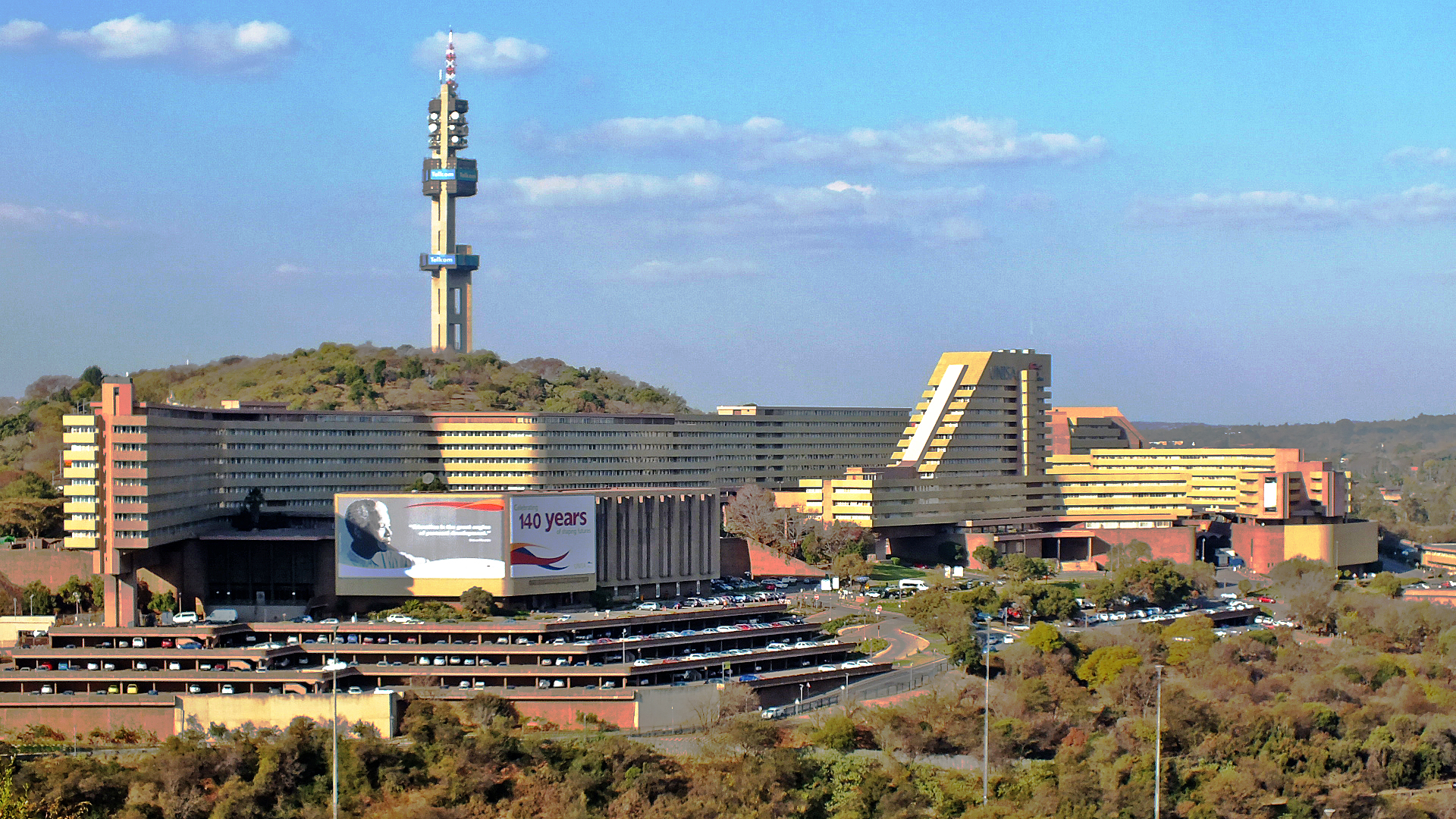
Choosing the right qualification is a significant step toward shaping your future career. For prospective students looking at the 2026 academic year, the University of South Africa (Unisa) remains a top choice for flexible, quality higher education. As the largest open distance learning institution in Africa, Unisa provides access to a vast array of studies, from higher certificates to doctoral degrees. This guide provides a detailed overview of the unisa courses and requirements for 2026, helping you navigate your options and prepare a successful application .
Understanding what you want to study is only half the process; knowing what is required to get there is crucial. Whether you are a matriculant, a working professional looking to upskill, or someone returning to education, this article breaks down the qualifications, admission criteria, and application processes in a clear, structured way.
Why Choose to Study at Unisa in 2026?
Before diving into the specific unisa courses and requirements, it is helpful to understand what makes the institution unique. Unisa operates on an open distance e-learning (ODeL) model. This means you are not required to attend daily classes on a physical campus. Instead, you receive study materials online, engage with tutors through digital platforms, and manage your study schedule independently .
This model offers distinct advantages:
-
Flexibility: You can study from anywhere in South Africa or abroad while balancing work and family commitments.
-
Wide Range of Choices: With over 3,500 module offerings, students can find programs across many fields, including commerce, science, education, and law .
-
Affordability: Tuition fees are generally lower than traditional residential universities, and you save on travel and accommodation costs.
-
Support Systems: Despite being a distance learning institution, Unisa provides extensive student support through online discussion forums, regional centers, and academic guidance .
Because space in certain programs is limited, meeting the unisa courses and requirements for your chosen field does not automatically guarantee admission. The university uses a selection process to manage capacity and ensure quality .
Unisa Courses and Requirements for 2026: Qualification Levels
Unisa structures its qualifications across several levels. Your choice will depend on your previous education and career goals. Below is an exploration of the primary categories, the general unisa courses and requirements, and examples of available programs.
Higher Certificates
Higher Certificates are typically one-year programs (NQF level 5) designed to provide foundational knowledge in a specific field. They are ideal for students who may not meet the entry requirements for a full degree or diploma but wish to start their tertiary education journey. They can also act as a pathway into higher-level studies .
General Requirements:
A National Senior Certificate (NSC) with a minimum achievement level as specified per qualification (usually a pass in the language of instruction). Alternatively, a Senior Certificate (pre-2009) may be accepted.
Available Courses for 2026:
-
Higher Certificate in Accounting Sciences (98201) .
-
Higher Certificate in Criminal Justice (90006) .
-
Higher Certificate in Education (90093) .
-
Higher Certificate in Law (98751) .
-
Higher Certificate in Mathematics and Statistics (90129) .
-
Higher Certificate in Social Auxiliary Work (90011) .
Diploma Programmes
Diplomas are career-focused qualifications that usually take three years to complete. They blend theoretical knowledge with practical skills, preparing students directly for the workplace or for further advanced diploma studies .
General Requirements:
A National Senior Certificate (NSC) with a diploma endorsement, meeting the specific subject and level requirements for the chosen field.
Available Courses for 2026:
-
Diploma in Human Resource Management (98211) .
-
Diploma in Information Technology (98806) .
-
Diploma in Law (98750) .
-
Diploma in Policing (98220) .
-
Diploma in Tourism Management (98223) .
-
Diploma in Engineering (various specializations such as Civil, Mechanical, Electrical) .
Undergraduate Bachelor Degrees
Bachelor’s degrees are professional or formative qualifications (NQF level 7 or 8) that provide in-depth knowledge in a discipline. These typically take three to four years to complete and are required for most professional careers and postgraduate study .
General Requirements:
A National Senior Certificate (NSC) with a degree endorsement, meeting the specific Admission Point Score (APS) and subject requirements for the specific degree.
Available Courses for 2026:
-
College of Accounting Sciences:
-
Bachelor of Accounting Sciences in Financial Accounting (98302) .
-
Bachelor of Accounting Sciences in Taxation (98318) .
-
-
College of Business and Economics:
-
Bachelor of Commerce in Business Management (98310) .
-
Bachelor of Commerce in Human Resource Management (98307) .
-
Bachelor of Commerce in Financial Management (98306) .
-
-
College of Education:
-
Bachelor of Education in Foundation Phase Teaching (90102) .
-
Bachelor of Education in Intermediate Phase Teaching (90103) .
-
Bachelor of Education in Senior Phase and Further Education and Training Teaching (90104) .
-
-
College of Human Sciences:
-
Bachelor of Arts (99311) .
-
Bachelor of Arts in Communication Science (98051) .
-
Bachelor of Arts in Criminology (98681) .
-
-
College of Science, Engineering and Technology:
-
Bachelor of Science (General) .
-
Bachelor of Information Technology .
-
Postgraduate Studies: Honours and Postgraduate Diplomas
For students who have completed an undergraduate degree, Unisa offers a range of postgraduate certificates, diplomas, and Honours degrees. These programs deepen expertise and are often required for entry into master’s programs .
General Requirements:
An appropriate bachelor’s degree (or equivalent) with a specified minimum average pass mark. Admission is often competitive and depends on the availability of supervisors or space .
Available Courses for 2026:
-
Postgraduate Certificate in Education (PGCE) in various teaching subjects (90148) .
-
Honours degrees in various disciplines like African Languages, Economics, and Psychology .
-
Postgraduate Diploma in Accounting Sciences (98231) – often referred to as CTA1 .
Master’s and Doctoral Degrees
These are high-level research qualifications. A Master’s degree (NQF level 9) involves coursework and a dissertation or a full research dissertation. A Doctorate (NQF level 10) requires a thesis that makes a significant original contribution to knowledge .
General Requirements:
-
Master’s: A relevant Honours degree or a postgraduate diploma. You must submit a research outline that aligns with the university’s research focus areas .
-
Doctoral: A relevant Master’s degree. You must demonstrate the ability to conduct independent research.
Important Notes for 2026:
-
Applications for Master’s and Doctoral qualifications typically open from 2 September to 21 November 2025 .
-
You may only apply for one qualification at this level. Ensure you meet the strict requirements before applying .
-
For the College of Science, Engineering and Technology, you may need a letter of permission from the department before submitting your application .
The Application Process for 2026
Understanding the process is just as important as knowing the unisa courses and requirements. For the 2026 academic year, applications are strictly online.
Key Dates to Remember
-
Undergraduate Qualifications (Higher Certificate, Diploma, Degree): Applications open August 2025 and close October 2025 .
-
Honours Degrees & Postgraduate Diplomas: Applications open August 2025 and close October 2025 .
-
Master’s & Doctoral Qualifications: Applications open 2 September 2025 and close 21 November 2025 .
-
Late Applications: Some undergraduate qualifications may reopen for late applications between November and December 2025, but spaces are very limited .
How to Apply
-
Visit the Official Website: Go to the Unisa official website (www.unisa.ac.za) .
-
Check Your Qualification: Verify that you meet the specific unisa courses and requirements for your chosen program.
-
Prepare Your Documents: Scan the following documents (PDF format, under 2MB):
-
A copy of your school qualifications (e.g., NSC).
-
A copy of your ID or valid passport.
-
If you completed tertiary studies elsewhere, you need your official academic record.
-
For international students, a SAQA evaluation may be required .
-
-
Pay the Application Fee: A non-refundable fee of approximately R140.00 is required .
-
Apply Online: Create an account (or log in), fill in the application form, and upload your documents.
-
Accept Your Offer: If successful, Unisa will send you an offer. You must accept it within the given time frame to secure your place .
Selection and Admission
It is important to note that meeting the minimum unisa courses and requirements does not guarantee a space. Unisa uses a selection process because the number of applications often exceeds available spaces. They assess your final marks and your academic history. If you are applying for a postgraduate program, the viability of your research proposal and supervisory capacity are also considered .
Conclusion
The range of unisa courses and requirements for 2026 reflects the university’s commitment to providing accessible, diverse, and high-quality education. Whether your goal is to enter the workforce with a diploma in Tourism Management, teach the next generation with a Bachelor of Education, or contribute to research with a Master’s in Economics, Unisa offers a pathway.
Success lies in preparation. Review the admission requirements carefully, gather your documents early, and submit your online application before the closing dates. By doing so, you take a decisive step toward achieving your academic and professional goals with one of the most flexible and respected institutions in Africa.
Frequently Asked Questions (FAQs)
1. Can I apply for more than one course?
Yes, for undergraduate qualifications, you may apply for a maximum of three qualifications, ranking them in order of preference. For Master’s and Doctoral qualifications, you may only apply for one .
2. Does Unisa require matric?
For most higher certificates, diplomas, and degrees, a National Senior Certificate (Matric) or equivalent is required. Unisa also offers Recognition of Prior Learning (RPL) in some cases for mature students who do not meet the formal requirements .
3. What is the application fee for 2026?
The online application fee is approximately R140.00 and is non-refundable .
4. Is Unisa recognized internationally?
Yes, Unisa is a reputable, accredited university, and many of its qualifications are recognized internationally. However, if you plan to work in another country, it is always advisable to check the specific professional registration requirements in that country .
5. How will Unisa communicate with me?
Unisa communicates primarily via email. It is vital to provide a valid email address and cellphone number and to check your messages regularly. If you are a previous student, they will use your myLife email address
Read Also
- How to apply to study Nursing Courses at UNISA
- University of the Witwatersrand (Wits) List Of courses and requirements
- Stellenbosch University Courses and Requirements
- University of Pretoria Courses Offered and Entry Requirements
