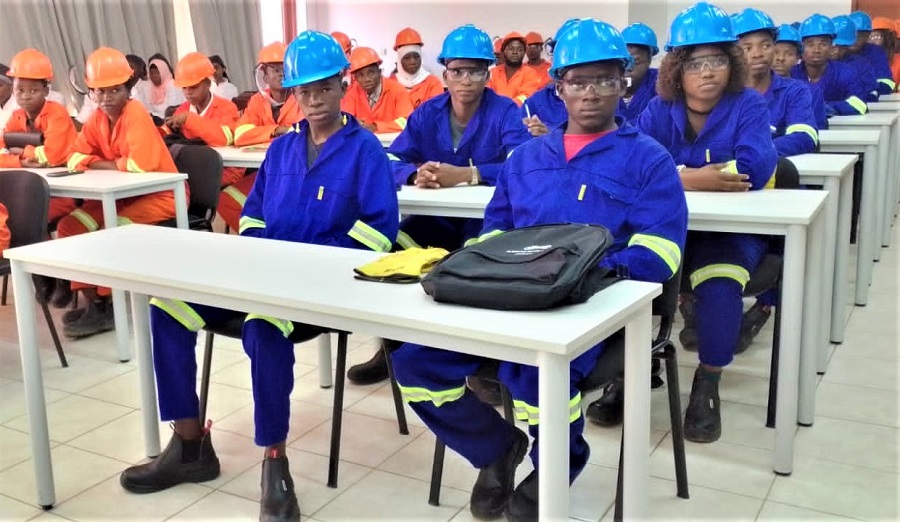
The global employment landscape is undergoing a significant transformation. As economies digitize and industries adopt stricter quality standards, the demand for a technically proficient workforce has never been higher. For students enrolled in Technical and Vocational Education and Training (TVET) colleges, the bridge between theoretical classroom knowledge and actual workplace demands is TVET Work-Based Internship Opportunities 2026.
These internships, often referred to as work-integrated learning (WIL) or experiential training, are more than just a line on a resume. They represent a critical phase in a student’s educational journey, designed to produce competent, confident, and industry-ready professionals. In 2026, the availability of these opportunities is expanding, driven by collaborations between educational institutions, private sector companies, and government bodies who recognize that a skilled technical workforce is essential for sustainable economic growth .
This guide provides a detailed overview of what these opportunities entail, why they are vital for your career, and how you can position yourself as a strong candidate in this competitive landscape.
Why Apply for TVET Work-Based Internship Opportunities 2026?
For many TVET students, the question isn’t just about finding a job—it’s about proving competency. In most TVET systems, completing a practical work component is a mandatory requirement to obtain a diploma or national certificate. However, the benefits of securing one of these internships extend far beyond graduation requirements.
Fulfilling Academic Requirements
The most immediate reason to apply is to complete your qualification. Programmes like the N6 National Diploma in South Africa, for example, require students to complete a specified period of practical work experience—often 12 to 18 months—after finishing their theoretical studies . Without this experiential training, the qualification remains incomplete. TVET Work-Based Internship Opportunities 2026 are specifically designed to place you in a real-world environment where you can log the required hours and complete your logbook, paving the way for your final certification.
Acquiring Industry-Specific Precision Skills
Classroom learning provides the foundation, but the workplace provides the nuance. Modern industries are moving toward precision-based manufacturing and service delivery. Initiatives like the Precision Quality Internship (PQI) in Ghana highlight a growing trend: industries need technicians who understand documentation integrity, AI-assisted quality assurance, and process discipline . By participating in a 2026 internship, you move from learning “how” to do something to understanding “why” it must be done to a specific standard. You learn to work with the machinery, software, and interpersonal dynamics that you cannot replicate in a college workshop.
Building a Professional Network
Internships serve as an extended job interview. By spending several months within a company, you have the opportunity to demonstrate your work ethic, reliability, and technical abilities directly to potential employers. Many companies, such as those in the automotive and agricultural sectors, use these programmes as a primary recruitment pipeline . The colleagues and mentors you work with during your placement can become valuable professional references and contacts for the rest of your career.
Understanding TVET Work-Based Internship Opportunities 2026
The structure of work-based learning varies depending on the industry, the specific qualification, and the partnership between the college and the employer. For the 2026 cycle, several distinct models are prevalent across different regions.
The Work Integrated Learning (WIL) Model
WIL is a structured educational approach that integrates academic study with productive work experience. It is a tripartite agreement involving the student, the employer, and the educational institution. In many cases, specific government gazettes or SETA (Sector Education and Training Authority) agreements fund these placements to ensure students receive a stipend while gaining experience .
For instance, agricultural graduates in South Africa can participate in programmes facilitated by AgriSETA. These placements are specifically for students who have completed their N6 in Farming Management and need practical hours to graduate. They are not general work experience but are tied directly to the curriculum .
The Experiential Trainee Model in Corporate Settings
Large corporations, particularly in manufacturing and healthcare, often run structured experiential trainee programmes. Companies like Volkswagen Group South Africa offer 18-month contracts for TVET graduates in fields like Business Management, Financial Management, and Office Management . These programmes are highly structured, often including orientation sessions, rotation through different departments, and mentorship from experienced staff. The goal is to provide a solid foundation from which trainees can launch their careers.
Sector-Specific Opportunities
In 2026, there is a noticeable increase in niche opportunities. For example, the healthcare sector requires TVET students for administrative and environmental health roles within hospital networks . Similarly, the public sector offers opportunities for graduates with qualifications in tourism or hospitality to complete their practicals within local municipalities . These roles are critical because they expose students to the specific regulatory and operational standards of their chosen field.
Key Components of a Quality 2026 Internship
Not all internships are created equal. As you search for TVET Work-Based Internship Opportunities 2026, it is helpful to understand what constitutes a high-quality placement. International standards, such as those promoted by the International Labour Organization (ILO), suggest that effective work-based learning includes several key features .
Structured Mentorship and Supervision
A quality internship ensures that you are not just an extra pair of hands but a learner. This requires a dedicated supervisor or mentor within the company who is responsible for guiding you, explaining processes, and providing feedback. The best programmes train these mentors to ensure they can effectively transfer knowledge. You should expect regular check-ins where your progress against the learning outcomes outlined by your college is reviewed.
Alignment with Curriculum
The tasks you perform must relate directly to your field of study. A financial management student should be processing invoices or assisting with bookkeeping, not solely making coffee or filing unrelated documents. The pilot programmes in Bangladesh demonstrated that when industries pre-screen students and align training with real tasks—such as quality control or maintenance in a cement factory—the outcomes for both the student and the employer improve significantly .
Fair Compensation and Decent Work Conditions
While the primary goal is learning, financial strain can derail a student’s ability to complete their internship. Many government-funded and corporate programmes in 2026 offer stipends to cover transport and meal costs . Furthermore, the workplace must be safe. The ILO emphasizes that WBL programmes should uphold safety and “decent work” standards, ensuring that young people are not exploited but are instead developed in a healthy environment .
How to Secure a Placement in 2026
The application process for these internships can be competitive. As industries increasingly rely on interns to fill skills gaps, they are also becoming more selective. Here is how you can improve your chances.
Ensure Your Documentation is Complete
This is the most basic yet most critical step. Applications often close on specific dates—such as the AgriSETA closing date of 27 February 2026 or the Garden Route deadline of 6 February 2026 . Missing these deadlines is the fastest way to be disqualified.
-
Certified Copies: Have certified copies of your ID, N6 certificate, and academic transcripts ready.
-
Application Forms: Use the correct forms. In some public service contexts, only the latest Z83 form is accepted .
-
Proof of Registration: Some programmes require a letter from your TVET college stating that the work placement is required to graduate.
Highlight Soft Skills
Technical skills get you the interview, but soft skills get you the job. Employers are explicitly looking for communication, teamwork, and professional attitude. Feedback from industry partners in Bangladesh noted that students who had undergone pre-attachment training in digital literacy and workplace etiquette adapted faster and were more likely to be retained . In your cover letter or interview, provide specific examples of how you have worked in a team, solved a problem, or communicated effectively.
Research the Industry Partner
Understanding the company you are applying to is essential. If you are applying to a manufacturing plant like BSRM or a hospital group like Joint Medical Holdings, know what they do, who their clients are, and what their core values are . Tailor your application to explain why you want to work specifically for them and how your N6 qualification in Environmental Health or Electrical Engineering makes you a good fit for their operations.
The Future of TVET and the Role of AI
Looking ahead at TVET Work-Based Internship Opportunities 2026, one cannot ignore the growing influence of technology. There is a common fear that automation and Artificial Intelligence (AI) will replace technical jobs. However, industry leaders suggest the opposite: AI will augment the skilled technician’s role.
AI as a Tool, Not a Replacement
Technicians who understand how to work alongside AI will be in high demand. In manufacturing, AI is used for predictive maintenance—telling a technician when a machine is likely to fail. In quality assurance, AI-powered cameras can spot defects invisible to the human eye. Your internship in 2026 is the perfect time to learn how these tools work. As Dr. David Boison noted, AI does not replace foundational skill; it amplifies it . A technician who can weld and also calibrate an AI-assisted welding robot is exponentially more valuable than one who can only do the former.
The Demand for Systems Thinking
Future technicians need “systems awareness.” This means understanding how your specific task fits into the larger production line or business process. Internships that rotate you through different departments—like the civil engineering students who moved between quality, maintenance, and production—build this intellectual agility . When applying for 2026 opportunities, look for programmes that promise this kind of holistic exposure rather than a single, repetitive task for six months.
TVET Work-Based Internship Opportunities 2026 represent a significant stepping stone from the classroom to a sustainable career. They are structured pathways designed to create competent, disciplined, and industry-ready professionals. Whether it is a farming management position in Limpopo, an administrative role in a manufacturing plant in Kariega, or a precision welding apprenticeship in Accra, the underlying principle is the same: learning by doing, under the guidance of experienced mentors.