

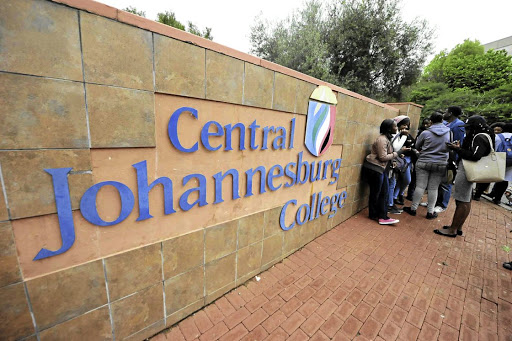
When considering vocational education in Gauteng, the Central Johannesburg TVET College list of Courses and Fees structure often emerges as a primary research point for prospective students. This public Technical and Vocational Education and Training institution operates under the Department of Higher Education and Training, serving as a crucial bridge between secondary education and the workplace or higher education pathways. With multiple campuses strategically located across Johannesburg—including Alexandra, Ellis Park, Langlaagte, Parktown, Smit Street, Riverlea, and Troyeville—the college provides accessible training to thousands of students annually.
Understanding both the educational offerings and financial requirements represents a significant step in planning your vocational journey. This comprehensive guide details available programmes, explains the fee framework, and provides practical information to help you navigate your options at one of Johannesburg’s prominent TVET institutions.
Why Consider Studying at Central Johannesburg TVET College?
Before examining specific programmes and costs, it helps to understand what distinguishes this institution within South Africa’s educational landscape.
Practical Skills Development
The college emphasizes hands-on learning that translates directly to workplace competencies. Unlike purely theoretical academic programmes, CJC courses integrate practical workshops, simulations, and industry-relevant projects that prepare students for specific roles in various economic sectors.
Industry-Relevant Qualifications
Programmes align with South Africa’s National Qualifications Framework (NQF) and undergo regular review to ensure they meet current industry standards. This alignment means employers recognize and value these qualifications, potentially improving graduate employment prospects.
Multiple Entry and Exit Points
The college’s programme structure allows for flexibility. Students can enter with varying academic backgrounds, and qualifications often provide multiple pathways—entering the workforce after completion or articulating to higher education institutions for further study.
Supportive Learning Environment
With smaller class sizes than many universities, students often receive more individualized attention. The college also provides additional academic support, career guidance, and student services to help learners succeed both during and after their studies.
Understanding Programme Types: NATED vs. NC(V)
Central Johannesburg TVET College offers two primary qualification streams, each with distinct structures, durations, and purposes. Understanding these differences will help you select the most appropriate path for your career goals.
NATED Programmes (Report 191 Programmes)
NATED (National Accredited Technical Education Diploma) programmes, traditionally known as Report 191 programmes, follow a trimester system with three intakes annually. These programmes typically combine theoretical learning with mandatory practical experience.
Structure and Progression
-
N4-N6 Certificates: Students complete theoretical components at college
-
In-Service Training: After N6, students undertake 18-24 months of industry work experience (depending on the field)
-
National Diploma: Awarded after successful completion of both theoretical and practical components
Typical Duration: 3-4 years total (including in-service training)
NC(V) Programmes (National Certificate Vocational)
NC(V) programmes follow a more traditional academic calendar with semester systems. These qualifications emphasize applied competence and integrate theory and practice throughout the studies.
Structure and Progression
-
Levels 2-4: Corresponding roughly to Grade 10-12 equivalents but with vocational specialization
-
Integrated Approach: Each level combines fundamental subjects, vocational subjects, and practical application
-
Workplace Experience: Incorporated throughout the programme rather than as a separate phase
Typical Duration: 3 years full-time
Central Johannesburg TVET College List of Courses and Fees Structure
Now let’s examine the specific programmes offered across the college’s campuses, followed by a detailed explanation of the associated costs.
Business Studies Programmes
The Business Studies faculty offers preparation for administrative, managerial, and entrepreneurial roles across various sectors.
NATED Business Studies (N4-N6)
-
Business Management: Focuses on entrepreneurship, operations, and general management principles
-
Financial Management: Covers accounting, taxation, cost and management accounting, and auditing
-
Human Resource Management: Includes labour relations, personnel management, and training practice
-
Marketing Management: Encompasses sales management, marketing communication, and consumer behaviour
-
Public Management: Prepares for public sector administration and governance roles
Campuses: Primarily offered at Parktown Campus
NC(V) Business-Related Programmes
-
Finance, Economics and Accounting (Levels 2-4)
-
Office Administration (Levels 2-4)
-
Marketing (Levels 2-4)
Campuses: Langlaagte Campus
Engineering Studies Programmes
Engineering programmes develop technical skills for industries including manufacturing, construction, and maintenance.
NATED Engineering Studies (N4-N6)
-
Civil Engineering: Building construction, roadworks, and structural principles
-
Electrical Engineering: Heavy current (power systems) and light current (electronics, instrumentation)
-
Mechanical Engineering: Fitting and machining, motor/diesel trade, welding
Campuses: Alexandra, Ellis Park, and Riverlea Campuses
NC(V) Engineering Programmes
-
Civil Engineering and Building Construction (Levels 2-4)
-
Engineering and Related Design (Levels 2-4)
Campuses: Ellis Park and Alexandra Campuses
Hospitality and Tourism Programmes
These programmes prepare students for the dynamic service industry with both practical skills and theoretical knowledge.
NATED Hospitality and Tourism
-
Hospitality and Catering Services (N4-N6)
-
Travel and Tourism (N4-N6)
NC(V) Hospitality Programme
-
Hospitality (Levels 2-4)
Campuses: Smit Street Campus (Hospitality), Riverlea Campus (Travel and Tourism)
Information Technology and Computer Science
IT programmes address the growing demand for digital skills across all economic sectors.
NC(V) Information Technology Programme
-
Information Technology & Computer Science (Levels 2-4)
Campuses: Troyeville Campus
Other Programmes
Creative Industries
-
Art and Design (NATED)
-
Studio Work (NATED)
Campuses: Smit Street Campus
Primary Agriculture (NC(V))
-
Primary Agriculture (Levels 2-4)
Campuses: Alexandra Campus
Detailed Fees Structure and Financial Information
Understanding the cost of education involves more than just tuition fees. This section breaks down the financial considerations for prospective CJC students.
Tuition Fees for 2026 Academic Year
Important Note: The following figures represent estimated ranges based on historical data and similar TVET college fees. Always confirm exact fees directly with the college before applying.
NATED Programme Fees (Per Subject Per Trimester)
-
Engineering Subjects: R600 – R1,500 per subject
-
Business Subjects: R800 – R1,800 per subject
-
Hospitality/Tourism Subjects: R700 – R1,600 per subject
A typical trimester load of 4 subjects would therefore range between R2,400 and R7,200 per trimester.
NC(V) Programme Fees (Annual)
-
Business Programmes: R8,000 – R15,000 per year
-
Engineering Programmes: R10,000 – R18,000 per year
-
Hospitality Programmes: R9,000 – R16,000 per year
-
IT Programmes: R9,000 – R17,000 per year
Additional Costs to Consider
Registration Fee
A non-refundable administration fee payable annually upon registration (typically R200-R500).
Textbooks and Study Materials
Depending on your programme, you might need to budget R1,500 – R4,000 annually for textbooks, stationery, and other learning materials.
Practical/Workshop Fees
Some programmes, particularly engineering and hospitality, may require additional fees for materials used in practical sessions (approximately R500 – R2,000 annually).
Examination Fees
Generally included in tuition, but re-examination or supplementary examination fees may apply (typically R150 – R400 per subject).
Payment Options and Schedules
The college typically requires:
-
Minimum Initial Payment: 40-50% of tuition fees upon registration
-
Payment Plans: Balance payable in monthly installments over the academic period
-
Payment Methods: Bank deposits, electronic transfers, or debit/credit card payments (where facilities exist)
Financial Assistance Options
NSFAS Bursaries
The National Student Financial Aid Scheme provides comprehensive funding for qualifying students, covering tuition, accommodation, transport, and living expenses. Eligibility depends on household income and academic progress.
College Payment Plans
For students not qualifying for NSFAS, the college offers structured payment plans to distribute costs across the study period.
External Bursaries and Scholarships
Some industries and corporations offer bursaries for students in specific fields, particularly engineering and IT. The college’s student support services can provide information about available opportunities.
The Central Johannesburg TVET College list of Courses and Fees structure provides a framework for vocational education that balances theoretical knowledge with practical application. With programmes spanning business, engineering, hospitality, IT, and creative fields, the college offers multiple pathways to skill development and career preparation.
Read Also
- Capricorn TVET College Courses and Fees
- Buffalo City TVET College Online Application
- Courses Offered at Buffalo City TVET College and Fees Structure
- Boland TVET College List of Courses and Fee Structure
