Category: Universities

  • Ekurhuleni West TVET College Fee Structure 2026

    Ekurhuleni West TVET College Fee Structure 2026

    Ekurhuleni West TVET College stands as a cornerstone of technical and vocational education in South Africa’s Gauteng province. For over two decades, this public institution has been transforming lives and building futures through practical, career-focused education. Established in 1999 and regulated under the FET Colleges Act, EWC operates across six campuses in Alberton, Boksburg, Germiston, Kathorus, Kempton Park, and Tembisa, serving diverse communities with a commitment to excellence.

    The college has built a remarkable track record, currently boasting a 98% success rate across its programs and having empowered more than 15,000 active learners. This achievement reflects the institution’s dedication to providing quality education that meets industry demands, preparing students not just with theoretical knowledge but with the practical skills employers genuinely seek. Under the leadership of Principal Mr. Molifi Mabe, EWC continues to evolve as a beacon of vocational training, adapting its offerings to the changing needs of both students and the South African economy.

    As you consider your educational pathway for 2026, understanding the Ekurhuleni West TVET College Fee Structure 2026 becomes essential. This comprehensive guide will walk you through everything you need to know about costs, payment options, and financial planning for your studies. Whether you’re interested in engineering, business studies, hospitality, or one of the many other programs EWC offers, having clarity on financial commitments upfront will help you make informed decisions about your future.

    Ekurhuleni West TVET College Fee Structure

    Why Choose Ekurhuleni West TVET College?

    When evaluating educational institutions, prospective students consider numerous factors beyond just curriculum. Ekurhuleni West TVET College distinguishes itself through several compelling advantages that contribute to its growing reputation and student success.

    Industry-Aligned Curriculum and Programs

    EWC offers a comprehensive range of programs designed with direct input from industry professionals. The curriculum spans three main faculties: Business Studies, Engineering Studies, and Utility Studies, with each containing specialized qualifications from National Certificate Vocational (NCV) levels 2-4 to post-matric N4-N6 programs. What makes these programs particularly valuable is their practical orientation and focus on employable skills. Rather than emphasizing purely theoretical knowledge, EWC courses incorporate hands-on training, workshops, and real-world applications that prepare graduates to step directly into their chosen fields with confidence and competence.

    The college has demonstrated its commitment to excellence through consistent performance in skills competitions. Recently, EWC students delivered a stellar performance at the World Skills Gauteng Provincial competition, showcasing the caliber of training they receive. Additionally, the college’s innovative outreach initiatives, like the “Open Bus Blitz” campaign and “Try a Skill Career Fair” in partnership with the Gauteng Department of Education, reflect its proactive approach to connecting students with opportunities.

    Comprehensive Support Services and Facilities

    Beyond academics, EWC provides students with robust support systems that contribute to their overall success and development. The college boasts state-of-the-art facilities including modern laboratories, workshops, computer centers, and libraries specifically tailored to vocational training needs. These resources ensure that students have access to the tools and technologies they’ll encounter in professional environments, creating a seamless transition from classroom to workplace.

    Student support extends to academic guidance, career counseling, and wellness services that address the holistic needs of learners. With a diverse student body and multiple campus locations, EWC has developed systems to help students navigate both academic challenges and personal development. The college’s 20+ years of experience in technical education means it has refined its support mechanisms based on understanding the unique needs of TVET students, particularly those who might be first-generation tertiary education participants.

    Strong Industry Connections and Employment Pathways

    Perhaps one of the most significant advantages of studying at EWC is the institution’s established relationships with employers and industry partners. These connections facilitate workplace experience opportunities, internships, and potential employment pathways for graduates. The college’s emphasis on producing “industry-ready” professionals means that employers recognize EWC qualifications as signals of practical competence and workplace readiness.

    The growing demand for technically skilled professionals in South Africa’s economy makes TVET qualifications increasingly valuable. EWC graduates enter fields with tangible skill shortages, positioning them favorably in the job market. Whether pursuing careers in electrical engineering, business management, hospitality, or information technology, students benefit from the college’s reputation and the practical orientation of their studies.

    Understanding the Ekurhuleni West TVET College Fee Structure 2026

    As you plan your educational journey for 2026, gaining a clear understanding of the Ekurhuleni West TVET College Fee Structure 2026 is crucial for effective financial planning. The college’s fee system comprises several components that together constitute the total cost of your studies.

    Components of the Fee Structure

    The comprehensive fee structure at EWC encompasses various elements designed to cover all aspects of your educational experience:

    • Application Fees: A non-refundable fee paid when submitting your application for admission.

    • Acceptance Deposit: A confirmation payment required to secure your place in a program once accepted.

    • Tuition Fees: The primary cost covering instruction, which varies significantly depending on your chosen program and level of study.

    • Accommodation Fees: For students utilizing college residence facilities (where available).

    • Miscellaneous Fees and Levies: Additional charges for specific services, facilities, or administrative functions.

    • Examination Fees: Costs associated with formal assessments and certification.

    • Resource and Material Fees: Charges for specialized equipment, software, or materials required for practical components of your program.

    It’s important to understand that tuition fees specifically cover registration, classes, tutorials, laboratory sessions, standard examinations, library access, compulsory personal accident insurance, and access to general sporting facilities. For programs with clinical or specialized practical components, additional fees may apply for these specific instructional elements.

    How Program Choice Affects Costs

    Your selection of program and qualification level represents the most significant factor influencing your total educational costs at EWC. The college offers diverse pathways across its faculties, each with different resource requirements and associated fees.

    Table: Sample Program Fee Variations at EWC (Estimates Based on Previous Years)

    Program Faculty Qualification Level Primary Cost Factors Approximate Fee Range (Annual)
    Engineering Studies NCV Level 2-4 Specialized equipment, laboratory usage, materials R12,000 – R18,000
    Engineering Studies N3-N6 (Post-Matric) Advanced technical resources, workshop requirements R14,000 – R20,000
    Business Studies NCV Level 2-4 Standard classroom resources, software licenses R10,000 – R15,000
    Business Studies N4-N6 (Post-Matric) Specialized business software, case materials R12,000 – R16,000
    Utility Studies NCV Level 2-4 Practical training materials, venue requirements R11,000 – R16,000

    Engineering programs typically involve higher costs due to the specialized equipment, materials, and laboratory facilities required for hands-on training. In contrast, business programs may have lower direct resource costs but could include fees for specialized software or examination materials. Utility studies encompassing hospitality, tourism, and education programs often fall somewhere in between, with costs driven by practical training components and venue requirements.

    Additional Financial Considerations

    Beyond the direct educational costs, prospective students should account for several ancillary expenses when budgeting for their studies:

    • Learning Materials: While tuition includes access to essential resources, students often need to budget for additional textbooks, stationery, electronic devices, or specialized tools related to their field of study.

    • Personal Expenses: Daily costs including meals (if not in residence), transportation between home and campus, communication expenses, and personal supplies should be factored into your overall budget.

    • Residence Costs: For students opting to live in college accommodation (where available), residence fees will constitute a significant portion of annual expenses. These typically include accommodation, utilities, and sometimes meal plans.

    • Financial Administration: Be aware of potential administrative fees for payment plans, late payments, or special services. The college may charge interest on overdue accounts, making timely payment financially advantageous.

    Detailed Breakdown of the 2026 Fee Structure

    While the exact figures for the Ekurhuleni West TVET College Fee Structure 2026 will be officially released closer to the application period, we can provide a detailed framework based on current structures and historical patterns. Understanding how fees are organized will help you anticipate costs and plan accordingly.

    Read Also

  • Ekurhuleni East TVET College Fee Structure 2026 – Complete Guide

    Ekurhuleni East TVET College Fee Structure 2026 – Complete Guide

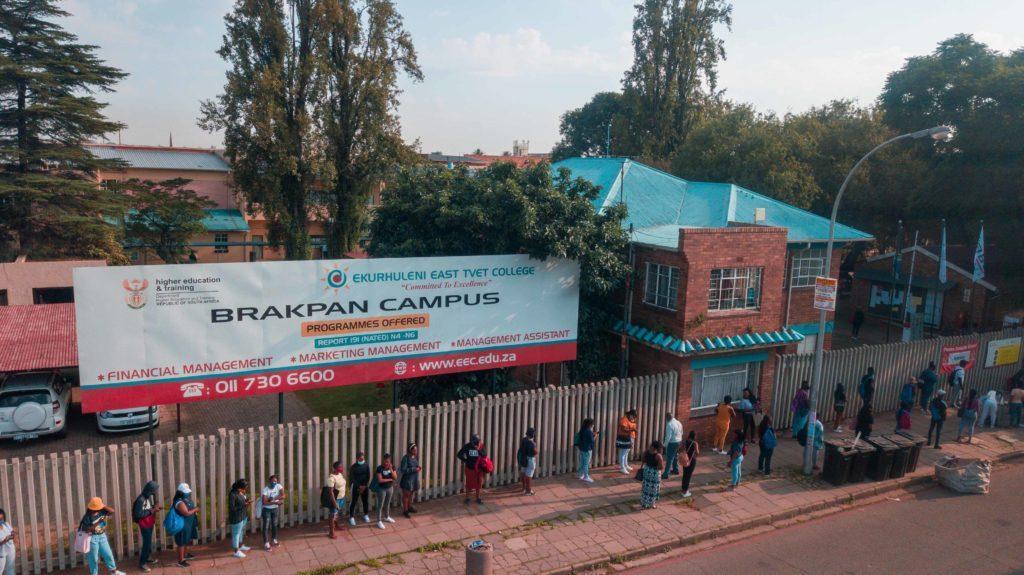
    Choosing the right educational path is a significant decision, and understanding the financial commitment involved is a crucial first step. For prospective students of Ekurhuleni East TVET College (EEC), getting a clear picture of the costs for the upcoming academic year is essential for effective planning. The Ekurhuleni East TVET College Fee Structure 2026 outlines the investment required to gain industry-aligned skills in fields like engineering, business, and hospitality. While the official, detailed fee schedule for 2026 is typically released by the college closer to the enrollment period, this guide provides a comprehensive overview based on the existing framework, available funding opportunities, and practical advice for financial planning. By breaking down what to expect, this article aims to demystify the costs and highlight the avenues for support, ensuring you can focus on your studies and career goals with greater confidence.

    Why Choose Ekurhuleni East TVET College for Your Studies?

    Ekurhuleni East TVET College has established itself as a prominent institution within South Africa’s Technical and Vocational Education and Training (TVET) sector. It operates with a clear mission: to deliver vocational education and skills development that produces industry-ready graduates. The college’s strength lies in its practical, hands-on approach to learning, which is designed to meet the direct needs of the national and local job markets. Unlike purely theoretical pathways, EEC’s programmes are built around the application of knowledge, ensuring that students graduate not just with a certificate, but with demonstrable competencies that employers value.

    Industry-Ready Programmes and Specialisations

    The college offers a wide array of qualifications through its National Certificate (Vocational) [NCV] and Report 191 (NATED) programmes. These are structured across three primary faculties: Engineering Studies, Business Studies, and Creative & Social Services. For instance, within Engineering, students can specialise in critical areas such as Civil Engineering and Building Construction, Electrical Infrastructure Construction, or Engineering and Related Design, which includes fields like fitting and turning or boilermaking. The Business Studies faculty covers essential sectors like Finance, Economics & Accounting, Management, Marketing, and Office Administration. This diversity allows students to align their education with specific career aspirations, from becoming an artisan or a technician to stepping into roles in management, tourism, or information technology.

    A Foundation for Further Growth

    Qualifying from EEC is more than an endpoint; it’s a launchpad. The college’s programmes are designed to facilitate both immediate entry into the workforce and further academic progression. The practical experience and theoretical foundation gained provide a solid base for students who may wish to pursue advanced diplomas or degrees later, often with credits for their TVET qualifications. Furthermore, the college’s focus on real-world skills means that students develop a professional mindset from day one, preparing them for the demands and dynamics of modern workplaces.

    Understanding the Ekurhuleni East TVET College Fee Structure 2026

    Planning your education budget requires a detailed look at the cost components. The Ekurhuleni East TVET College Fee Structure 2026 will encompass several key elements. It is vital to note that while the exact Rand values for 2026 are pending official publication, the structure and categories of fees are consistent year-on-year, allowing for informed estimation and planning.

    Primary Components of TVET College Fees

    Tuition fees form the core of the cost, covering the instruction for your chosen programme. These fees can vary significantly depending on the field of study. Generally, engineering and other programmes requiring specialised workshops, tools, and materials may have higher associated costs compared to business theory courses. Beyond tuition, students should budget for additional mandatory costs. A registration fee is typically payable at the start of the academic year or trimester. Most colleges also charge for a student card, which is essential for campus access and services. For many NCV programmes, the quoted fee is often inclusive, covering tuition, textbooks, essential learning materials, and in some cases, protective clothing for certain engineering fields. It is always best to confirm what is included in your specific programme fee.

    Estimated Fee Ranges Based on Programme Type

    To aid in financial planning, the following table provides estimated fee ranges for different programme types at TVET colleges. These figures are extrapolated from available public data on similar institutions and previous years to give a realistic financial picture for planning your 2026 studies.

    Programme Category Estimated Annual Fee Range (Full-Time) Common Included Items Notes
    Business Studies (NCV Levels 2-4) R 54,000 – R 64,000 Tuition, textbooks, learning materials Fees for Marketing and Office Administration tend to be on the lower end of this spectrum.
    Engineering Studies (NCV Levels 2-4) R 83,000 – R 110,000 Tuition, textbooks, learning materials, protective clothing (Level 2) Mechatronics and Engineering & Related Design are often among the higher-cost streams.
    Report 191 (NATED) Programmes Per Subject, Per Trimester Tuition for the subject Fees are calculated per subject. Engineering subjects (N4-N6) may cost approximately R 690+ per subject, while Business subjects may be around R 880+ per subject for full-time study.

    Payment Terms and Important Financial Policies

    Understanding the payment schedule is as important as knowing the fees. Colleges usually have strict policies to ensure fees are settled. A standard requirement is that all outstanding fees from the previous year must be cleared before a student can enroll for the new academic year. For new students, payment is often required in installments. A common structure involves paying a non-refundable deposit upon registration (which is then deducted from the total fee), with the balance payable before the commencement of final examinations. For students enrolling in only one or two subjects, full payment upfront is typically required. It is crucial to view the official 2026 fee structure document from EEC when it is released to confirm the exact amounts, due dates, and payment methods accepted.

    Financing Your Future: Bursaries and Financial Aid for 2026

    A key message for all prospective students is that the upfront cost of a programme should not be a barrier to education. Several financial support mechanisms are available, and applying for them should be a top priority in your planning process.

    National Student Financial Aid Scheme (NSFAS)

    The National Student Financial Aid Scheme (NSFAS) is the primary source of government funding for eligible TVET college students. NSFAS provides comprehensive bursaries that cover tuition, registration, accommodation, transport, learning materials, and a personal care allowance. For the 2026 academic year, the application cycle is already open, with a critical deadline of 15 November 2025. All applications must be submitted through the official myNSFAS portal at www.nsfas.org.za. It is imperative to prepare certified copies of your ID, your parents’ or guardians’ IDs, and proof of income early. Remember, NSFAS applications are free, and you should never pay anyone to assist you with the application.

    Specialised Bursary: The Services SETA Opportunity

    In addition to NSFAS, sector-specific bursaries offer vital support. A significant opportunity for EEC Business Studies students is the Services SETA Bursary for 2026. This bursary is valued at up to R80,000 and is specifically targeted at unemployed students registered for Business courses who are not receiving NSFAS or any other funding. It covers tuition, registration, accommodation, a living allowance, learning materials, and a once-off laptop provision. The application process for this bursary is handled directly through the EEC campus Financial Aid Offices, and the closing date is 29 January 2026. This represents a critical avenue for students who may not qualify for NSFAS but still require financial assistance.

    Proactive Steps to Secure Funding

    • Apply Early: Treat bursary applications with urgency. Submitting well before the deadline avoids last-minute technical issues and shows professionalism.
    • Documentation: Have all your supporting documents—certified ID copies, proof of registration, affidavits (for unemployment), and fee statements—prepared and organized.
    • Direct Contact: For college-specific bursaries or queries, always communicate directly with the EEC Financial Aid Office. They provide the most accurate and current information.
    • Beware of Scams: Be vigilant against fraud. You should never be asked to pay a fee to apply for admission or a legitimate bursary. All official communication will come through college channels or the NSFAS website.

    Navigating the Ekurhuleni East TVET College Fee Structure 2026 is the first major step in your educational journey. While the specific figures are forthcoming, the framework for costs and funding is clear and manageable with careful planning. Start by identifying your preferred programme and use historical estimates to model a budget. Immediately thereafter, focus your energy on securing funding by marking the NSFAS (15 November 2025) and Services SETA (29 January 2026) deadlines in your calendar and preparing your applications.

    Read Also

  • Ekurhuleni East TVET College Courses Offered and Requirement 2026 | Full Guide

    Ekurhuleni East TVET College Courses Offered and Requirement 2026 | Full Guide

    Ekurhuleni East TVET College Courses offered and requirement 2026 represent a critical pathway for students and working professionals across Gauteng aiming to build tangible, in-demand skills. As a cornerstone of the Technical and Vocational Education and Training (TVET) sector in South Africa, the college has built a strong reputation for aligning its curriculum with the economic and industrial pulse of the region. Each academic year brings refined programs designed to meet both national standards and local employment needs. Understanding the full scope of what is available, and precisely what is needed to gain entry, is the essential first step in planning your educational future. This comprehensive guide delves into the specifics of the 2026 academic offerings, moving beyond simple lists to explain the structure, potential career trajectories, and the logical reasons behind each admission prerequisite.

    Introducing Ekurhuleni East TVET College

    Ekurhuleni East TVET College (EEC) operates as a significant public institution within the Gauteng province’s educational landscape, with campuses strategically located in towns like Benoni, Brakpan, Daveyton, and Springs. The college’s mandate extends far beyond traditional academic learning; it functions as an engine for practical skills development. By focusing on vocational and occupational training, EEC directly addresses the skills gap in key sectors of the South African economy. The college environment is tailored to simulate real-world working conditions, with workshops, labs, and classroom instruction that emphasize hands-on competency. This practical approach ensures that graduates are not merely certificate holders but are work-ready individuals capable of contributing meaningfully in fields like engineering, business, and services from their first day on the job. The upcoming 2026 academic calendar continues this mission, with programs structured to respond to both current employer demands and future industry trends.

    Why Consider Studying at Ekurhuleni East TVET College?

    Prospective students evaluating their post-school options often weigh factors such as career relevance, cost, and duration of study. Ekurhuleni East TVET College presents a compelling proposition on all these fronts. Unlike purely theoretical pathways, EEC programs are inherently practical. The college maintains strong linkages with industry partners, which often inform curriculum development and can lead to critical workplace-based experience for students. This connection significantly enhances employability upon graduation. Furthermore, the financial and time investment in a TVET qualification is frequently more accessible than other tertiary routes. The courses are designed to be completed in shorter cycles, allowing students to enter the workforce more quickly with a recognized National Qualification Framework (NQF) level credential. For many school-leavers and those seeking a career change, this provides a direct and efficient route to becoming a qualified artisan, business assistant, or IT technician. The college also caters to a diverse student body, offering a supportive environment for adult learners and those who may have followed non-linear educational paths. Choosing EEC is, therefore, a strategic decision for individuals seeking focused, applied education that leads to specific vocational outcomes.

    Understanding the Framework: NCV and Report 191 Programs

    Before exploring the specific Ekurhuleni East TVET College courses offered and requirement 2026, it is vital to understand the two primary program frameworks under which they fall: the National Certificate (Vocational), or NCV, and the NATED / Report 191 programs. These are not merely different titles; they represent distinct educational approaches and entry points.

    National Certificate (Vocational) – NCV

    The NCV is a three-year, full-time program offered at Levels 2, 3, and 4, equivalent to Grades 10, 11, and 12. It is designed primarily for students who have completed Grade 9 or higher. The NCV structure is broad-based, combining fundamental subjects like Language and Mathematics with seven vocational specializations. For example, a student in NCV: Finance, Economics & Accounting will take the core vocational subjects alongside the compulsory ones, gaining a well-rounded foundation in that field. Successful completion of Level 4 grants a qualification that allows for entry into the job market or articulation to certain higher education opportunities, depending on the score achieved.

    NATED / Report 191 Programmes

    The Report 191 programs are older, legacy courses that remain highly respected and in demand, particularly for engineering studies. These are trimester-based (three academic periods per year) and follow a different progression: N4, N5, N6, followed by 18 months of in-service training. Entry typically requires a Grade 12 certificate with relevant subjects. The key differentiator is the mandatory work-integrated learning component after the theoretical N6 level. Only upon submission of a satisfactory logbook from this practical training period does the student receive the National N-Diploma. This model makes Report 191 programs intensely industry-focused, as the in-service training is a non-negotiable part of qualification.

    Ekurhuleni East TVET College Courses Offered and Requirement 2026: A Detailed Breakdown

    The portfolio of Ekurhuleni East TVET College courses offered and requirement 2026 is organized into distinct faculties or fields of study. Each field contains several specific programs under either the NCV or Report 191 framework. The requirements are not arbitrary; they are set to ensure a student has the foundational knowledge necessary to have a reasonable chance of success within the demanding vocational curriculum.

    Engineering Studies

    The Engineering faculty is often the largest and most robust in a TVET college, and EEC is no exception. It caters directly to the industrial heartland of Ekurhuleni. Programs here are rigorous and require a strong aptitude in mathematics and physical science. Report 191 Engineering Programs (N4-N6): These include Civil Engineering, Electrical Engineering, Mechanical Engineering, and Chemical Engineering. The requirement 2026 for entry at N4 is typically a National Senior Certificate (Grade 12) with passes in Mathematics, Physical Science, and English. Alternatively, a relevant NCV Level 4 certificate with specific subject passes and percentage requirements will be considered. The path involves theoretical instruction at N4-N6, after which students must secure 18 months of practical experience to qualify for the National Diploma. NCV Engineering & Related Design: At Level 2-4, this provides a foundational route for students coming from Grade 9. It covers core engineering principles and allows for specialization in areas like fabrication, welding, or drawing office practice. The requirement here is a Grade 9 certificate or higher, with a pass in Mathematics being a critical advantage.

    Business and Utility Studies

    This faculty addresses the vast need for administrative, managerial, and support personnel in every sector of the economy. Courses here blend office skills with theoretical knowledge of commercial environments. Report 191 Business Programs (N4-N6): These include Management, Marketing, Human Resource Management, Business Management, Financial Management, and Tourism. The requirement 2026 for N4 entry is a Grade 12 certificate. Specific subjects like Accounting or Business Studies may be recommended but are not always mandatory. These programs are ideal for Matriculants seeking a focused business diploma that includes practical training. NCV Business-Related Programs: Offered at Levels 2-4, these include Finance, Economics & Accounting (FEA), Office Administration, and Marketing. The entry point is Grade 9. These programs are excellent for younger students to build a comprehensive understanding of business operations over three years, preparing them for roles as bookkeepers, administrative officers, or sales assistants.

    Information Technology and Computer Science

    Reflecting the digital age, EEC offers pathways into the IT sector. These programs balance technical hardware and software knowledge with essential problem-solving skills. NCV Information Technology & Computer Science (ITC): Spanning Levels 2-4, this program covers systems analysis, data communication, network management, and software development fundamentals. A Grade 9 certificate is the base requirement, but a logical mind and comfort with technology are key assets. Graduates can pursue roles in technical support, network administration, or proceed to higher education in IT.

    Primary Agriculture, Hospitality, and Safety in Society

    These programs cater to niche but vital sectors. The Ekurhuleni East TVET College courses offered and requirement 2026 in these fields demonstrate the college’s responsiveness to diverse community and economic needs. NCV Primary Agriculture: This program teaches modern farming techniques, agribusiness, and animal production. It is crucial for food security and sustainable development. Requirement: Grade 9. NCV Hospitality: Designed for the growing tourism and service industry, it covers food preparation, guest house operations, and client services. Requirement: Grade 9. NCV Safety in Society: This unique program introduces students to the principles of policing, private security, and community safety operations. It serves as a foundation for careers in law enforcement and corporate security. Requirement: Grade 9.

    General Admission Requirements and Application Process for 2026

    While each program has specific prerequisites, some general rules apply to all applications for the Ekurhuleni East TVET College courses offered and requirement 2026 cycle. First, all applicants must have a certified copy of their latest school qualification, whether a Grade 9 report, Grade 11 report, or National Senior Certificate. A certified copy of the applicant’s ID document, and IDs of parents/guardians, is mandatory. Proof of residence and, for some funded students, relevant bursary documentation, will be required. The application process typically begins in the middle of the preceding year. Prospective students are advised to apply online via the official EEC website or to visit their nearest campus for assistance. The process involves selecting the desired course and campus, submitting all required documents, and awaiting a response. It is critical to apply early, as spaces in popular programs are limited and filled on a first-come, first-served basis. Meeting the minimum requirements does not guarantee admission but is the first necessary hurdle. Some programs may require additional screening, such as an interview or placement test, which the college will communicate to shortlisted candidates. The detailed exploration of Ekurhuleni East TVET College courses offered and requirement 2026 highlights a clear and structured pathway to vocational excellence. Whether through the foundational NCV route or the industry-intensive Report 191 path, the college provides education that is designed to translate directly into workplace competence. By understanding the frameworks, carefully reviewing the requirements for your field of interest, and preparing a meticulous application, you position yourself to take a decisive step toward a skilled and meaningful career. Ekurhuleni East TVET College stands as a bridge between academic potential and economic contribution, making its 2026 academic offerings a compelling opportunity for any aspiring professional in South Africa. Read Also
  • Ehlanzeni TVET College Fee Structure 2026: Complete Guide

    Ehlanzeni TVET College Fee Structure 2026: Complete Guide

    Ehlanzeni TVET College Fee Structure 2026 begins with understanding what the college offers and why it stands out. Located in the Mpumalanga province, Ehlanzeni TVET College is one of South Africa’s leading technical and vocational education institutions. It provides practical, industry-focused programs across multiple campuses, equipping students with skills that are in high demand in the labor market.

    The college’s curriculum is designed to blend theory with hands-on experience. From modern engineering workshops to business simulation labs, students gain real-world exposure while completing their studies. Ehlanzeni TVET College also prioritizes student support, offering career guidance, academic counseling, and pathways to higher education.

    For students planning their studies, knowing the Ehlanzeni TVET College Fee Structure 2026 is crucial. Tuition costs, registration fees, and additional program-related expenses must be considered to avoid surprises and ensure a smooth academic journey. Understanding the fee structure early allows students and parents to plan finances and access available bursaries or financial aid.

    Why Study at Ehlanzeni TVET College

    Choosing Ehlanzeni TVET College offers several benefits beyond standard classroom learning. First, the college maintains strong connections with local industries, ensuring that the skills students acquire match labor market demands. Programs in engineering, information technology, tourism, and business are designed with input from industry experts, allowing graduates to transition seamlessly into employment.

    Second, affordability is a key advantage. While universities often require substantial tuition payments, TVET colleges like Ehlanzeni provide quality vocational education at a fraction of the cost. This makes it a practical choice for school leavers, working adults, and career changers seeking technical qualifications without excessive debt.

    Third, the college fosters an inclusive and supportive environment. Students from various backgrounds can access financial aid and bursaries, while smaller class sizes encourage personalized attention. Programs also focus on both technical and soft skills, such as problem-solving, teamwork, and professional communication, which are crucial for workplace success.

    Finally, Ehlanzeni TVET College invests in infrastructure and resources. Modern labs, workshops, and IT facilities allow students to gain hands-on experience with industry-standard equipment. The combination of practical training, affordability, and support services positions the college as an excellent choice for vocational and technical education in Mpumalanga and beyond.

    Ehlanzeni TVET College Fee Structure 2026

    Understanding the Ehlanzeni TVET College Fee Structure 2026 helps students prepare for both tuition and additional program-related costs. Fees vary depending on the course, duration, and required materials, with specialized programs generally costing more due to equipment or lab requirements.

    Tuition Fees by Program

    Below is a breakdown of estimated tuition fees for popular programs at Ehlanzeni TVET College in 2026:

    1. Engineering and Technical Programs

    Engineering programs, including Mechanical Engineering, Electrical Engineering, and Civil Engineering, involve hands-on training in labs and workshops. Tuition fees typically range from R15,000 to R25,000 per year, depending on the complexity and length of the course. These programs also require additional costs for safety gear, tools, and project materials.

    2. Business and Management Programs

    Business-related courses, such as Business Administration, Financial Management, and Marketing, are generally more affordable. Annual tuition fees range from R10,000 to R18,000, including access to business simulation software and study resources. Students may also incur minor costs for printing, stationery, or workshops.

    3. Information Technology Programs

    IT programs, such as Computer Applications, Networking, and Software Development, combine classroom instruction with practical software and lab training. Fees usually range from R12,000 to R20,000 per year, with additional expenses for licensed software or specialized hardware in certain courses.

    4. Tourism and Hospitality Programs

    Tourism, Hospitality, and Event Management programs focus on both theory and practical exposure. Annual fees typically range from R10,000 to R15,000, covering training in service skills, customer care simulations, and occasional field trips for hands-on experience.

    Registration Fees

    All new students must pay a registration fee, which is generally R500 to R1,000 per academic year. This fee covers administrative costs, student ID cards, and initial access to learning platforms. Returning students may pay a smaller registration fee for re-enrollment, depending on the program.

    Additional Costs

    Certain programs require extra materials or resources:

    • Engineering: Safety boots, overalls, personal protective equipment, and lab tools (R1,500–R3,000).

    • IT: Licensed software, external drives, and project kits (R1,000–R2,500).

    • Hospitality and Tourism: Uniforms, field trips, and event materials (R1,000–R2,000).

    • Business: Workshop materials, case study resources, and optional certifications (R500–R1,500).

    Financial Assistance and Bursaries

    To support students, Ehlanzeni TVET College offers bursaries and financial aid programs. These may cover tuition partially or fully, depending on eligibility and financial need. Applications require supporting documents such as proof of income, academic records, and personal statements. Students are encouraged to apply early, as funds are limited.

    Planning around these fees ensures that students can focus on their studies without unexpected financial strain. With the right preparation, enrolling at Ehlanzeni TVET College becomes a manageable and rewarding investment.

    Tips for Budgeting and Planning for Fees

    Managing finances effectively is crucial for students attending Ehlanzeni TVET College. Here are some practical tips:

    1. Calculate Total Costs: Include tuition, registration, materials, and living expenses. This helps avoid surprises during the academic year.

    2. Explore Financial Aid: Apply for bursaries and scholarships early. Even partial funding can reduce stress significantly.

    3. Consider Part-Time Work: Some students balance part-time jobs with studies to cover personal expenses.

    4. Plan for Tools and Equipment: Programs like engineering and IT may require upfront purchases, so budget accordingly.

    5. Track Payments: Keep a record of all tuition and material payments to avoid late fees or registration issues.

    Budgeting early ensures a smoother college experience and allows students to focus on learning and career preparation.

    The Ehlanzeni TVET College Fee Structure 2026 reflects the institution’s dedication to providing affordable, high-quality vocational education. With transparent tuition, manageable registration fees, and detailed guidance on additional program costs, students can plan their education confidently.

    Ehlanzeni TVET College combines affordability, modern facilities, and industry-relevant training to prepare students for successful careers. Understanding the fee structure, exploring financial aid options, and planning expenses carefully ensures a smooth academic journey and positions graduates for professional success.

    Read Also

  • Ehlanzeni TVET College Courses Offered and Requirements 2026

    Ehlanzeni TVET College Courses Offered and Requirements 2026

    For many prospective students in Mpumalanga and beyond, navigating the landscape of technical and vocational education begins with a clear understanding of institutional offerings. Ehlanzeni TVET College courses offered and requirements represent a foundational step for individuals aiming to align their career aspirations with practical, skills-based training. As one of the prominent public Technical and Vocational Education and Training institutions in South Africa, Ehlanzeni TVET College operates across several campuses, including Nelspruit, Barberton, Mapulaneng, and others, serving as a critical hub for human capital development. The college’s mandate centers on delivering quality education that responds directly to both industry needs and socio-economic growth within the region. This blog post will provide a detailed, straightforward exploration of why one might choose this institution, the specific programs available, and the essential criteria for admission, ensuring you have the information needed to make an informed decision about your future.

    Why Consider Studying at Ehlanzeni TVET College?

    Choosing where to pursue post-school education is a significant decision, and Ehlanzeni TVET College presents several compelling advantages for students focused on vocational and occupational pathways. Unlike academic institutions that prioritize theoretical knowledge, the college’s core philosophy hinges on applied learning. This means that from the first year, students engage in practical tasks, workshop sessions, and simulated work environments that mirror real-world job scenarios. This methodology bridges the gap between classroom knowledge and workplace competency, a factor highly valued by employers across sectors such as engineering, business, and hospitality.

    Furthermore, the college maintains strong linkages with local industries, businesses, and community organizations. These relationships often facilitate work-integrated learning opportunities, which are a compulsory component of National Certificate (Vocational) and Report 191 programmes. Students don’t just learn about a trade; they gain hands-on experience through structured internships and practical placements. This exposure is invaluable, as it allows students to build professional networks, understand workplace culture, and often leads to employment opportunities directly after qualification. The college’s multiple campuses also enhance accessibility for students in different parts of the Ehlanzeni District, each campus often specializing in certain fields aligned with local economic activities, such as agriculture in rural campuses or business studies in urban centers.

    Another key consideration is the financial accessibility and support structures. TVET colleges are generally more affordable than universities, and Ehlanzeni TVET College administers government bursaries like the NSFAS (National Student Financial Aid Scheme) for qualifying students. This financial model opens doors for many who require assistance to further their education. Additionally, the college provides student support services, including academic guidance and career counseling, to help learners navigate their educational journey successfully. For individuals seeking a direct route to employment, entrepreneurial ventures, or even articulation to university for further studies, the college’s programmes are designed to create multiple pathways, making it a versatile and pragmatic choice.

    Ehlanzeni TVET College Courses Offered and Requirements

    Understanding the Ehlanzeni TVET College courses offered and requirements is crucial for aligning your application with your career goals. The college’s programmes are primarily categorized under two instructional frameworks: the National Certificate (Vocational), or NC(V), and the older but still relevant Report 191 programmes (NATED). Each framework serves a distinct purpose and has a unique structure, catering to different entry points and occupational outcomes.

    National Certificate (Vocational) – NC(V) Programmes

    The NC(V) courses are designed as a three-year, full-time alternative to the traditional Grade 10-12 academic pathway, starting at Level 2 on the National Qualifications Framework (NQF) and progressing to Level 4. These programmes are ideal for students who have completed Grade 9 or an equivalent qualification and wish to enter a specific vocational field. The curriculum blends fundamental subjects like Language and Mathematics with vocational specialization and practical workshop experience.

    Key NC(V) fields offered at Ehlanzeni TVET College include:

    • Engineering Studies: This encompasses trades critical to the industrial and manufacturing sectors. Students can specialize in Civil Engineering and Building Construction, which covers topics from bricklaying and plastering to construction planning; Electrical Infrastructure Construction, focusing on domestic and industrial electrical systems; and Engineering and Related Design, which introduces principles of mechanics, welding, and fitting and turning.

    • Business Studies: For those inclined towards commerce, administration, and management, this stream offers specializations in Finance, Economics and Accounting (FEA), which delves into bookkeeping, financial management, and economics; Management, providing grounding in business operations, human resources, and project management; and Marketing, exploring sales, advertising, and consumer behavior.

    • Utility Studies: This sector includes Information Technology & Computer Science (IT&C), where students learn about computer hardware, networking, software development, and end-user applications; and Tourism, which covers travel services, hospitality operations, and cultural tourism, leveraging Mpumalanga’s robust tourism industry.

    • Social Sciences: Programmes like Primary Health and Education and Development provide foundational knowledge for careers in community health, early childhood development, and educational support.

    The general requirements for NC(V) Level 2 entry include a Grade 9 pass or an equivalent qualification (ABET Level 4). Some programmes with high demand or specific practical components may have additional selection criteria. Prospective students must submit a certified copy of their latest school report or certificate, a copy of their ID, and proof of residence during application.

    Report 191 (NATED) Programmes

    The Report 191 programmes are traditional “apprenticeship” styled courses that follow a structured pattern: N4, N5, and N6 certificates are theoretical components typically studied at the college over 18 months, followed by 18 months of practical in-service training in the relevant industry to obtain a National Diploma. These programmes are suited for students who have completed Grade 12 or an equivalent NC(V) Level 4 qualification.

    Prominent NATED courses at Ehlanzeni TVET College include:

    • Business Studies: This is a major offering, with diplomas available in Financial Management, covering cost and managerial accounting, auditing, and taxation; Human Resource Management, focusing on labor relations, personnel management, and training; Management Assistant, training students in office administration, information processing, and communication; and Marketing Management, encompassing sales management, public relations, and marketing research.

    • Engineering Studies: The college offers N1-N6 certificates in various engineering disciplines, leading to diplomas after practical training. These include Civil Engineering, for careers in construction and municipal engineering; Electrical Engineering, covering power systems and electronics; and Mechanical Engineering, focusing on mechanics, thermodynamics, and plant operation.

    The requirements for entry into N4 courses typically demand a Grade 12 certificate with relevant subject passes (e.g., Mathematics for Engineering). For those without a Grade 12, a National Certificate (Vocational) Level 4 in a related field is also an accepted entry route. The application process similarly requires certified academic records, ID documentation, and sometimes a completed application form procured directly from the college’s admissions office.

    Beyond these core programmes, the college also offers various skills and occupational short courses through its Skills Development unit. These courses, often aligned with SETA requirements, provide targeted training for specific trades or artisan development and have their own set of entry requirements, usually based on prior learning or work experience.

    A clear comprehension of the Ehlanzeni TVET College courses offered and requirements provides a solid foundation for making an empowered educational choice. The college stands as a vital institution for delivering occupation-directed education that can lead directly to employment, self-employment, or further study. By offering programmes under both the NC(V) and NATED frameworks, it caters to a wide spectrum of students, from those exiting Grade 9 to Grade 12 graduates seeking a specialized diploma. The emphasis on practical skills, coupled with industry partnerships and relative financial accessibility, makes it a relevant and strategic option for many.

    Read Also

  • Eastcape Midlands TVET College Fee Structure for Academic Year 2026

    Eastcape Midlands TVET College Fee Structure for Academic Year 2026

    Planning your further education involves careful financial planning. Understanding the costs associated with your chosen course is a crucial first step. For prospective students in the Eastern Cape region of South Africa, getting clarity on the Eastcape Midlands TVET College fee structure for the 2026 academic year is essential for making informed decisions. This comprehensive guide aims to provide detailed, practical information about the college’s fees, breaking down what you can expect and how to navigate the financial aspects of your studies.

    About Eastcape Midlands TVET College

    Eastcape Midlands TVET College (EMC) is a prominent public technical and vocational education and training institution in South Africa. With campuses strategically located in towns like Uitenhage, Graaff-Reinet, and Kariega, the college serves a wide community across the Eastern Cape. Its core mission is to equip students with practical skills and theoretical knowledge that directly align with the needs of various industries and the broader South African economy. EMC offers a diverse range of programs through its three main faculties: Engineering Studies, Business Studies, and Occupational Programs. These qualifications range from National Certificate (Vocational) or NC(V) levels to report 191 NATED programs and various skills-based learnerships. The college has built a reputation for fostering employability, with many courses designed to include practical workplace experience, giving graduates a tangible advantage in the job market.

    Why Consider Studying at Eastcape Midlands TVET College?

    Industry-Aligned, Practical Education

    Unlike purely academic pathways, TVET colleges like EMC focus on applied learning. The curriculum for programs in fields like electrical infrastructure, civil engineering, finance, and management is developed with direct input from sector experts. This means the skills you learn in the workshop, computer lab, or classroom are the very skills employers are seeking. For students who thrive in hands-on environments and want to see the direct application of their studies, this practical approach is a significant benefit.

    Multiple Pathways to a Career

    EMC provides flexibility in how you structure your education. You can enroll in a full-time NC(V) program right after Grade 9, which provides a strong foundation over three years. Alternatively, the NATED (Report 191) programs offer a different route, often allowing for a combination of theoretical study at the college and mandatory practical work in a related industry, culminating in a diploma. For those already employed or seeking specific, short-term skills, the college’s learnerships and skills programs offer targeted training. This variety ensures that whether you are a school-leaver or a professional looking to upskill, there is likely a suitable entry point.

    Enhanced Employability Prospects

    The South African economy has a pronounced demand for technically skilled artisans and mid-level professionals. Graduates from TVET colleges are positioned to fill this critical gap. EMC’s strong emphasis on work-integrated learning, through partnerships with local businesses and mandatory in-service training for many courses, means you graduate not just with a certificate, but with real-world experience on your CV. This dramatically increases your readiness for employment upon completion.

    Accessible and Community-Focused Campuses

    With campuses in several towns, EMC brings quality vocational education closer to home for many students in the region. This reduces the immense costs and logistical challenges associated with relocating to major urban centers. The college functions as a community hub, often understanding and catering to the specific socio-economic and employment needs of the Eastern Cape.

    Understanding the Eastcape Midlands TVET College Fee Structure for 2026

    Navigating the Eastcape Midlands TVET College fee structure requires understanding that costs are not a single flat rate. Instead, fees are influenced by the specific program you choose, its level, and its duration. It is vital to note that while the college sets its fee guidelines, they are a public institution and their final fee schedule for 2026 is subject to approval by the Department of Higher Education and Training (DHET). The figures and structures discussed here are based on current models and historical data to give you the most accurate forecast possible. Always confirm directly with the college’s finance department or admissions office once the official 2026 fees are published.

    Key Components of the Fee Structure

    The total cost of your studies at EMC will typically consist of several components:
      • Registration Fee: This is a non-refundable fee payable when you submit your application and complete your registration for the academic year. For 2026, this is anticipated to be a modest amount, often a few hundred Rand, which secures your place in the program.
      • Tuition Fees: This is the core cost covering your academic instruction. Tuition fees vary significantly. A foundational NC(V) Level 2 course will generally cost less per year than an advanced N6 Diploma program in Engineering Studies. The complexity of the training, the equipment used, and the duration of the program all factor into the tuition calculation.
      • Course-Specific Levies: Many practical programs require additional levies. For example, an engineering student might pay a workshop levy that covers the use of specialized machinery, tools, and safety equipment. A business studies student taking a computer course might have a levy for software licensing and IT resource maintenance. These are not optional extras but essential parts of the program cost.
      • Examination Fees: Fees for semester or trimester exams, as well as final external exams set by the DHET or Quality Council, are usually included. However, it’s important to verify if these are bundled into your tuition or listed separately.
      • Student Support Fee: This may cover access to limited health services, counseling, and student governance activities.
      • Additional Optional Costs: You should also budget for items not included in the official fee structure, such as prescribed textbooks, stationery, specific protective clothing (e.g., overalls, safety boots), and transportation to and from campus or your work-based training site.

    Estimated Fee Ranges for 2026 (Forecast)

    While exact 2026 figures will be released closer to the enrollment period, we can provide estimated ranges based on the current fee model and typical annual adjustments for inflation. These estimates are for a full academic year of a standard program.
      • National Certificate (Vocational) – NC(V) Programs: For Levels 2-4, total annual fees (including tuition and compulsory levies) could range between approximately R 4,000 and R 8,000. Programs with high resource use, like Engineering and Related Design, tend to be at the higher end of this scale.
      • NATED / Report 191 Programs: These are typically priced per subject or module. For the N4-N6 certificates, students can expect to pay between R 1,200 and R 2,500 per subject per trimester or semester. A full-time load of 4-5 subjects per semester would therefore translate to an estimated annual cost between R 10,000 and R 20,000, depending on the faculty and number of modules taken.
      • Occupational and Skills Programs: Fees for these shorter, more focused programs are highly variable. They could range from a few thousand Rand for a part-time course to R 15,000 or more for an extensive, accredited learnership with significant practical components.
    Critical Reminder: These are informed estimates. The official, legally binding 2026 fee schedule will be published by Eastcape Midlands TVET College. Prospective students must contact the college directly or check its official website (likely under the “Fees” or “Student Support” section) for the confirmed amounts.

    Payment Methods and Important Financial Policies

    EMC provides several channels for fee payment to accommodate different student needs. These generally include direct bank deposits, electronic funds transfer (EFT), and possibly cash payments at designated campus offices. A critical policy to understand is the payment deadline. The college typically requires a minimum initial payment (a percentage of the total fees) upon registration to finalize your enrollment. The remaining balance is then structured into installment plans over the course of the academic year. Missing these payment deadlines can result in penalties, blocked access to exams, or even de-registration. It is absolutely essential to get a clear payment agreement and schedule in writing from the finance office and adhere to it strictly.

    Financial Aid and Bursary Opportunities

    Recognizing that the cost of education can be a barrier, several financial aid options exist to support EMC students. The most significant source is the National Student Financial Aid Scheme (NSFAS). NSFAS provides bursaries to eligible students from poor and working-class backgrounds, covering not only tuition and registration fees but also providing allowances for transport, learning materials, and personal care. Application for NSFAS is a separate process from college application and has its own deadlines and stringent eligibility criteria, which always include a means test. Beyond NSFAS, students should investigate other bursaries offered by Sector Education and Training Authorities (SETAs) related to their field of study, private companies with corporate social investment programs, and local government initiatives. The college’s own Student Support Services department is the best starting point for information on all available funding. They can guide you on application procedures and deadlines, which often fall many months before the academic year begins.

    How to Get Official Fee Information and Apply

    The most reliable way to access the definitive Eastcape Midlands TVET College fee structure for 2026 is through official channels. Here is a step-by-step approach:
      1. Visit the Official Website: Go to the Eastcape Midlands TVET College website. Look for sections titled “Prospective Students,” “Fees,” or “Downloadable Documents.”
      1. Download the Fee Schedule: When released, the official fee schedule for 2026 will typically be a PDF document listing costs per program and campus. Download and review this carefully.
      1. Contact the College Directly: If the information online is unclear, contact the central administration or the specific campus where you intend to study. Speak to someone in the Finance Office or the Admissions Office. Prepare a list of questions about your specific program of interest.
      1. Apply for Admission Early: Once you have financial clarity, complete the official application form for your chosen program. Ensure you submit all required certified documents. Early application improves your chances of securing a spot and gives you more time to arrange funding.
      1. Apply for Financial Aid Concurrently: Do not wait for college admission to be confirmed before applying for NSFAS or other bursaries. Run these processes in parallel, as funding applications close early.
    Investing in your education at Eastcape Midlands TVET College is a strategic step toward a skilled career. By taking the time to thoroughly understand the Eastcape Midlands TVET College fee structure for 2026, you move from uncertainty to empowered planning. Start your research early, use the estimates in this guide as a budgeting baseline, and then diligently seek out the official figures. Proactively explore all financial aid avenues, particularly NSFAS. With a clear financial plan in place, you can focus your energy on what truly matters: acquiring the valuable, hands-on skills and knowledge that will form the foundation of your professional future. Your journey toward becoming a qualified artisan or business professional begins with this crucial step of financial understanding. Read Also
  • Eastcape Midlands TVET College: Full Course List and Entry Requirements for 2026

    Eastcape Midlands TVET College: Full Course List and Entry Requirements for 2026

    If you are considering a hands-on, career-focused education in the Eastern Cape, understanding the Eastcape Midlands TVET College full course offered and requirements is the essential first step. Located across key sites like Uitenhage, Graaff-Reinet, and Kariega, this public Technical and Vocational Education and Training (TVET) institution serves as a vital hub for practical skills development. The college aligns its programs with South Africa’s critical economic sectors, aiming to equip students with the competencies that employers actively seek. This comprehensive guide will detail the available study options, the specific requirements for enrollment in 2026, and the practical aspects of becoming a student here, providing you with the clarity needed to make an informed decision about your future.

    Why Consider Studying at Eastcape Midlands TVET College?

    Before diving into the specific courses and requirements, it’s valuable to understand what sets this college apart. Unlike purely academic pathways, TVET education prioritizes applied learning. At Eastcape Midlands TVET College, this translates to curricula developed in consultation with industry bodies, ensuring that the skills taught in workshops, labs, and classrooms reflect real-world workplace needs.

    Students often find that the college’s environment fosters a direct connection between learning and doing. Programs are structured to include a significant practical component, which can involve simulated work environments, practical projects, and mandated work-integrated learning. This approach is designed to build confidence and competency, so graduates are not just familiar with theory but are also ready to perform job-specific tasks from day one. Furthermore, the college’s National Accredited Technical Education Diploma (NATED) / Report 191 programs are specifically geared toward providing a scaffolded qualification journey—from certificate to diploma—that combines theoretical knowledge with increasingly advanced practical experience.

    Exploring the Full Spectrum of Courses at Eastcape Midlands TVET College

    The college organizes its qualifications into several distinct faculties or fields of study, each housing programs that target specific career clusters. When reviewing the Eastcape Midlands TVET College full course offered and requirements, it’s helpful to navigate by these fields. The offerings primarily consist of National Certificate (Vocational) [NC(V)] programs and NATED/Report 191 courses, alongside other skills-based training.

    Business and Management Studies

    This field caters to students interested in the backbone operations of commerce and administration. Courses here develop proficiencies in office management, financial literacy, computer applications, and business principles. The environment is ideal for those who are organized, detail-oriented, and interested in how organizations function.

    • Sample NATED Programs: Business Management, Financial Management, Management Assistant, Human Resource Management, and Marketing Management. These are structured across N4-N6 levels, with a diploma award contingent on completing 18 months of relevant practical experience after the theoretical N6.

    • Sample NC(V) Programs: NC(V) in Finance, Economics and Accounting (FEA), Office Administration, and Marketing. These are 3-year programs from Level 2 to Level 4.

    Engineering Studies

    The engineering faculty is a cornerstone of the college’s offerings, focusing on the technical skills that drive manufacturing, construction, and maintenance industries. Training here is highly practical, with a strong emphasis on workshop safety, precision, and the application of engineering principles.

    • Sample NATED Programs: Engineering Studies across various trades, including Civil Engineering, Electrical Engineering, and Mechanical Engineering. These follow the N1-N6 structure, with N6 completion and requisite practical time leading to a national diploma.

    • Sample NC(V) Programs: NC(V) in Civil Engineering and Building Construction, Electrical Infrastructure Construction, Engineering and Related Design, and Process Plant Operations.

    Utility and Occupational Studies

    This diverse field encompasses programs related to essential services, safety, and social development. It responds to community and national needs for skilled practitioners in sectors like education, safety, and social work.

    • Primary Offerings: This includes the Educare program (NATED), which prepares students for roles in early childhood development, and Safety in Society, focused on foundational knowledge for careers in policing, security, and loss prevention.

    National Certificate (Vocational) – NC(V) Program Structure

    The NC(V) pathway provides a broad-based vocational education at Levels 2, 3, and 4 (equivalent to Grades 10-12). Each program combines three fundamental subjects (Language, Mathematics/Maths Literacy, Life Orientation) with three vocational subjects specific to the chosen field. Successful completion of Level 4 provides a national certificate that facilitates entry into the labor market or serves as a bridge to further NATED studies or higher education opportunities.

    NATED / Report 191 Program Structure

    The NATED system is a long-standing, career-focused model. Programs are divided into two phases:

    1. Theoretical Instruction (N1-N6): Conducted at the college, with each level typically representing a trimester of study. Students progress from N1 to N6 in their chosen field.

    2. Practical Experience: After completing the N6 theoretical examination, students must secure and complete 18 months of relevant in-service training or work experience in industry to qualify for their National Diploma, which is awarded by the Department of Higher Education and Training (DHET).

    Understanding the Entry Requirements for 2026 Enrollment

    Meeting the specific Eastcape Midlands TVET College full course offered and requirements is crucial for a successful application. The criteria differ between NC(V) and NATED programs and are strictly enforced to ensure students are placed in courses where they have the foundation to succeed.

    General Admission Requirements for All Applicants

    All prospective students must provide the following during application:

    • A certified copy of their latest school results or qualification.

    • A certified copy of their South African ID document, birth certificate, or passport (for international applicants).

    • Proof of residential address.

    • Contact details.

    Specific Requirements for NC(V) Programs (Level 2)

    To enroll in a 3-year NC(V) program starting at Level 2, applicants need:

    • A Grade 9 completion certificate, OR

    • An approved Adult Basic Education and Training (ABET) qualification, OR

    • An NQF Level 1 qualification.

    • A specific minimum achievement in related subjects may be recommended but is not always a firm barrier at entry.

    Specific Requirements for NATED Programs (N1 Entry)

    For admission into NATED N1 courses, which are post-Grade 9, the requirements are:

    • A Grade 9 certificate or equivalent, OR

    • Successful completion of an NC(V) Level 4 in a related field.

    • For Engineering studies, a pass in Mathematics and Physical Science at the Grade 9 level is highly advantageous and often strongly recommended to cope with the course content.

    Requirements for Direct Entry into Higher N-Levels (N4/N5)

    Applicants wishing to enter at an advanced NATED level (e.g., starting at N4 instead of N1) must present:

    • A Grade 12 National Senior Certificate (NSC) with relevant subject passes, OR

    • A completed NC(V) Level 4 certificate in a related field, OR

    • Proof of previous N-Level passes to allow for articulation.

    Additional Considerations for Specific Courses

    • Educare: A passion for working with young children and a clear criminal record are essential, with vetting likely required for practical placements.

    • Safety in Society: Physical fitness, integrity, and a strong disciplinary ethic are important non-academic attributes for this field.

    • Engineering Trades: As mentioned, foundational knowledge in Mathematics and Science significantly improves a student’s likelihood of success.

    The Application Process and Key Dates for 2026

    Once you have identified a course whose requirements you meet, the next step is navigating the application. The college operates an online application system, which is the primary and most efficient method.

    1. Research and Choose: Carefully review the Eastcape Midlands TVET College full course offered and requirements on their official website to finalize your program choice.

    2. Prepare Documents: Gather all necessary certified documents as listed in the requirements section.

    3. Online Application: Visit the Eastcape Midlands TVET College website, locate the ‘Admissions’ or ‘Apply Now’ portal, and complete the digital form accurately. You will need to upload electronic copies of your documents.

    4. Alternative Application: If online access is limited, application forms may be obtained from and submitted directly to any of the college’s campuses.

    5. Follow Up: After submitting, note your reference number. Monitor your email and phone for communication regarding placement tests, interviews, or acceptance offers.

    For the 2026 academic year, prospective students should note:

    • The application period typically opens around May 2025.

    • While deadlines can vary, aiming to submit by September 30, 2025, is a safe benchmark to ensure your application receives full consideration.

    • All dates should be confirmed on the official college website or via direct contact with the admissions office, as they are subject to change.

    Financing Your Studies: NSFAS and Other Options

    Understanding the cost of tuition and the available financial support is a practical part of planning. Eastcape Midlands TVET College is accredited to administer bursaries from the National Student Financial Aid Scheme (NSFAS) for qualifying students.

    • NSFAS Bursaries: These government bursaries are designed for students from poor and working-class backgrounds. They typically cover registration, tuition fees, and provide allowances for learning materials, transport, and personal care. Eligibility is means-tested, and applications are made directly to NSFAS, not the college, though the college’s financial aid office can provide guidance.

    • Other Bursaries: Sector Education and Training Authorities (SETAs) and some private companies occasionally offer bursaries for specific fields of study.

    • Self-Funding: Students who do not qualify for bursaries can arrange to pay fees directly to the college according to its prescribed payment plans.

    Navigating the details of the Eastcape Midlands TVET College full course offered and requirements for 2026 provides a solid foundation for your next educational move. This college offers a tangible pathway into the workforce through its practice-oriented programs in business, engineering, and essential services. By aligning your academic background and career interests with the specific entry criteria, you can position yourself for a relevant and practical education.

    Read Also

  • College Of Cape Town For TVET Courses Offered and Tuition Fees | A Detailed Guide

    College Of Cape Town For TVET Courses Offered and Tuition Fees | A Detailed Guide

    Nestled within the dynamic landscape of South Africa’s most iconic city, the College of Cape Town represents a pivotal institution for career-focused education. As a public Technical and Vocational Education and Training (TVET) college, it operates under the national mandate to deliver skills that directly translate into employment and entrepreneurial opportunity. For individuals seeking pathways beyond traditional academic routes, the college provides a tangible connection between learning and doing. This blog post delves into the practical details of the College Of Cape Town For TVET Courses Offered and Tuition Fees, offering prospective students and their supporters a clear, navigable guide to what this institution provides and what one can expect in terms of investment.

    The college is not a single-campus entity but a collective of several campuses spread across Cape Town, each often developing a specialty in certain trades or fields. This structure allows the college to serve a diverse community and cater to the specific economic and industrial needs of different parts of the metropolitan area. Understanding its offerings requires looking beyond a simple brochure, considering how specific programs align with both personal ambition and market reality.

    Why Consider Studying at the College of Cape Town?

    Choosing where to pursue further education is a significant decision. The College of Cape Town presents a series of compelling reasons that extend far beyond its geographic appeal.

    Industry-Aligned Curriculum and Practical Focus
    The core philosophy of TVET education is practical skill acquisition, and the College of Cape Town embodies this. Courses are designed with direct input from industry bodies and employers, ensuring that the competencies taught—be it in welding, business administration, or IT support—are current and in demand. Workshops, simulations, and mandatory practical work-integrated learning (WIL) components form the backbone of most programs. This means students spend considerable time applying theory in environments that mirror real workplaces, a critical advantage when entering the job market.

    Accessibility and Pathways for Diverse Students
    The college serves as a crucial access point for education. It caters to students directly from Grade 9 (through the National Certificate Vocational or NCV stream) and Grade 12 (through the Report 191 NATED programs), as well as to adults seeking to reskill or upskill. This creates a unique socio-educational ecosystem where diverse age groups and experiences converge. Furthermore, successful completion of certain programs, particularly the NATED courses, can provide articulation opportunities into higher certificate or diploma programs at universities of technology, creating a ladder for academic and professional progression.

    Affordability Compared to Private and University Education
    When discussing the College Of Cape Town For TVET Courses Offered and Tuition Fees, the cost factor is a primary consideration. As a public institution, its fee structure is subsidized by the Department of Higher Education and Training (DHET). This makes it substantially more affordable than equivalent courses at private colleges. For eligible students, the National Student Financial Aid Scheme (NSFAS) provides comprehensive bursaries covering tuition, accommodation, transport, and learning materials, removing a major barrier to entry for thousands of students annually.

    Strategic Location within a Thriving Economy
    Being in Cape Town places students in the heart of the Western Cape’s economy, with key sectors including tourism, hospitality, creative design, film, manufacturing, and business process outsourcing (BPO). Many campuses are situated near industrial hubs or business districts, facilitating easier arrangements for work placements and exposing students to potential employers. The city itself, with its mix of established industries and innovative start-ups, offers a living laboratory for the skills being taught.

    A Detailed Look at the College Of Cape Town For TVET Courses Offered

    The college’s offerings are structured primarily under two broad programming streams: the National Certificate (Vocational) or NCV, and the NATED (Report 191) programs. Understanding this distinction is the first step to choosing the right path.

    Understanding the Two Main Program Streams

    National Certificate (Vocational) – NCV
    The NCV is a three-year, full-time qualification offered at Levels 2, 3, and 4 (equivalent to Grades 10, 11, and 12 in the academic sphere, but with a vocational focus). It is aimed at students who have completed Grade 9 or higher. The program combines fundamental subjects like Language and Mathematics with a core vocational specialism. It’s designed to provide a broad-based vocational education, preparing students for employment in a sector or for further specialised training. Completion of the NCV Level 4 can allow entry into certain NATED programs or other tertiary opportunities.

    NATED / Report 191 Programs
    These are post-Grade 12 qualifications, often referred to as “the old Technikon courses.” They are more specialised and follow a structured sequence: you typically start with a National Certificate (N4, N5, N6), which requires 6 months of study each, followed by 18 months of relevant practical experience in the field to qualify for the National Diploma. This mandatory in-service training is what gives NATED graduates a significant edge, as they graduate with both theoretical knowledge and verifiable work experience.

    Comprehensive Breakdown of Course Fields

    Instead of a simple list, let’s explore the fields of study contextually, to understand what they entail and where they might lead.

    1. Engineering Studies
    This is a cornerstone of the college’s offerings, delivered across several campuses like City, Athlone, and Crawford. The training here is hands-on from day one. Under the Engineering umbrella, you’ll find specializations such as:

    • Electrical Infrastructure Construction: Prepares students for roles in domestic and industrial electrical systems, renewable energy installation, and electrical maintenance.

    • Fitting and Turning / Mechanics: Focuses on machining, manufacturing metal components, and the assembly of mechanical systems—skills vital for the manufacturing and maintenance sectors.

    • Welding: Goes beyond basic techniques to include advanced processes like Gas Tungsten Arc Welding (GTAW), crucial for industries from automotive to structural steelwork.

    • Civil Engineering and Building Construction: Covers drawing, surveying, quantity surveying, and construction materials, forming the foundation for technicians in the built environment.

    2. Business and Hospitality
    This sector merges office-based skills with high-energy service industries. Campuses like Gardens and Pinelands have strong reputations here.

    • Business Management (NATED): A highly popular path covering management, entrepreneurship, marketing, and human resources at N4-N6 level. The subsequent practical training often takes place in corporate offices, retail management, or SMME support structures.

    • Finance, Economics & Accounting (FEA) – NCV: Provides grounding in bookkeeping, business literacy, and economics, suitable for entry-level roles in accounting firms or business finance departments.

    • Hospitality & Catering Services: This is a performance-driven field where students train in commercial kitchens (Food Preparation), front-of-house operations (Food and Beverage Services), and accommodation services. Links with Cape Town’s vast tourism and hotel industry provide excellent practical exposure.

    3. Information Technology and Computer Science
    In a digitally-driven world, these courses at campuses like Crawford focus on applied IT skills.

    • IT & Computer Science (NCV) and Information Technology (NATED): The NCV stream introduces systems, networking, and software. The NATED path delves deeper into technical support, systems analysis, and network management, with practicals often in corporate IT departments or tech support companies.

    4. Educare and Early Childhood Development
    For those passionate about child development, the Educare program (primarily NATED) trains students in the theory and practice of early childhood learning. The practical component is fulfilled at registered pre-schools or crèches, leading to a qualification that allows graduates to work in or establish their own early childhood development centres.

    5. Creative Industries
    Reflecting Cape Town’s status as a design capital, courses in Art and Design (including graphic design, photography, and interior decorating) and Clothing Production (from fashion design to manufacturing) are offered. These programs blend creative vision with technical commercial skills, preparing graduates for the competitive creative sector.

    Other notable fields include Primary Agriculture, Office Administration, Tourism, and Safety in Society. Each is designed with specific exit-level outcomes that align with known occupational roles.

    Understanding the College Of Cape Town For TVET Courses Offered and Tuition Fees Structure

    The topic of fees is often where clarity is most needed. It’s important to approach this with the understanding that as a public TVET college, fees are regulated and subject to change annually, approved by the DHET.

    General Fee Structure and Payment Principles
    Tuition fees are calculated per program and per level (e.g., NCV Level 2, or N4). They are not uniform across all courses; programs with high consumable costs (like Engineering workshops requiring metal and gases, or Hospitality needing food ingredients) may have higher fees than those that are more classroom-based. Fees typically cover tuition and may include a basic administrative levy. They do not automatically cover textbooks, specialised toolkits (e.g., a mechanic’s toolbox), uniforms (for hospitality), or protective clothing (for engineering), which are often additional, required costs.

    Approximate Fee Range and Critical Disclaimer
    To give a general idea, as of recent academic years, annual tuition fees for most programs have ranged between R 3,500 to R 12,000 per academic level. However, this is a broad estimate. The only authoritative source of fee information is the official College of Cape Town fee schedule for the specific year and program you are applying for. Relying on outdated figures can lead to significant financial miscalculation.

    The Central Role of NSFAS Funding
    For a large number of students, the question of fees is addressed through the National Student Financial Aid Scheme (NSFAS). NSFAS provides fully subsidized bursaries to students from households with a combined annual income below a specified threshold (currently R350,000 or less). A NSFAS bursary can cover:

    • Full tuition fees as set by the college.

    • Accommodation costs (either at college-approved residences or a capped allowance for private accommodation).

    • A transport allowance.

    • A living allowance.

    • Prescribed learning material allowances.
      Prospective students must apply directly to NSFAS during its application cycle (typically opening months before the academic year) and meet the academic and financial eligibility criteria.

    Additional Financial Considerations

    • Registration Fee: A non-refundable fee is usually payable upfront to secure your placement upon acceptance.

    • Payment Plans: For students who do not qualify for NSFAS and are self-funding, the college generally offers structured payment plans, allowing fees to be paid in instalments across the semester or year.

    • Hidden Costs: Always budget for the ancillary costs mentioned above (books, tools, etc.), transportation, and personal living expenses.

    Navigating the Application and Admission Process

    Knowing about courses and fees is one part; successfully gaining admission is the next.

    Step-by-Step Application Guide

    1. Research and Choose: Identify your preferred program and the campus that offers it. Check the minimum entry requirements meticulously (e.g., a Grade 12 with certain subjects for NATED programs).

    2. Prepare Documents: Have certified copies of your ID, latest academic results/certificates, and proof of address ready. If applicable, have your parent/guardian’s ID and proof of income for NSFAS applications.

    3. Submit Application: Applications are increasingly online via the college website. Ensure you fill in all sections accurately and submit before the deadline. There may be a small application fee.

    4. Follow Up and Acceptance: Monitor your application status. If accepted, you will receive an official offer. You will then typically need to pay a registration fee to confirm your seat.

    5. Finalize Funding: Ensure your NSFAS status is confirmed or that you have made the necessary financial arrangements with the college’s finance office.

    Key Dates and Deadlines
    The college operates on a standard academic calendar, with applications for the following year usually opening around May/June and closing by September/October. Missing these deadlines can mean waiting a full year, so timeliness is crucial.

    Making an Informed Decision on Your TVET Journey

    Exploring the College Of Cape Town For TVET Courses Offered and Tuition Fees reveals an institution built to serve as an engine for practical skills development. Its strength lies not in extravagant promises, but in providing structured, accessible, and industry-relevant education that can lead directly to employment or further study. The choice to enroll should be based on a clear alignment between your career goals, the specific skills a course imparts, and a realistic plan for managing the associated costs, primarily through mechanisms like NSFAS.

    Read Also

  • Coastal TVET College List of Courses and Fees Structure | 2026 Guide

    Coastal TVET College List of Courses and Fees Structure | 2026 Guide

    If you’re looking for practical, career-oriented education in KwaZulu-Natal, understanding the Coastal TVET College List of courses and fees structure is your essential first step. As the largest Technical and Vocational Education and Training (TVET) college in the province, Coastal KZN TVET College serves a vast community, offering nationally recognized qualifications designed to bridge the gap between learning and earning[citation:4]. This guide provides a clear, detailed breakdown of what the college offers and how to plan your educational investment.

    Introduction to Coastal KZN TVET College

    Coastal KZN TVET College was formed from the merger of several historic technical colleges and has grown into a pivotal institution for skills development in the region[citation:4]. With its central administration in KwaMakhutha and a catchment area stretching from north of Durban down the South Coast, the college caters to a diverse student body[citation:4]. Its mission focuses on delivering responsive programs that address both student ambitions and the socio-economic needs of the broader community, making it a cornerstone for vocational training in KwaZulu-Natal[citation:4].

    Why Choose Coastal TVET College for Your Studies?

    Choosing where to pursue your vocational training is a significant decision. Coastal TVET College stands out for several compelling reasons that align with the needs of modern learners and the job market.

    Industry-Aligned, Practical Education

    The college’s programs are not purely theoretical. They are structured to provide hands-on skills that employers actively seek. With a national shortage of qualified artisans in fields like engineering, construction, and hospitality, the college’s curriculum is tailored to make graduates job-ready from day one[citation:7]. This focus on practical competency over abstract theory is a defining feature of the TVET educational pathway.

    Pathways to In-Demand and Lucrative Careers

    TVET qualifications can lead directly to stable and rewarding careers. For instance, trades such as electricians, plumbers, welders, and automotive mechanics are consistently highlighted as scarce skills in South Africa[citation:7]. These professions offer competitive earning potential, with qualified artisans’ salaries ranging significantly based on experience and specialization[citation:7]. Coastal TVET College provides the foundational and advanced training required to enter these high-demand fields.

    Affordability and Financial Support

    Compared to university education, TVET colleges offer a more accessible financial model[citation:2][citation:7]. Coastal TVET College participates in the National Student Financial Aid Scheme (NSFAS), which can cover tuition, accommodation, transport, and other costs for qualifying students[citation:2][citation:3]. For those who may not qualify for full bursaries, the college provides structured payment plans, making education more manageable[citation:1][citation:3].

    A Legacy of Community Impact

    With a history of serving adult learners, out-of-school youth, and industry employees, the college has deep roots in the community[citation:4]. This experience translates into an understanding of local economic needs and a proven track record of empowering students from varied academic and professional backgrounds to improve their prospects.

    Coastal TVET College List of Courses and Fees Structure

    Now, let’s explore the core of the Coastal TVET College List of courses and fees structure. The college primarily offers qualifications through three streams: National Certificate Vocational (NCV) programs, NATED / Report 191 programs, and Occupational/Skills courses. Each has a distinct purpose and fee model.

    1. National Certificate Vocational (NCV) Programs

    NCV programs are ideal for students who have completed Grade 9 or equivalent. They are full-time, three-year qualifications from Levels 2 to 4 (NQF Levels 2-4) that combine theory with practical training. A key feature is the requirement to take seven subjects: three fundamental subjects (like Language and Mathematics) and four vocational subjects specific to your field[citation:6].

    The fees for NCV programs are typically annual. It’s important to note that fees can vary, and engineering-related fields often have higher costs due to workshop and equipment requirements. Below is a representation of the NCV program costs based on historical data, which serves as a useful reference for understanding the fee landscape.

    NC(V) Programme Annual Tuition Fee (Reference)
    Primary Agriculture R 18,062
    Engineering and Related Design R 13,698
    Hospitality R 12,808
    Civil Engineering and Building Construction R 10,584
    Electrical Infrastructure Construction R 10,441
    Information Technology and Computer Science R 10,305
    Tourism R 9,770
    Management R 7,872
    Finance, Economics and Accounting R 7,521
    Education and Development R 7,322
    Marketing R 6,714
    Office Administration R 6,661

    Table: Historical NCV program fees for reference[citation:1]. Current fees may vary.

    2. NATED / Report 191 Programs

    NATED programs are post-matric (Grade 12) qualifications. They are trimester-based and are structured across different levels:

    • N1-N3: These are engineering studies certificates (e.g., Civil, Electrical, Mechanical).
    • N4-N6: These are higher-level certificates and diplomas in both Engineering and Business Studies. To obtain a National Diploma, students must complete N4-N6 theoretical studies and then 18-24 months of relevant practical experience.

    Fees for NATED programs are often charged per trimester. Payment requirements differ between Engineering and Business streams. For example, engineering students may need to pay the full trimester fee upfront, while business students might have the option of a deposit and payment plan[citation:1][citation:3].

    NATED Programme (N4-N6) Annual Fee (Full Year) Per Trimester Fee
    Hospitality and Catering Services R 9,443 R 2,092.50*
    Tourism R 9,201 R 4,600.50
    Hair Care R 8,232 R 4,116.00
    Educare R 5,084 R 2,542.00
    Engineering (Civil/Electrical/Mechanical) R 4,943 R 1,648.00
    Business Management, Financial Management, etc. R 4,185 R 2,092.50

    Table: Historical NATED program fees for reference[citation:1]. *Note: Some per-trimester fees are calculated as 50% of the annual fee, while others (especially those with practical components) have a different structure.

    3. Skills and Occupational Programmes

    For those seeking specific, shorter-term training to upgrade skills or enter a trade quickly, the college offers a variety of skills courses. These are typically shorter in duration (e.g., 56 hours to 6 months) and highly focused[citation:1].

    • Examples include: Cabinet Making, Basic and Advanced Electricity, Plumbing, Welding, Carpentry, Bricklaying, Motor Mechanics, Haircare, Beauty, and Computer Literacy[citation:1].
    • Fee Structure: Fees for these courses vary widely based on length and materials. Historical examples range from around R1,034 for a short course like Sewing Basic Phase 1 to approximately R10,314 for a full-time trimester in Sewing[citation:1]. Prospective students are advised to contact their chosen campus directly for the latest fees on these flexible offerings[citation:1].

    Understanding Fees, Payment, and Financial Aid

    Navigating the financial aspects of your studies is crucial. Here’s what you need to know about costs beyond tuition, payment rules, and available support.

    Additional Costs to Budget For

    When planning your finances, consider these potential additional expenses, which are common across TVET colleges[citation:2][citation:8]:

    • Registration Fee: A once-off fee payable at enrolment, often estimated between R250 and R500[citation:8].
    • Learning Materials: This can include textbooks, workbooks, and stationery, potentially adding R500 to R1,000 to your annual costs[citation:8].
    • Protective Clothing: Essential for many engineering and construction workshops.
    • Examination Fees: Some programs may have separate exam fees, estimated at R200 to R500[citation:8].

    Payment Policies and Plans

    Coastal TVET College has clear payment policies[citation:1][citation:3]:

    • For NCV & Occupational Programs: Students not funded by NSFAS must pay a minimum deposit (historically 60% at registration) and then enter a formal payment arrangement for the balance[citation:3].
    • For NATED Engineering: Non-NSFAS students typically must pay the full trimester fee on registration day[citation:1][citation:3].
    • For NATED Business & General Studies: Non-NSFAS students may pay a deposit (e.g., 60%) at registration with a plan for the remainder[citation:3].

    The college emphasizes that all students are personally liable for their tuition fees and must sign an acknowledgement of debt if fees are not paid in full upfront[citation:1][citation:3].

    Financial Aid: The NSFAS Bursary Scheme

    The National Student Financial Aid Scheme (NSFAS) is the primary source of financial support for eligible TVET students. It is a bursary, not a loan, meaning funded students do not have to repay the money[citation:3].

    Eligibility: To qualify, you must be a South African citizen, demonstrate financial need, show academic potential, and be registered or intending to register for an NCV or NATED program[citation:3]. Funding is not automatic and is subject to availability[citation:3].

    Application & Documentation: Students apply online via the NSFAS portal. Required documents usually include certified copies of your ID, your parents’/guardians’ IDs and proof of income, proof of address, and, if applicable, death certificates or affidavits[citation:3].

    Continued Funding (Progression Rule): Bursary renewal is not guaranteed. To continue receiving funding, students must meet academic progression criteria, such as passing a required number of subjects (e.g., 3 out of 4 for Report 191, or 5 out of 7 for NCV)[citation:3]. Students who repeat a level or switch programs (“program hopping”) may lose their financial aid eligibility[citation:3].

    Understanding the Coastal TVET College List of courses and fees structure empowers you to make an informed decision about your future. The college provides a viable and respected pathway to gaining practical skills in sectors vital to South Africa’s economy.

    Read Also

  • Central Johannesburg TVET College List of Courses and Fees Structure | 2026 Guide

    Central Johannesburg TVET College List of Courses and Fees Structure | 2026 Guide

    When considering vocational education in Gauteng, the Central Johannesburg TVET College list of Courses and Fees structure often emerges as a primary research point for prospective students. This public Technical and Vocational Education and Training institution operates under the Department of Higher Education and Training, serving as a crucial bridge between secondary education and the workplace or higher education pathways. With multiple campuses strategically located across Johannesburg—including Alexandra, Ellis Park, Langlaagte, Parktown, Smit Street, Riverlea, and Troyeville—the college provides accessible training to thousands of students annually.

    Understanding both the educational offerings and financial requirements represents a significant step in planning your vocational journey. This comprehensive guide details available programmes, explains the fee framework, and provides practical information to help you navigate your options at one of Johannesburg’s prominent TVET institutions.

    Why Consider Studying at Central Johannesburg TVET College?

    Before examining specific programmes and costs, it helps to understand what distinguishes this institution within South Africa’s educational landscape.

    Practical Skills Development
    The college emphasizes hands-on learning that translates directly to workplace competencies. Unlike purely theoretical academic programmes, CJC courses integrate practical workshops, simulations, and industry-relevant projects that prepare students for specific roles in various economic sectors.

    Industry-Relevant Qualifications
    Programmes align with South Africa’s National Qualifications Framework (NQF) and undergo regular review to ensure they meet current industry standards. This alignment means employers recognize and value these qualifications, potentially improving graduate employment prospects.

    Multiple Entry and Exit Points
    The college’s programme structure allows for flexibility. Students can enter with varying academic backgrounds, and qualifications often provide multiple pathways—entering the workforce after completion or articulating to higher education institutions for further study.

    Supportive Learning Environment
    With smaller class sizes than many universities, students often receive more individualized attention. The college also provides additional academic support, career guidance, and student services to help learners succeed both during and after their studies.

    Understanding Programme Types: NATED vs. NC(V)

    Central Johannesburg TVET College offers two primary qualification streams, each with distinct structures, durations, and purposes. Understanding these differences will help you select the most appropriate path for your career goals.

    NATED Programmes (Report 191 Programmes)

    NATED (National Accredited Technical Education Diploma) programmes, traditionally known as Report 191 programmes, follow a trimester system with three intakes annually. These programmes typically combine theoretical learning with mandatory practical experience.

    Structure and Progression

    • N4-N6 Certificates: Students complete theoretical components at college

    • In-Service Training: After N6, students undertake 18-24 months of industry work experience (depending on the field)

    • National Diploma: Awarded after successful completion of both theoretical and practical components

    Typical Duration: 3-4 years total (including in-service training)

    NC(V) Programmes (National Certificate Vocational)

    NC(V) programmes follow a more traditional academic calendar with semester systems. These qualifications emphasize applied competence and integrate theory and practice throughout the studies.

    Structure and Progression

    • Levels 2-4: Corresponding roughly to Grade 10-12 equivalents but with vocational specialization

    • Integrated Approach: Each level combines fundamental subjects, vocational subjects, and practical application

    • Workplace Experience: Incorporated throughout the programme rather than as a separate phase

    Typical Duration: 3 years full-time

    Central Johannesburg TVET College List of Courses and Fees Structure

    Now let’s examine the specific programmes offered across the college’s campuses, followed by a detailed explanation of the associated costs.

    Business Studies Programmes

    The Business Studies faculty offers preparation for administrative, managerial, and entrepreneurial roles across various sectors.

    NATED Business Studies (N4-N6)

    • Business Management: Focuses on entrepreneurship, operations, and general management principles

    • Financial Management: Covers accounting, taxation, cost and management accounting, and auditing

    • Human Resource Management: Includes labour relations, personnel management, and training practice

    • Marketing Management: Encompasses sales management, marketing communication, and consumer behaviour

    • Public Management: Prepares for public sector administration and governance roles

    Campuses: Primarily offered at Parktown Campus

    NC(V) Business-Related Programmes

    • Finance, Economics and Accounting (Levels 2-4)

    • Office Administration (Levels 2-4)

    • Marketing (Levels 2-4)

    Campuses: Langlaagte Campus

    Engineering Studies Programmes

    Engineering programmes develop technical skills for industries including manufacturing, construction, and maintenance.

    NATED Engineering Studies (N4-N6)

    • Civil Engineering: Building construction, roadworks, and structural principles

    • Electrical Engineering: Heavy current (power systems) and light current (electronics, instrumentation)

    • Mechanical Engineering: Fitting and machining, motor/diesel trade, welding

    Campuses: Alexandra, Ellis Park, and Riverlea Campuses

    NC(V) Engineering Programmes

    • Civil Engineering and Building Construction (Levels 2-4)

    • Engineering and Related Design (Levels 2-4)

    Campuses: Ellis Park and Alexandra Campuses

    Hospitality and Tourism Programmes

    These programmes prepare students for the dynamic service industry with both practical skills and theoretical knowledge.

    NATED Hospitality and Tourism

    • Hospitality and Catering Services (N4-N6)

    • Travel and Tourism (N4-N6)

    NC(V) Hospitality Programme

    • Hospitality (Levels 2-4)

    Campuses: Smit Street Campus (Hospitality), Riverlea Campus (Travel and Tourism)

    Information Technology and Computer Science

    IT programmes address the growing demand for digital skills across all economic sectors.

    NC(V) Information Technology Programme

    • Information Technology & Computer Science (Levels 2-4)

    Campuses: Troyeville Campus

    Other Programmes

    Creative Industries

    • Art and Design (NATED)

    • Studio Work (NATED)

    Campuses: Smit Street Campus

    Primary Agriculture (NC(V))

    • Primary Agriculture (Levels 2-4)

    Campuses: Alexandra Campus

    Detailed Fees Structure and Financial Information

    Understanding the cost of education involves more than just tuition fees. This section breaks down the financial considerations for prospective CJC students.

    Tuition Fees for 2026 Academic Year

    Important Note: The following figures represent estimated ranges based on historical data and similar TVET college fees. Always confirm exact fees directly with the college before applying.

    NATED Programme Fees (Per Subject Per Trimester)

    • Engineering Subjects: R600 – R1,500 per subject

    • Business Subjects: R800 – R1,800 per subject

    • Hospitality/Tourism Subjects: R700 – R1,600 per subject

    A typical trimester load of 4 subjects would therefore range between R2,400 and R7,200 per trimester.

    NC(V) Programme Fees (Annual)

    • Business Programmes: R8,000 – R15,000 per year

    • Engineering Programmes: R10,000 – R18,000 per year

    • Hospitality Programmes: R9,000 – R16,000 per year

    • IT Programmes: R9,000 – R17,000 per year

    Additional Costs to Consider

    Registration Fee
    A non-refundable administration fee payable annually upon registration (typically R200-R500).

    Textbooks and Study Materials
    Depending on your programme, you might need to budget R1,500 – R4,000 annually for textbooks, stationery, and other learning materials.

    Practical/Workshop Fees
    Some programmes, particularly engineering and hospitality, may require additional fees for materials used in practical sessions (approximately R500 – R2,000 annually).

    Examination Fees
    Generally included in tuition, but re-examination or supplementary examination fees may apply (typically R150 – R400 per subject).

    Payment Options and Schedules

    The college typically requires:

    1. Minimum Initial Payment: 40-50% of tuition fees upon registration

    2. Payment Plans: Balance payable in monthly installments over the academic period

    3. Payment Methods: Bank deposits, electronic transfers, or debit/credit card payments (where facilities exist)

    Financial Assistance Options

    NSFAS Bursaries
    The National Student Financial Aid Scheme provides comprehensive funding for qualifying students, covering tuition, accommodation, transport, and living expenses. Eligibility depends on household income and academic progress.

    College Payment Plans
    For students not qualifying for NSFAS, the college offers structured payment plans to distribute costs across the study period.

    External Bursaries and Scholarships
    Some industries and corporations offer bursaries for students in specific fields, particularly engineering and IT. The college’s student support services can provide information about available opportunities.

    The Central Johannesburg TVET College list of Courses and Fees structure provides a framework for vocational education that balances theoretical knowledge with practical application. With programmes spanning business, engineering, hospitality, IT, and creative fields, the college offers multiple pathways to skill development and career preparation.

    Read Also

WhatsApp Channel Join Now!