Category: Universities

  • Capricorn TVET College Courses and Fees 2026 – Full Program Guide and Cost Overview

    Capricorn TVET College Courses and Fees 2026 – Full Program Guide and Cost Overview

    Capricorn TVET College courses and fees are among the most searched topics by students planning to pursue vocational and technical education in South Africa. As the 2026 academic year approaches, prospective learners want clear, updated, and realistic information about available programmes, study costs, and what to expect academically. This guide provides a comprehensive overview of Capricorn TVET College, its academic offerings, and estimated fees for 2026, written in a practical and student-focused manner.

    Capricorn TVET College is a public Technical and Vocational Education and Training (TVET) institution located in Limpopo Province. The college serves thousands of students each year across multiple campuses, offering programmes that focus on practical skills, industry relevance, and career readiness. It operates under the Department of Higher Education and Training (DHET), which ensures that its qualifications are nationally recognized and aligned with South Africa’s skills development goals.

    This article is designed to help students, parents, and guardians make informed decisions by explaining not only what courses are available, but also how the fee structure works, what factors influence costs, and how these programmes connect to employment and further studies.

    Introduction to Capricorn TVET College

    Capricorn TVET College was established through the merger of several technical colleges in Limpopo, with the aim of expanding access to quality vocational education. Today, the college operates multiple campuses, including Polokwane, Seshego, Ramokgopa, Senwabarwana, and Mashamba. Each campus specializes in certain fields of study, allowing the institution to offer a wide range of programmes without compromising on training quality.

    The college focuses on delivering education that combines classroom learning with hands-on practical training. This approach helps students develop real-world skills that employers value. Programmes are structured to meet national curriculum standards while also responding to local economic needs, particularly in sectors such as engineering, business, information technology, and hospitality.

    Capricorn TVET College primarily serves students who have completed Grade 9 or Grade 12 and are looking for affordable, skills-based education. Many of its graduates move directly into employment, apprenticeships, or further studies at universities and universities of technology.

    Why to Study at Capricorn TVET College

    Choosing a college involves more than just looking at course names. It requires understanding how an institution supports learning, skills development, and long-term career goals. There are several reasons why students continue to choose Capricorn TVET College as their preferred institution.

    Industry-Relevant Training

    Capricorn TVET College designs its programmes around practical competencies rather than theory alone. Engineering students, for example, spend significant time in workshops, while business students work with real administrative and financial scenarios. This practical emphasis helps graduates adapt more easily to workplace environments.

    Affordable Education

    Compared to many private colleges and universities, Capricorn TVET College offers more accessible tuition fees. The fee structure is regulated by DHET, which helps keep costs within reach for students from different economic backgrounds. Financial assistance through NSFAS is also available for qualifying students, reducing the overall financial burden.

    Multiple Campuses and Accessibility

    With campuses spread across Limpopo, students do not always need to relocate far from home. This geographic spread makes education more accessible, particularly for rural communities where higher education options are limited.

    Recognized Qualifications

    All accredited programmes at Capricorn TVET College are nationally recognized. This means that qualifications can be used for employment, apprenticeships, or further studies at other institutions. Employers across South Africa understand and accept TVET qualifications, especially in technical and vocational fields.

    Pathways to Employment and Further Study

    Many programmes at the college are designed with clear progression routes. Students can move from entry-level certificates to higher-level qualifications, or transition into workplace-based training. This structured pathway supports both immediate employment and long-term career growth.

    Capricorn TVET College Courses and Fees 2026 Overview

    Understanding Capricorn TVET College courses and fees for 2026 requires looking at the different programme categories offered by the institution. Each category serves a specific educational purpose and has its own fee structure.

    The college mainly offers:

    • National Certificate (Vocational) [NCV] programmes

    • NATED (Report 191) programmes

    • Occupational and skills programmes

    Fees vary depending on the programme type, level, and campus. While exact 2026 fees are confirmed closer to the academic year, students can use previous trends to estimate expected costs.

    National Certificate (Vocational) Programmes

    What Are NCV Programmes?

    NCV programmes are designed for students who have completed Grade 9 or higher. These programmes combine academic subjects with practical training and are offered at Levels 2, 3, and 4, which roughly correspond to Grades 10, 11, and 12.

    Students usually complete an NCV qualification over three years, progressing one level per year. Each level builds on the previous one, ensuring structured skills development.

    NCV Courses Offered at Capricorn TVET College

    Capricorn TVET College offers NCV programmes across various fields, depending on campus specialization. Common NCV courses include:

    • Engineering and Related Design

    • Electrical Infrastructure Construction

    • Civil Engineering and Building Construction

    • Information Technology and Computer Science

    • Office Administration

    • Management

    • Finance, Economics, and Accounting

    • Hospitality

    • Tourism

    Each programme includes fundamental subjects such as Mathematics or Mathematical Literacy, English, and Life Orientation, alongside vocational subjects related to the chosen field.

    NCV Fees for 2026 (Estimated)

    For the 2026 academic year, NCV programme fees at Capricorn TVET College are expected to range between R8,000 and R15,000 per year, depending on the course and campus. Engineering-related programmes often fall on the higher end due to workshop materials and equipment usage.

    Many NCV students qualify for NSFAS funding, which can cover tuition, learning materials, and in some cases, accommodation and transport.

    NATED (Report 191) Programmes

    Understanding NATED Programmes

    NATED programmes, also known as Report 191 programmes, are aimed at students who have completed Grade 12 or relevant NCV qualifications. These programmes focus on both theoretical knowledge and practical application, particularly in engineering and business studies.

    NATED programmes are structured into N4, N5, and N6 levels. After completing N6 and the required workplace experience, students can apply for a National Diploma.

    NATED Courses Available

    Capricorn TVET College offers a wide range of NATED programmes, including:

    Engineering Studies

    • Electrical Engineering

    • Mechanical Engineering

    • Civil Engineering

    • Chemical Engineering

    Business Studies

    • Business Management

    • Financial Management

    • Human Resource Management

    • Marketing Management

    • Management Assistant

    These programmes are popular among students seeking practical qualifications that lead directly to employment or further professional development.

    NATED Fees for 2026 (Estimated)

    NATED programme fees for 2026 are expected to range between R6,000 and R12,000 per trimester or semester, depending on the field of study. Engineering programmes typically cost more due to technical training requirements.

    As with NCV programmes, NSFAS funding is available for qualifying NATED students, subject to DHET funding rules.

    Occupational and Skills Programmes

    Purpose of Occupational Programmes

    Occupational and skills programmes are shorter, targeted courses designed to address specific industry needs. These programmes often focus on practical competencies and may be developed in partnership with industry stakeholders or Sector Education and Training Authorities (SETAs).

    They are suitable for students who want to gain specific skills quickly or improve their employability without enrolling in long-term academic programmes.

    Examples of Occupational Programmes

    Depending on funding and campus capacity, Capricorn TVET College may offer occupational programmes such as:

    • Welding and Boilermaking

    • Plumbing

    • Carpentry

    • Fitting and Turning

    • Computer Skills and End-User Computing

    • Entrepreneurship and Small Business Skills

    Fees for Occupational Programmes 2026

    Fees for occupational programmes vary widely based on duration, materials, and certification requirements. For 2026, students can expect fees to range from R2,500 to R10,000, with some programmes subsidized through government or SETA funding.

    Additional Costs to Consider

    When reviewing Capricorn TVET College courses and fees, it is important to consider costs beyond tuition. These may include:

    • Registration fees

    • Examination fees

    • Workshop or laboratory fees

    • Learning materials and textbooks

    • Protective clothing for engineering programmes

    While these costs are generally kept affordable, they can vary by programme and campus. Students are encouraged to budget accordingly.

    Financial Aid and NSFAS Support

    Many students rely on financial aid to access education. Capricorn TVET College participates in the National Student Financial Aid Scheme (NSFAS), which provides funding to eligible students from low-income households.

    NSFAS funding can cover:

    • Tuition fees

    • Prescribed learning materials

    • Accommodation (for qualifying students)

    • Transport allowances (where applicable)

    Applying early and submitting accurate documentation increases the chances of securing funding for the 2026 academic year.

    Admission Requirements Overview

    Admission requirements depend on the chosen programme. Generally:

    • NCV programmes require a minimum of Grade 9

    • NATED programmes require Grade 12 or relevant NCV qualifications

    • Occupational programmes may have specific skill or educational requirements

    Meeting the minimum requirements does not always guarantee admission, as space availability and campus capacity also play a role.

    Career Opportunities After Studying at Capricorn TVET College

    Graduates from Capricorn TVET College work in various sectors, including engineering firms, construction companies, government departments, financial institutions, hospitality businesses, and small enterprises.

    Some students choose to continue their studies at universities or universities of technology, using their TVET qualifications as a foundation for further academic growth.

    Conclusion

    Capricorn TVET College courses and fees for 2026 reflect the institution’s commitment to providing accessible, practical, and industry-relevant education. With a wide range of NCV, NATED, and occupational programmes, the college caters to students at different academic levels and career stages.

    By offering affordable fees, nationally recognized qualifications, and strong practical training, Capricorn TVET College remains a valuable option for students seeking skills-based education in Limpopo and beyond. Prospective students are encouraged to review programme options carefully, plan financially, and apply early to secure placement and funding for the 2026 academic year.\

    Read Also
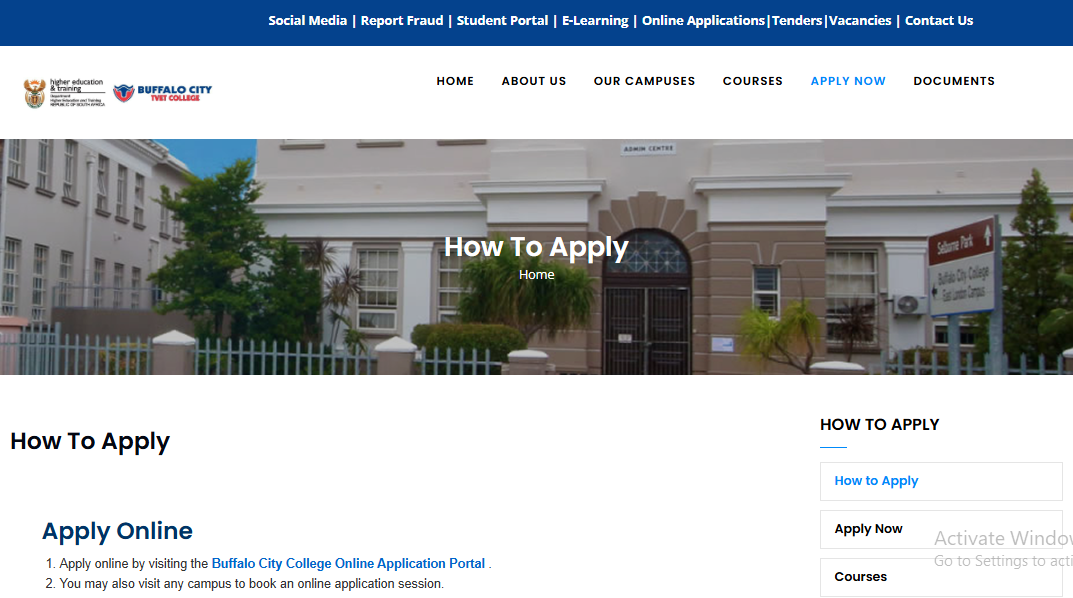
  • Buffalo City TVET College Online Application 2026

    Buffalo City TVET College Online Application 2026

    Buffalo City TVET college online application processes for the 2026 academic year are designed to make access to technical and vocational education easier for prospective students across South Africa. Whether you are finishing high school, upgrading your qualifications, or planning to gain practical skills for employment, understanding how the application system works is an important first step.

    Buffalo City TVET College is one of South Africa’s established public Technical and Vocational Education and Training institutions. The college focuses on career-oriented education that balances theory with workplace-relevant practical training. With multiple campuses and a broad range of accredited programmes, the institution plays a key role in skills development within the Eastern Cape.

    This guide explains everything you need to know about studying at Buffalo City TVET College and how to complete the online application for the 2026 intake. Each section flows logically to help you make informed decisions without unnecessary repetition or exaggerated claims.

    Introduction to Buffalo City TVET College

    Buffalo City TVET College is a public institution operating under the Department of Higher Education and Training (DHET). It serves students from diverse backgrounds who are looking for accessible education linked to employment opportunities and further academic progression.

    The college operates several campuses within the Buffalo City Metropolitan area, including East London and surrounding regions. Each campus specializes in specific fields of study, allowing students to access facilities and training environments aligned with their chosen programmes.

    What sets Buffalo City TVET College apart is its focus on industry-aligned qualifications. Courses are structured to help students gain applied knowledge rather than purely academic theory. This approach supports graduates who want to enter the workforce, start small businesses, or pursue further studies at universities of technology.

    Over the years, the college has expanded its digital systems, including student portals and online application platforms, to improve access and administrative efficiency. The 2026 online application process continues this effort by allowing applicants to apply remotely without visiting campuses in person.

    Why Study at Buffalo City TVET College

    Choosing where to study is a significant decision, particularly for students seeking skills that translate directly into employment. Buffalo City TVET College offers several practical reasons why it remains a preferred option for many learners.

    Industry-Focused Learning Approach

    One of the strongest reasons to study at Buffalo City TVET College is its emphasis on applied learning. Programmes are designed around industry standards, ensuring that students acquire relevant competencies rather than abstract knowledge.

    Many courses include practical assessments, simulated workplace environments, and exposure to real-world equipment. This structure helps students understand how their skills apply beyond the classroom.

    Affordable Public Education

    As a public TVET college, Buffalo City offers tuition fees that are generally lower than those of private institutions. This makes vocational education more accessible to students from different economic backgrounds.

    Eligible students may also apply for funding through the National Student Financial Aid Scheme (NSFAS), which can cover tuition, accommodation, and learning materials depending on individual circumstances.

    Wide Range of Accredited Programmes

    The college offers National Certificate (Vocational), NATED (Report 191), and skills-based programmes across multiple fields. These qualifications are nationally recognized and regulated by DHET, ensuring quality and credibility.

    Students can choose programmes aligned with engineering, business, information technology, hospitality, education support, and other vocational sectors.

    Multiple Campuses for Accessibility

    Buffalo City TVET College operates across various campuses, allowing students to study closer to where they live. This geographic spread reduces transport challenges and supports community-based access to education.

    Each campus focuses on specific programmes, meaning facilities and resources are tailored to the courses offered there.

    Pathways to Employment and Further Study

    Graduates from Buffalo City TVET College often pursue employment directly after completing their studies. Others use their qualifications as a foundation for further education at universities of technology or other higher education institutions.

    The college’s curriculum structure supports these progression routes, making it suitable for students with both short-term and long-term career plans.

    Buffalo City TVET College Online Application 2026

    The Buffalo City TVET college online application for 2026 allows prospective students to submit applications electronically through the official college system. This section explains the application process in detail, including timelines, requirements, and important considerations.

    When Applications Open for 2026

    Application opening dates may vary depending on the programme and intake period. Generally, TVET colleges begin accepting applications several months before the academic year starts.

    For 2026, applicants are encouraged to apply as early as possible. Early submission improves the chances of securing a space, especially in high-demand programmes such as engineering and business studies.

    Applicants should regularly check the official Buffalo City TVET College website for confirmed opening and closing dates, as late applications may not be considered.

    Who Can Apply

    The online application system is open to:

    • Grade 9 learners applying for NC(V) programmes

    • Grade 12 learners seeking vocational or technical qualifications

    • Returning students applying for new programmes

    • Individuals upgrading or changing career paths

    Admission requirements vary depending on the programme level and field of study. Meeting the minimum requirements does not guarantee admission, as space availability also plays a role.

    Entry Requirements Overview

    Buffalo City TVET College sets entry requirements based on national education regulations. These requirements differ depending on the qualification type.

    NC(V) Programmes

    NC(V) programmes generally require a Grade 9 pass or higher. Certain subjects may be required for specific fields, such as Mathematics or Physical Sciences for engineering-related courses.

    NATED (Report 191) Programmes

    NATED programmes often require a Grade 12 certificate or an equivalent qualification. Some engineering programmes may require Mathematics and Science at a specific level.

    Applicants should review the specific entry criteria for their chosen programme before applying to avoid delays or rejections.

    How to Apply Online Step by Step

    The Buffalo City TVET college online application process is structured to be user-friendly, but accuracy is important at every stage.

    Step 1: Access the Official Application Portal

    Visit the official Buffalo City TVET College website and navigate to the admissions or applications section.

    Step 2: Create an Applicant Profile

    New applicants must register by providing basic personal details and creating login credentials.

    Step 3: Complete the Online Application Form

    Fill in all required fields, including personal information, educational history, and programme choices.

    Step 4: Upload Supporting Documents

    Applicants are usually required to upload certified copies of:

    • Identity document or birth certificate

    • Latest academic results

    • Proof of residence (if required)

    Ensure documents are clear and correctly formatted.

    Step 5: Review and Submit

    Before submitting, review all information carefully. Errors or missing details may affect application processing.

    After submission, applicants should save or print confirmation details for reference.

    Application Fees

    Most public TVET colleges, including Buffalo City TVET College, do not charge application fees. However, applicants should confirm this information through official communication channels, as policies may change.

    After Submitting Your Application

    Once the online application is submitted, it enters the review process. During this stage:

    • Applications are assessed based on eligibility and space availability

    • Shortlisted applicants may receive communication via email or SMS

    • Some programmes may require additional placement assessments

    Applicants should monitor their communication channels regularly and respond promptly to any requests.

    Admission Confirmation and Registration

    Successful applicants receive official admission offers. Acceptance instructions and registration dates are usually included in the offer.

    Registration may involve:

    • Verification of original documents

    • Payment of registration fees (if applicable)

    • Orientation sessions

    Failure to register within the specified timeframe may result in forfeiting the offered space.

    Courses Offered at Buffalo City TVET College

    Buffalo City TVET College offers programmes across various vocational fields. While course availability may change, common areas include:

    • Engineering Studies

    • Business Studies

    • Information Technology and Computer Science

    • Hospitality and Tourism

    • Education and Development

    Each programme is structured to align with occupational standards and national curriculum frameworks.

    Student Support and Campus Life

    Beyond academics, the college provides student support services aimed at improving retention and success rates. These may include academic guidance, career counseling, and access to student wellness resources.

    Campus environments differ by location, but most campuses offer libraries, computer labs, and study spaces that support learning outside scheduled classes.

    Conclusion

    The Buffalo City TVET college online application for 2026 provides a structured and accessible entry point into vocational education for students across South Africa. By understanding the application process, entry requirements, and available programmes, prospective students can approach their applications with confidence.

    Buffalo City TVET College continues to play an important role in skills development by offering industry-aligned qualifications within a public education framework. Applying early, submitting accurate information, and staying informed through official channels can significantly improve your chances of success.

    For students seeking practical education with clear pathways to employment or further study, Buffalo City TVET College remains a relevant and accessible option for the 2026 academic year.

    Read Also

  • Full List of Courses Offered at Buffalo City TVET College and Fees Structure

    Full List of Courses Offered at Buffalo City TVET College and Fees Structure

    Courses offered at Buffalo City TVET College and fees structure are frequently researched by students seeking affordable, skills-based education in South Africa. Buffalo City TVET College is a public Technical and Vocational Education and Training institution located in the Eastern Cape and operates under the authority of the Department of Higher Education and Training (DHET).

    The college was formed through the consolidation of several former technical institutions with the goal of expanding access to vocational education. Today, it serves a wide range of students from urban and surrounding rural communities. Buffalo City TVET College focuses on practical training that supports employment, entrepreneurship, and further academic progression.

    By offering nationally accredited programmes aligned with industry standards, the institution plays an important role in developing technical and business skills required in the local and national economy.

    Why Study at Buffalo City TVET College

    Selecting a TVET college is an important decision, particularly for students who prefer practical learning over purely academic study. Buffalo City TVET College offers several features that make it a suitable option for vocational education.

    Government-Accredited Training

    All qualifications offered by the college are officially registered with DHET and mapped to the National Qualifications Framework (NQF). This ensures that students receive certificates that are recognised across South Africa.

    Career-Focused Learning Approach

    Programmes at Buffalo City TVET College are designed to combine classroom instruction with hands-on practical experience. This approach helps students develop applied skills that are relevant to real working environments.

    Affordable Education and Financial Support

    Compared to private institutions, tuition fees at Buffalo City TVET College are structured to remain affordable. Many students rely on NSFAS funding, which may cover tuition fees, accommodation, transport, and learning materials for those who qualify.

    Multiple Campuses for Better Access

    The college operates several campuses, including:

    • East London Campus

    • King Street Campus

    • John Knox Bokwe Campus

    • St Marks Campus

    This multi-campus system allows students from different areas to access training without relocating far from home.

    Opportunities for Further Study

    TVET qualifications can open pathways to:

    • Artisan development

    • Employment in technical or administrative roles

    • Further studies at universities of technology or other institutions

    Overview of Courses Offered at Buffalo City TVET College and Fees Structure

    Buffalo City TVET College offers programmes in three main categories:

    1. National Certificate (Vocational) – NC(V)

    2. NATED (Report 191) programmes

    3. Occupational and skills-based programmes

    Each category serves different educational needs, and the fees structure varies depending on course type, duration, and level of study.

    National Certificate (Vocational) [NC(V)] Programmes

    NC(V) programmes are aimed at students who have completed Grade 9 or higher. These qualifications are offered from Level 2 to Level 4 and include both theoretical subjects and practical training components.

    NC(V) Business and Management Studies

    Office Administration

    This programme equips students with administrative, communication, and organizational skills required in office environments.

    Possible career paths:

    • Office clerk

    • Administrative assistant

    • Receptionist

    Estimated Fees:
    R12,000 – R18,000 per academic year

    Finance, Economics, and Accounting

    Students are introduced to basic accounting principles, financial management, and economic concepts relevant to business operations.

    Estimated Fees:
    R12,000 – R18,000 per academic year

    Marketing

    This course focuses on marketing fundamentals, customer relations, and promotional strategies used in modern business settings.

    Estimated Fees:
    R12,000 – R18,000 per academic year

    NC(V) Engineering Studies

    Engineering programmes generally require more workshop-based learning, which can influence tuition costs.

    Electrical Infrastructure Construction

    This programme provides training in electrical installations, wiring systems, and safety procedures.

    Estimated Fees:
    R15,000 – R20,000 per academic year

    Civil Engineering and Building Construction

    Students learn about construction processes, materials, and basic project planning.

    Estimated Fees:
    R15,000 – R20,000 per academic year

    Engineering and Related Design

    This course introduces students to mechanical systems, design principles, and manufacturing processes.

    Estimated Fees:
    R15,000 – R20,000 per academic year

    NC(V) Hospitality and Tourism Studies

    Hospitality

    The hospitality programme focuses on food preparation, accommodation services, and customer care within the hospitality industry.

    Estimated Fees:
    R13,000 – R18,000 per academic year

    Tourism

    This course covers tourism operations, travel planning, and customer service in the tourism sector.

    Estimated Fees:
    R12,000 – R17,000 per academic year

    NATED (Report 191) Programmes

    NATED programmes are designed mainly for students who have completed Grade 12. These programmes are offered from N1 to N6 levels, with classes typically structured on a trimester basis.

    To obtain a National Diploma, students must complete both theoretical studies and a required period of workplace experience.

    NATED Engineering Programmes

    Electrical Engineering (N1–N6)

    This programme focuses on electrical theory, systems, and industrial applications.

    Estimated Fees:
    R3,000 – R6,000 per trimester

    Mechanical Engineering (N1–N6)

    Students gain knowledge of mechanical systems, machinery, and maintenance principles.

    Estimated Fees:
    R3,000 – R6,000 per trimester

    Civil Engineering (N1–N6)

    The curriculum includes construction technology, surveying basics, and structural concepts.

    Estimated Fees:
    R3,000 – R6,000 per trimester

    NATED Business Studies Programmes

    Business Management (N4–N6)

    This course develops skills in entrepreneurship, operations, and business planning.

    Estimated Fees:
    R2,500 – R5,000 per trimester

    Human Resource Management (N4–N6)

    Students learn about recruitment, employee relations, and labor legislation.

    Estimated Fees:
    R2,500 – R5,000 per trimester

    Financial Management (N4–N6)

    The programme focuses on budgeting, cost control, and financial decision-making.

    Estimated Fees:
    R2,500 – R5,000 per trimester

    Public Management (N4–N6)

    This course is suited for students interested in public sector administration and governance.

    Estimated Fees:
    R2,500 – R5,000 per trimester

    Occupational and Skills-Based Programmes

    Buffalo City TVET College also offers occupational and short skills programmes aimed at improving employability or supporting self-employment. These courses are usually shorter in duration and focus on specific technical or practical skills.

    Examples of Skills Programmes

    • Welding and metal fabrication

    • Plumbing

    • Computer literacy

    • End-user computing

    • Artisan-related training programmes

    Estimated Fees:
    R1,500 – R6,000 depending on course length and resources required

    Understanding the Fees Structure

    The fees structure at Buffalo City TVET College is influenced by several factors:

    • Programme category (NC(V), NATED, or skills)

    • Level of study

    • Duration of the programme

    • Practical resource requirements

    General Fee Summary

    Programme Type Approximate Cost
    NC(V) Programmes R12,000 – R20,000 per year
    NATED Programmes R7,000 – R18,000 per year
    Skills Programmes R1,500 – R6,000

    Fees are subject to change, and students should confirm updated costs with the college before registration.

    Financial Aid and NSFAS Funding

    Many students at Buffalo City TVET College rely on financial assistance through the National Student Financial Aid Scheme (NSFAS). Eligible students may receive funding for:

    • Tuition fees

    • Accommodation

    • Transport allowances

    • Study materials

    Applications must be submitted within the official NSFAS application period, and students must meet the required eligibility criteria.

    Admission Requirements

    Admission requirements differ depending on the programme selected.

    For NC(V) Programmes

    • Minimum Grade 9 completion

    • Specific subject requirements may apply for certain fields

    For NATED Programmes

    • Grade 12 certificate

    • Relevant subjects for engineering or business courses

    Career Prospects After Graduation

    Graduates from Buffalo City TVET College may find employment in:

    • Engineering trades

    • Construction

    • Business administration

    • Hospitality and tourism

    • Public sector roles

    Some graduates choose to continue their studies or pursue artisan qualifications through workplace-based training.

    Conclusion

    Understanding the courses offered at Buffalo City TVET College and fees structure is essential for students planning a practical and affordable education pathway. The college provides a wide range of vocational, technical, and business programmed designed to support skills development and employment readiness.

    With nationally recognized qualifications, multiple campuses, and financial support options, Buffalo City TVET College remains a viable choice for students seeking career-focused education in South Africa. Prospective students are advised to verify admission requirements, course availability, and current fees directly with the institution before applying.

    Read Also

  • Boland TVET College List of Courses and Fee Structure (2026/2027 Guide)

    Boland TVET College List of Courses and Fee Structure (2026/2027 Guide)

    Boland TVET College List of Courses and Fee Structure is an essential reference for students planning to study at one of South Africa’s respected Technical and Vocational Education and Training (TVET) colleges. With its multiple campuses across the Western Cape, Boland TVET College provides a range of career-focused programmes that prepare learners for the workplace or further study.

    In this updated 2026/2027 guide, we detail the current courses, estimated fee structures, admission requirements, financial support options, and practical insights to help you make informed decisions about your educational journey.

    Introduction to Boland TVET College

    Boland TVET College is a public vocational education institution located in the Western Cape, South Africa, serving the Boland and surrounding regions. The college operates from five campuses: Stellenbosch, Paarl, Worcester, Strand, and Caledon. Each campus offers specialised programmes designed to meet local industry needs and equip students with practical and technical skills.

    The college presents a mix of National Certificate Vocational (NCV) courses, NATED (Report 191) programmes, and occupational/skills certifications. These are structured to deliver hands-on learning, industry relevance, and opportunities for workplace exposure, helping students transition into employment or further studies.

    Why Study at Boland TVET College

    Choosing where to study can be challenging. Here’s why many students opt for Boland TVET College for the 2026/2027 intake:

    1. Accredited Public Institution

    Boland TVET College is fully recognised and funded by the South African Department of Higher Education and Training (DHET). Qualifications earned here are nationally accredited and respected across industries.

    2. Wide Range of Practical Programmes

    The college offers courses in engineering, business, hospitality, agriculture, information technology, and more — giving students options that match diverse interests and career goals.

    3. Affordable Tuition with Financial Aid Options

    Fees at Boland TVET College are generally more affordable than many private institutions. Additionally, students who qualify for NSFAS funding may have their tuition covered and can receive allowances for transport and accommodation.

    4. Multiple Strategic Campuses

    Studying across five campuses makes education more accessible for students in different parts of the Western Cape, reducing travel and living costs.

    5. Career Readiness

    Courses are designed to include practical competencies and real-world applications, helping graduates become employable or ready to pursue higher qualifications.

    Boland TVET College List of Courses and Fee Structure (2026/2027)

    Below is the most current overview of programmes available for the 2026/2027 intake along with estimated fee information. Note that exact fees can vary by campus and programme level, and are subject to change. Prospective students should confirm exact figures with the college admissions office.

    1. National Certificate Vocational (NCV) Programmes

    NCV programmes are ideal for students who have completed Grade 9 and above. They run from Level 2 to Level 4 and combine theoretical knowledge with practical skills.

    Key NCV Courses (2026/2027)

    • Electrical Infrastructure Construction

    • Civil Engineering & Building Construction

    • Engineering & Related Design

    • Information Technology & Computer Science

    • Office Administration

    • Tourism & Hospitality Studies

    • Safety in Society

    • Education & Development

    (Courses vary by campus.)

    Estimated NCV Fees (Per Year)

    Programme Estimated Annual Fee (2026/2027)
    Office Administration ~R11,900
    Safety in Society ~R12,200
    Education & Development ~R12,900
    IT & Computer Science ~R18,200
    Electrical Infrastructure ~R18,300
    Civil Engineering ~R18,400
    Engineering & Related Design ~R23,600
    Primary Agriculture ~R32,200

    These figures are approximate and based on 2026 draft fee schedules.

    2. NATED (Report 191) Programmes

    NATED programmes are typically suited for learners who have completed Matric (Grade 12). They run from N4 to N6, and students generally require workplace experience to complete a full qualification.

    Popular NATED Courses (2026/2027)

    • Engineering Studies (Electrical, Civil, Mechanical)

    • Business Management and related fields

    • Hospitality & Tourism Management

    • Farming Management and Mechanisation

    • Office Management Sciences (e.g., Medical and Legal Secretary)

    (Course offerings are campus dependent.)

    Estimated NATED Fees

    • Business Studies (N4–N6): approx. R3,500 – R4,200 per semester

    • Engineering Studies (N4–N6): approx. R2,500 – R3,000 per trimester

    Fees vary by programme and level.

    3. Occupational and Skills Programmes

    Boland TVET College also offers short courses and occupational certifications for students who want to gain specific skills quickly.

    Examples of Skills Programmes

    • Welding and Fabrication

    • Automotive Repair

    • Plumbing

    • Bricklaying

    • Computer Literacy and IT Short Courses

    Estimated Fees for Skills Courses

    These shorter programmes can range from a few weeks to several months, with fees typically between R1,500 and R12,000 depending on course length and structure. (Exact fees should be confirmed with the campus.)

    Admission Requirements for 2026/2027 Intake

    NCV Programmes

    • Minimum: Grade 9 or higher (specific subject passes may be required).

    • Some courses may prefer applicants with Mathematics and English.

    NATED Programmes

    • National Senior Certificate (Matric) with relevant subjects.

    • Engineering streams may require Mathematics and Science.

    Occupational Programmes

    • Requirements differ by course; some may not require a matric certificate but may ask for basic competency.

    Financial Support and NSFAS Funding

    Students who meet eligibility criteria can apply for NSFAS (National Student Financial Aid Scheme). Qualifying students may receive:

    • Tuition fee coverage

    • Transport allowances

    • Accommodation support

    • Personal care allowances

    NSFAS applications are submitted through the myNSFAS portal, and deadlines vary yearly. Qualification for funding is based on household income and academic criteria.

    Tips for Prospective Students

    • Apply Early: The college typically opens applications months before the academic year. For 2026 programmes, applications opened in late 2025.

    • Prepare Required Documents: Certified copies of ID, last academic results, and proof of residence are usually needed.

    • Check Campus Availability: Not all courses are available at every campus, so verify your preferred programme at your nearest campus.

    • Confirm Fees: Official fee sheets from the college should be consulted for the most accurate and updated rates.

    Conclusion

    The Boland TVET College List of Courses and Fee Structure for the 2026/2027 intake shows a comprehensive array of vocational and technical programmes designed to meet diverse learner needs. From NCV and NATED qualifications to short occupational skills courses, the college provides accessible pathways into employment and further learning.

    With state-subsidised fees, NSFAS funding options, and campuses spread throughout the Western Cape, Boland TVET College remains a practical and strategic choice for students seeking hands-on, career-oriented education. Prospective students are advised to verify specific course details and fees directly with the college when planning for the 2026/2027 academic cycle.

  • MANCOSA Online Courses, Fees and Requirements – Complete Guide for 2026

    MANCOSA Online Courses, Fees and Requirements – Complete Guide for 2026

    Management College of Southern Africa (MANCOSA) is one of South Africa’s most respected private higher education institutions, well known for its business, management, and leadership programs. With the rapid growth of digital learning, MANCOSA online courses have become a popular choice for working professionals, entrepreneurs, and students who want flexible, accredited education.

    In this detailed guide, we cover everything you need to know about MANCOSA online courses, fees and requirements, including available programs, admission criteria, learning format, benefits, FAQs, and a final conclusion to help you decide if MANCOSA is right for you.

    About MANCOSA

    MANCOSA (Management College of Southern Africa) was established in 1995 and is registered with the Department of Higher Education and Training (DHET) in South Africa. It is also accredited by the Council on Higher Education (CHE) and its qualifications are registered on the National Qualifications Framework (NQF).

    MANCOSA is especially known for:

    • Business and management qualifications

    • Flexible online and distance learning

    • Strong industry relevance

    • Affordable fee structures compared to many private institutions

    MANCOSA Online Courses Overview

    MANCOSA offers a wide range of online undergraduate, postgraduate, and short learning programs. These courses are designed to meet the needs of students who cannot attend traditional on-campus classes.

    Popular MANCOSA Online Courses

    1. Undergraduate Online Courses

    • Higher Certificate in Business Management

    • Bachelor of Business Administration (BBA)

    • Bachelor of Commerce (BCom)

    • Bachelor of Public Administration

    These programs are ideal for school leavers and entry-level professionals seeking foundational business knowledge.

    2. Postgraduate Online Courses

    • Postgraduate Diploma in Business Management

    • Postgraduate Diploma in Project Management

    • Master of Business Administration (MBA)

    • Master of Public Administration (MPA)

    Postgraduate programs are designed for professionals aiming to advance their careers into management or executive roles.

    3. Short Learning Programmes (SLPs)

    • Project Management Short Courses

    • Leadership and Management Certificates

    • Supply Chain and Logistics Management

    • Human Resource Management Courses

    Short courses are perfect for upskilling without committing to a full qualification.

    MANCOSA Online Learning Format

    MANCOSA’s online learning platform allows students to study anytime and anywhere. The system includes:

    • Online learning materials and study guides

    • Recorded lectures and webinars

    • Discussion forums and peer interaction

    • Online assessments and assignments

    This blended digital approach ensures students receive academic support while enjoying flexibility.

    MANCOSA Online Course Fees

    One of the most searched topics is MANCOSA online course fees. While fees may vary depending on the program and year of registration, MANCOSA remains competitively priced.

    Estimated Fee Structure

    Undergraduate Courses

    • Fees generally range between R30,000 – R55,000 per year, depending on the qualification.

    Postgraduate Diplomas

    • Fees range from R35,000 – R60,000 for the full program.

    MBA and Master’s Degrees

    • MBA fees typically range between R70,000 – R95,000 in total.

    Short Courses

    • Short learning programmes can range from R5,000 – R15,000, depending on duration and content.

    Note: Fees can change annually. It is always recommended to confirm the latest fees directly with MANCOSA.

    Payment Options

    • Monthly debit orders

    • Semester-based payments

    • Corporate or employer sponsorship (where applicable)

    MANCOSA Admission Requirements

    General Admission Requirements

    Admission requirements depend on the level of study:

    Undergraduate Requirements

    • National Senior Certificate (NSC) or equivalent

    • Minimum admission point score (APS) as per program

    • English proficiency

    Postgraduate Diploma Requirements

    • A relevant bachelor’s degree or advanced diploma

    • Academic transcripts

    • Work experience may be considered

    MBA and Master’s Degree Requirements

    • A recognized undergraduate degree or postgraduate diploma

    • Relevant management or professional experience

    • Possible entrance assessment or interview

    Short Courses Requirements

    • Open to school leavers and professionals

    • No formal qualification required for some courses

    Why Choose MANCOSA Online Courses?

    There are several reasons why students choose MANCOSA:

    1. Accredited and Recognized Qualifications

    2. Flexible Online Learning for Working Professionals

    3. Affordable Fees Compared to Other Private Institutions

    4. Strong Focus on Business and Leadership Skills

    5. Supportive Academic and Student Services

    How to Apply for MANCOSA Online Courses

    The application process is straightforward:

    1. Visit the official MANCOSA website

    2. Choose your desired online course

    3. Complete the online application form

    4. Upload required documents

    5. Await admission confirmation

    Early applications are encouraged due to limited intake capacity.

    Career Opportunities After MANCOSA Online Courses

    Graduates from MANCOSA online programs often pursue careers such as:

    • Business Manager

    • Project Manager

    • Operations Manager

    • Human Resource Manager

    • Public Sector Administrator

    • Entrepreneur

    An MBA from MANCOSA, in particular, can significantly boost leadership and executive career prospects.

    FAQs – MANCOSA Online Courses, Fees and Requirements

    1. Are MANCOSA online courses accredited?

    Yes, MANCOSA is registered with DHET and accredited by CHE.

    2. Can international students apply for MANCOSA online courses?

    Yes, international students can enroll, especially for online programs.

    3. Is MANCOSA MBA respected in South Africa?

    Yes, the MANCOSA MBA is widely recognized and valued in the business sector.

    4. Are there bursaries or financial aid options?

    MANCOSA may offer payment plans, but bursary availability depends on external providers.

    5. How long do online courses take to complete?

    Duration varies:

    • Undergraduate degrees: 3 years

    • Postgraduate diplomas: 1 year

    • MBA: 2–3 years

    Conclusion

    MANCOSA online courses offer an excellent opportunity for students seeking flexible, affordable, and accredited education in business and management. With a wide range of programs, reasonable fees, and clear admission requirements, MANCOSA continues to attract students from South Africa and beyond. Whether you are starting your academic journey or advancing your professional career, MANCOSA online courses, fees and requirements make it a strong contender in the online education space.

    Read Also

  • How to Get a Bachelor’s Degree Pass in Grade 12 in South Africa (Complete Guide)

    How to Get a Bachelor’s Degree Pass in Grade 12 in South Africa (Complete Guide)

    Many South African learners dream of studying at a university, but the first major step toward that goal is achieving a Bachelor’s Degree pass in Grade 12. This is not an actual degree yet—it is a pass level in the National Senior Certificate (NSC) that allows you to apply for bachelor’s degree studies at universities in South Africa.

    Unfortunately, many learners reach Grade 12 without fully understanding what a bachelor’s pass is, what subjects are required, or how marks are calculated. This detailed guide explains how to get a bachelor’s degree pass in Grade 12 in South Africa, the subject and mark requirements, APS scores, and practical tips to help you succeed.

    What Is a Bachelor’s Degree Pass in South Africa?

    A Bachelor’s Degree pass is the highest pass level in the National Senior Certificate (NSC). It qualifies learners to apply for bachelor’s degree programs at public universities, subject to meeting specific course and institutional requirements.

    There are three main NSC pass levels:

    1. Higher Certificate pass

    2. Diploma pass

    3. Bachelor’s Degree pass

    A bachelor’s pass does not guarantee university admission, but it is the minimum requirement to be considered for degree programs.

    Minimum Requirements for a Bachelor’s Degree Pass

    To obtain a bachelor’s degree pass in Grade 12, you must meet the following official Department of Basic Education (DBE) requirements:

    1. Home Language

    • Minimum of 40%

    • Must be one of South Africa’s official languages

    2. Four Other Subjects

    • At least 50% in four subjects

    • These must be from the designated subject list

    3. Two Remaining Subjects

    • Minimum of 30% each

    • These can include Life Orientation

    Important: Life Orientation cannot be counted among the four 50% subjects required for a bachelor’s pass.

    Designated Subject List (Very Important)

    To qualify for a bachelor’s pass, your four 50% subjects must come from the designated subject list, which includes:

    • Mathematics

    • Physical Sciences

    • Life Sciences

    • Accounting

    • Business Studies

    • Economics

    • Geography

    • History

    • Agricultural Sciences

    • Information Technology

    • Consumer Studies

    • Engineering Graphics and Design

    • Dramatic Arts

    • Music

    • Visual Arts

    • Religion Studies

    Choosing the right subjects in Grades 10–12 is crucial if your goal is university study.

    Is Mathematics Compulsory for a Bachelor’s Pass?

    No, Mathematics is not compulsory for a bachelor’s degree pass.

    However:

    • Many university programs (engineering, commerce, health sciences) require Mathematics

    • Some degrees accept Mathematical Literacy, but options are limited

    If you aim for science, engineering, or commerce degrees, Mathematics is strongly recommended.

    Understanding APS Scores

    Most South African universities use an Admission Point Score (APS) system to evaluate applicants.

    How APS Works

    • Each subject is allocated points based on your percentage

    • Life Orientation is often excluded

    • Universities calculate APS differently

    Typical APS Score Guide

    • 80–100% = 7 points

    • 70–79% = 6 points

    • 60–69% = 5 points

    • 50–59% = 4 points

    • 40–49% = 3 points

    A bachelor’s pass alone is not enough—competitive courses may require APS scores of 30–45+.

    Choosing the Right Subjects in Grade 10–12

    Your subject choices can either open or close doors later. To improve your chances of a bachelor’s pass:

    • Choose at least two strong academic subjects

    • Avoid selecting difficult subjects without proper support

    • Balance interest with career goals

    • Get guidance from teachers or career counselors

    Study Tips to Achieve a Bachelor’s Degree Pass

    1. Start Early

    Grade 12 results are built over the year. Avoid cramming at the end.

    2. Focus on Weak Subjects

    Identify subjects where you struggle and get extra help early.

    3. Use Past Exam Papers

    Past NSC papers help you understand:

    • Question styles

    • Mark allocation

    • Time management

    4. Attend Extra Classes

    Many schools and NGOs offer free weekend or holiday classes.

    5. Improve Your Language Skills

    Language subjects affect overall performance significantly.

    Can You Upgrade to a Bachelor’s Pass Later?

    Yes. If you did not get a bachelor’s pass, you can:

    • Rewrite subjects through NSC rewrites

    • Register for Senior Certificate (Amended)

    • Enroll in a bridging or foundation program

    Many students upgrade their results successfully and later enter university.

    Common Mistakes That Prevent a Bachelor’s Pass

    • Counting Life Orientation as a 50% subject

    • Choosing non-designated subjects

    • Ignoring subject requirements for chosen careers

    • Poor attendance

    • Late exam preparation

    Avoiding these mistakes can significantly improve your chances.

    FAQs

    1. Is a bachelor’s pass the same as a degree?

    No. It only allows you to apply for a degree.

    2. Can I study at university without a bachelor’s pass?

    Generally no, but some universities offer alternative access routes.

    3. Does Life Orientation count for APS?

    Most universities exclude it.

    4. Can I get a bachelor’s pass with Mathematical Literacy?

    Yes, but degree options may be limited.

    5. What is the minimum APS for university?

    It depends on the university and course.

    Conclusion

    Getting a bachelor’s degree pass in Grade 12 in South Africa requires planning, discipline, and the right subject choices. Understanding the official requirements, focusing on designated subjects, and aiming for strong APS scores will put you in the best position for university admission.

    Remember, even if you don’t succeed the first time, there are multiple pathways to upgrade your results and still achieve your academic dreams. With commitment and the right strategy, a bachelor’s pass is achievable.

  • Best Courses to Study in South Africa: Top 10 Degrees with Career Scope

    Best Courses to Study in South Africa: Top 10 Degrees with Career Scope

    Best courses to study in South Africa are attracting students from across the globe due to the country’s high-quality education system, practical learning opportunities, and career-oriented programs. South African universities combine academic excellence with hands-on training, preparing students for both local and international job markets.

    Whether you are interested in healthcare, business, technology, or environmental studies, South Africa offers a wide variety of courses tailored to modern workforce needs. This guide will help you explore why South Africa is a top study destination and highlight the top programs students can consider.

    Why to Study in South Africa

    South Africa is a leading higher education hub in Africa, offering globally recognized degrees, cultural diversity, and affordable education. Here’s why students choose to study here:

    Globally Recognized Universities

    Universities like the University of Cape Town, University of the Witwatersrand, and Stellenbosch University are consistently ranked internationally. Their degrees are recognized worldwide and open doors to global career opportunities.

    Diverse Course Options

    Students can select from disciplines like medicine, engineering, IT, business, law, and environmental sciences. The broad selection allows learners to match their studies with career goals.

    Affordable Education

    Compared to countries like the USA, UK, or Australia, South Africa offers quality education at relatively lower tuition fees and living costs.

    Strong Research and Innovation

    South Africa invests in research areas such as medicine, renewable energy, technology, and biodiversity, providing students with hands-on learning experiences.

    Cultural Diversity and Student Life

    The country offers a rich cultural environment, vibrant campus life, and personal development opportunities beyond academics.

    Top 10 Best Courses to Study in South Africa

    Here are the top 10 best courses to study in South Africa, selected based on career prospects, demand, and academic relevance.

    1. Medicine and Health Sciences

    Medicine, dentistry, nursing, pharmacy, and public health programs are highly respected.

    Why choose this course:

    • Practical clinical training

    • Exposure to diverse medical cases

    • High employability

    Career Opportunities:

    • Medical doctor

    • Dentist

    • Public health officer

    • Pharmacist

    2. Engineering (Civil, Mechanical, Electrical, Chemical)

    Engineering remains highly sought after due to infrastructure and industrial growth.

    Why choose this course:

    • Accredited programs with practical training

    • Strong industry demand

    Career Opportunities:

    • Civil or mechanical engineer

    • Electrical engineer

    • Project manager

    3. Information Technology and Computer Science

    IT and computer science degrees are in demand due to the rise of digital technology and cybersecurity.

    Why choose this course:

    • Skills relevant globally

    • Opportunities in software development, AI, and data analytics

    Career Opportunities:

    • Software developer

    • Data analyst

    • Cybersecurity specialist

    4. Business Administration and Management

    Business degrees prepare students for leadership and entrepreneurial roles.

    Why choose this course:

    • Broad career options

    • Strong foundation in management and finance

    Career Opportunities:

    • Business manager

    • Operations manager

    • Consultant

    • Entrepreneur

    5. Accounting and Finance

    Accounting and finance remain stable and respected professional fields.

    Why choose this course:

    • High demand in all industries

    • Pathway to professional certifications (CA, CFA)

    Career Opportunities:

    • Chartered accountant

    • Financial analyst

    • Auditor

    • Tax consultant

    6. Law

    South Africa’s law programs prepare students for both local and international legal careers.

    Why choose this course:

    • Accredited legal education

    • Opportunities in public and private sectors

    Career Opportunities:

    • Attorney or advocate

    • Corporate lawyer

    • Legal advisor

    7. Education and Teaching

    Education programs train future teachers and academic professionals.

    Why choose this course:

    • Consistent demand for educators

    • Opportunities to impact communities

    Career Opportunities:

    • School teacher

    • Lecturer

    • Curriculum developer

    • Education consultant

    8. Environmental Science and Environmental Management

    Focus on sustainability and conservation makes this program highly relevant.

    Why choose this course:

    • Hands-on fieldwork

    • Growing global career demand

    Career Opportunities:

    • Environmental consultant

    • Conservation officer

    • Sustainability manager

    9. Hospitality and Tourism Management

    South Africa’s tourism industry creates strong demand for hospitality graduates.

    Why choose this course:

    • Industry-focused training

    • Global career mobility

    Career Opportunities:

    • Hotel manager

    • Event coordinator

    • Tourism consultant

    10. Agriculture and Agribusiness

    Agriculture is crucial for economic growth and food security.

    Why choose this course:

    • Research and practical exposure

    • Opportunities in agribusiness innovation

    Career Opportunities:

    • Agricultural scientist

    • Agribusiness consultant

    • Farm manager

    Factors to Consider When Choosing a Course in South Africa

    Before selecting from the best courses to study in South Africa, consider:

    • Your personal interests and strengths

    • Career prospects and industry demand

    • Accreditation of the institution

    • Practical training opportunities

    • Long-term career goals

    Conclusion

    Choosing the best courses to study in South Africa requires thoughtful consideration of academic interests and career goals. South African universities offer a mix of theoretical knowledge and practical skills, preparing graduates for competitive careers.

    From medicine and engineering to IT, business, and environmental studies, South Africa provides diverse programs aligned with workforce needs. Affordable tuition, globally recognized degrees, and a culturally rich environment make South Africa an excellent destination for higher education.

    FAQs About Best Courses to Study in South Africa

    Q1. What are the best courses to study in South Africa for jobs?
    Courses like medicine, engineering, IT, accounting, and business offer strong career prospects.

    Q2. Are South African degrees internationally recognized?
    Yes, degrees from accredited South African universities are widely recognized around the world.

    Q3. Is South Africa affordable for students?
    Compared to countries like the UK or USA, tuition and living costs are relatively affordable.

    Q4. Can international students study in South Africa?
    Yes, South African universities welcome international students and provide support services.

    Q5. Which universities offer the best programs?
    Top institutions include University of Cape Town, Stellenbosch University, and University of the Witwatersrand.

    Read Also

  • Online Bachelors Degree Programs in South Africa | 20 Accredited Options

    Online Bachelors Degree Programs in South Africa | 20 Accredited Options

    Online Bachelors Degree Programs in South Africa have become an important part of the country’s higher education system, offering students flexible access to undergraduate qualifications without the need for full-time campus attendance. With the expansion of digital learning platforms and distance education models, many South African universities now provide online bachelor’s degrees that meet national academic and quality assurance standards.

    These programs are designed to support students who may be working professionals, international learners, or individuals who require flexible study schedules due to personal or financial responsibilities. Online bachelor’s degrees in South Africa generally follow the same academic structure, learning outcomes, and assessment requirements as traditional on-campus programs, ensuring consistency and recognition.

    South Africa’s online education landscape continues to grow as institutions invest in learning management systems, digital libraries, and academic support services. This makes online bachelor’s degree programs a practical pathway for students seeking accessible, structured, and credible higher education options.

    Why to Study Online Bachelors Degree Program in South Africa

    Studying an online bachelor’s degree in South Africa offers several academic and practical advantages. One of the primary reasons students choose South African institutions is the country’s regulated higher education framework. Universities operate under the oversight of bodies such as the Council on Higher Education (CHE) and the South African Qualifications Authority (SAQA), which helps ensure consistent academic standards.

    Another key benefit is flexibility. Online bachelor’s degree programs allow students to study from different locations while managing work or family commitments. Course materials, lectures, and assessments are typically delivered through digital platforms, enabling students to learn at their own pace within structured academic timelines.

    Affordability is also a consideration for many learners. Compared to some international study destinations, South Africa offers relatively accessible tuition options, especially through distance learning models. Additionally, students gain access to diverse fields of study, ranging from business and education to technology and social sciences, making South Africa a suitable choice for a wide range of academic interests.

    20 Online Bachelors Degree Programs in South Africa

    Below is a detailed overview of 20 Online Bachelors Degree Programs in South Africa commonly available through online or distance learning formats. Program availability, structure, and delivery methods may vary depending on the institution.

    1. Bachelor of Commerce (BCom)

    The Bachelor of Commerce is one of the most widely offered online undergraduate degrees in South Africa. It provides foundational knowledge in accounting, economics, management, and business law. This program is suitable for students interested in business, finance, or entrepreneurship.

    2. Bachelor of Accounting Sciences

    This degree focuses on financial accounting, auditing, taxation, and management accounting. It is designed for students who plan to pursue careers in accounting or related financial fields and may serve as a foundation for professional qualifications.

    3. Bachelor of Business Administration

    The Bachelor of Business Administration emphasizes organizational management, leadership principles, and strategic decision-making. Online learners gain a broad understanding of business operations applicable across multiple industries.

    4. Bachelor of Human Resource Management

    This program focuses on workforce management, employment relations, and organizational development. It prepares students for roles in human resources departments within both public and private organizations.

    5. Bachelor of Economics

    An online Bachelor of Economics develops analytical and critical thinking skills related to economic theory, policy analysis, and quantitative methods. Graduates may pursue careers in research, finance, or public sector planning.

    6. Bachelor of Marketing Management

    This degree explores marketing principles, consumer behavior, branding, and digital marketing strategies. Online delivery allows students to balance theoretical learning with real-world applications.

    7. Bachelor of Public Administration

    The Bachelor of Public Administration focuses on governance, public policy, and administrative systems. It is particularly relevant for students aiming to work in government departments, municipalities, or nonprofit organizations.

    8. Bachelor of Education (Foundation Phase)

    This program prepares students for teaching roles in early childhood and primary education. While theoretical components are delivered online, practical teaching experience is usually required through approved schools.

    9. Bachelor of Education (Intermediate and Senior Phase)

    This education degree focuses on subject-specific teaching methodologies for intermediate and senior school levels. Online coursework is combined with supervised teaching practice to meet professional requirements.

    10. Bachelor of Information Technology

    The Bachelor of Information Technology covers programming, systems analysis, database management, and IT infrastructure. Online learners typically engage in virtual labs and project-based assessments.

    11. Bachelor of Computer Science

    This degree emphasizes software development, algorithms, and computational problem-solving. It is suitable for students interested in software engineering, data science, or technology-related research fields.

    12. Bachelor of Science in Environmental Management

    An online Bachelor of Science in Environmental Management focuses on sustainability, environmental policy, and resource management. Graduates may work in environmental planning, conservation, or regulatory compliance.

    13. Bachelor of Social Work

    This program prepares students for careers in social services, community development, and welfare organizations. Practical placements are often required and arranged in collaboration with approved institutions.

    14. Bachelor of Psychology

    The Bachelor of Psychology introduces students to psychological theories, human behavior, and research methods. It serves as a foundation for further postgraduate study in psychology or related disciplines.

    15. Bachelor of Criminology

    This degree examines crime patterns, justice systems, and social behavior. Online coursework focuses on criminological theory, criminal law concepts, and research methods.

    16. Bachelor of Law (LLB)

    Some South African universities offer distance or blended learning options for the LLB degree. The program covers constitutional law, criminal law, contract law, and legal interpretation, following national academic standards.

    17. Bachelor of Communication Studies

    This program focuses on communication theory, media studies, and public relations. Online learners develop analytical, writing, and strategic communication skills relevant across industries.

    18. Bachelor of Journalism

    The Bachelor of Journalism introduces students to news reporting, media ethics, and digital journalism practices. Online study often includes practical writing assignments and media analysis.

    19. Bachelor of Tourism Management

    This degree focuses on hospitality operations, sustainable tourism development, and destination management. It is suitable for students interested in tourism, travel, and hospitality sectors.

    20. Bachelor of Supply Chain and Logistics Management

    This program covers procurement, logistics planning, operations management, and supply chain optimization. Online delivery allows students to gain industry-relevant knowledge while maintaining flexibility.

    Important Considerations Before Enrolling

    Before enrolling in Online Bachelors Degree Programs in South Africa, students should verify that the institution is accredited and registered with relevant national authorities. Accreditation ensures that the qualification is recognized for employment and further studies.

    Students should also review program requirements, including assessment methods, examination arrangements, and any mandatory practical components. Some online programs may follow a blended model, requiring limited in-person attendance or supervised practical experience.

    Understanding study duration, workload expectations, and available academic support services can help students choose a program that aligns with their personal and professional goals.

    Frequently Asked Questions

    Are online bachelor’s degrees in South Africa recognized?

    Yes, online bachelor’s degrees are recognized when offered by accredited institutions registered with SAQA and overseen by the Council on Higher Education.

    Can international students enroll in online bachelor’s programs in South Africa?

    Many South African universities allow international students to enroll in online or distance learning bachelor’s degree programs, subject to institutional policies.

    Are online bachelor’s degrees equivalent to on-campus degrees?

    Accredited online bachelor’s degrees follow the same curriculum and assessment standards as on-campus programs, making them academically equivalent.

    How long does it take to complete an online bachelor’s degree in South Africa?

    Most programs take three to four years, depending on the field of study and whether the student enrolls part-time or full-time.

    Do online bachelor’s programs include exams?

    Yes, assessments typically include assignments, tests, and examinations, which may be conducted online or at approved examination centers.


    Online Bachelors Degree Programs in South Africa provide flexible and structured pathways for students seeking recognized undergraduate qualifications through distance learning. With options available across business, education, technology, social sciences, and more, students can pursue academic goals while managing personal and professional commitments.

    As digital education continues to expand, South African institutions remain focused on maintaining academic quality and regulatory compliance. By selecting accredited programs and understanding study requirements, students can make informed decisions and benefit from the opportunities offered by online bachelor’s degree programs in South Africa.

  • Best Online Schools In South Africa: Top 15 Accredited Digital Learning Institutions

    Best Online Schools In South Africa: Top 15 Accredited Digital Learning Institutions

    Best Online Schools In South Africa have become an important part of the country’s modern education system, offering flexible and accessible learning opportunities for students of all ages. With improvements in digital infrastructure and wider acceptance of online qualifications, South Africa has positioned itself as a strong destination for quality online education within Africa and beyond.

    Online schooling in South Africa serves a wide range of learners, including primary and high school students, working professionals, adult learners, and international students. These schools follow structured curricula aligned with national or international standards, while allowing students to study remotely at their own pace. This flexibility makes online education an attractive option for families seeking alternative learning models and individuals balancing work, family, or other commitments.

    In recent years, the demand for online schools has grown steadily due to changing lifestyles, increased internet access, and the need for adaptable education solutions. Many institutions now combine technology-driven teaching with academic support systems, ensuring students receive quality instruction comparable to traditional classroom learning.

    Why to Study In South Africa

    South Africa is widely recognized for its diverse education system, cultural richness, and well-established academic frameworks. Choosing to study in South Africa, whether online or on-campus, offers several practical and academic advantages.

    Recognized Education Standards

    South African education follows regulated frameworks overseen by national bodies such as the Department of Basic Education (DBE) and the Council on Higher Education (CHE). Many online schools align their curricula with CAPS, IEB, Cambridge, or international qualifications, ensuring credibility and recognition.

    Flexible Learning Options

    One of the strongest reasons to study in South Africa through online schools is flexibility. Students can learn from home, set personalized schedules, and access digital learning platforms that support different learning styles.

    Cost-Effective Education

    Compared to many Western countries, online education in South Africa is often more affordable. Tuition fees, learning materials, and examination costs are generally lower while maintaining acceptable academic standards.

    Multicultural Learning Environment

    South Africa’s diverse society brings a multicultural perspective into education. Online schools often attract students from various backgrounds, encouraging inclusivity and global awareness.

    Preparation for Global Opportunities

    Many online schools in South Africa offer internationally recognized curricula, helping students prepare for higher education and career opportunities both locally and abroad.

    Top 15 Best Online Schools In South Africa

    Below is a carefully compiled list of the Top 15 Best Online Schools In South Africa, selected based on curriculum options, accreditation, learning support, and reputation. The information is presented in a neutral, informational manner for comparison purposes.

    1. Optimi College Online School

    Optimi College is one of the most established names in South African online education. It offers CAPS-aligned and Cambridge curricula for primary and high school learners.

    Key Features:

    • CAPS and Cambridge pathways

    • Structured lesson plans and assessments

    • Academic and technical support

    • Suitable for local and international learners

    Optimi focuses on guided online learning combined with independent study, making it suitable for families seeking structured flexibility.

    2. Think Digital Academy

    Think Digital Academy provides a fully online learning environment aligned with the CAPS curriculum. It is designed for learners who prefer a modern, technology-based approach.

    Key Features:

    • CAPS-aligned content

    • Interactive digital platform

    • Teacher-led online lessons

    • Continuous assessment

    The academy emphasizes engagement through live classes and digital collaboration tools.

    3. Curro Online

    Curro is a well-known private education group in South Africa, and Curro Online extends its offerings to virtual learning.

    Key Features:

    • CAPS curriculum

    • Experienced educators

    • Structured academic calendar

    • Support for Grades 4 to 12

    Curro Online aims to mirror the quality of traditional Curro schools in an online format.

    4. Brainline Digital School

    Brainline Digital School has a long history in distance education and online learning in South Africa.

    Key Features:

    • CAPS and international curriculum options

    • Flexible pacing

    • Extensive learning resources

    • Support for special learning needs

    Brainline is often chosen by families seeking a self-paced yet guided online education model.

    5. UCT Online High School

    The UCT Online High School operates in collaboration with the University of Cape Town and offers a CAPS-aligned curriculum.

    Key Features:

    • University-supported academic model

    • Qualified South African teachers

    • Digital learning platform

    • National Senior Certificate preparation

    This school combines academic rigor with accessible online delivery.

    6. Teneo Online School

    Teneo Online School offers British international education through Cambridge Assessment International Education.

    Key Features:

    • Cambridge Primary, Secondary, and IGCSE

    • International focus

    • Experienced international educators

    • Flexible enrollment

    Teneo is suitable for learners planning to pursue higher education abroad.

    7. Kings InterHigh Africa

    Kings InterHigh Africa provides online British curriculum education tailored to African learners.

    Key Features:

    • British curriculum

    • Live and recorded lessons

    • Global student community

    • International examinations

    This school is ideal for students seeking an internationally recognized qualification.

    8. South African College of Applied Psychology (Online Programs)

    While known mainly for higher education, SACAP offers online learning programs that prepare students for further academic or professional development.

    Key Features:

    • Accredited online courses

    • Flexible study schedules

    • Academic support services

    • Focus on applied learning

    These programs are better suited for older students and adult learners.

    9. Pearson Online Academy (South Africa Access)

    Pearson Online Academy provides access to international online schooling options available to South African students.

    Key Features:

    • International curriculum

    • Accredited qualifications

    • Self-paced and teacher-led options

    • Global recognition

    This platform supports learners looking for international mobility.

    10. Hatfield Online School

    Hatfield Online School focuses on CAPS-aligned education with a strong emphasis on Christian values.

    Key Features:

    • CAPS curriculum

    • Values-based education

    • Online lessons and assessments

    • Parental involvement encouraged

    The school combines faith-based principles with academic learning.

    11. Keystone International Online School (South Africa Enrollment)

    Keystone offers American-accredited online education accessible to South African students.

    Key Features:

    • American curriculum

    • NCAA-approved courses

    • College preparation focus

    • Flexible learning pace

    Keystone is suitable for students planning to study in the United States.

    12. CambriLearn Online School

    CambriLearn is a well-established provider of online education in South Africa, offering CAPS, Cambridge, and IEB options.

    Key Features:

    • Multiple curriculum pathways

    • Recorded and live lessons

    • Extensive academic support

    • Examination preparation

    CambriLearn appeals to families seeking choice and flexibility.

    13. FutureLearn South Africa (Partner Programs)

    FutureLearn collaborates with South African institutions to offer online learning opportunities mainly for secondary and post-school education.

    Key Features:

    • Short courses and certificates

    • International partnerships

    • Flexible online access

    • Skill-based learning

    It is best suited for learners interested in supplementary education.

    14. Eduvos Online Learning

    Eduvos provides online higher education programs that prepare students for professional careers.

    Key Features:

    • Accredited qualifications

    • Online lectures and assessments

    • Career-focused programs

    • Academic advising

    Eduvos Online is suitable for students transitioning from school to tertiary education.

    15. Open Learning Group (OLG)

    The Open Learning Group offers distance and online education programs recognized in South Africa.

    Key Features:

    • Accredited learning pathways

    • Blended and online options

    • Support services

    • Adult and professional education focus

    OLG supports learners seeking flexible academic progression.

    How to Choose Among the Best Online Schools In South Africa

    When selecting from the Best Online Schools In South Africa, learners and parents should consider several important factors:

    • Accreditation and curriculum alignment

    • Level of academic support offered

    • Flexibility and pacing options

    • Assessment and examination methods

    • Cost and additional fees

    Careful evaluation helps ensure the chosen school meets educational goals and personal circumstances.

    Benefits of Online Schooling in South Africa

    Online schooling provides several practical benefits, especially in a diverse and geographically wide country like South Africa.

    Accessibility

    Students from urban and rural areas can access quality education without relocating.

    Personalized Learning

    Online schools often allow students to learn at a pace that suits their abilities and learning styles.

    Safe Learning Environment

    Remote learning offers a controlled environment that many families find appealing.

    Skill Development

    Students develop digital literacy, time management, and independent learning skills.

    The growth of online education has expanded learning opportunities across the country, making the Best Online Schools In South Africa a practical and reliable choice for many students. These schools offer structured curricula, recognized qualifications, and flexible learning models suited to modern educational needs.

    Whether a learner is seeking a national curriculum, international qualification, or flexible study schedule, South Africa’s online schools provide diverse options to support academic success. By understanding individual goals and comparing available programs, students and parents can confidently choose an online school that aligns with their long-term educational plans.

  • Complete List of Colleges Offering Online Courses in South Africa

    Complete List of Colleges Offering Online Courses in South Africa

    Colleges Offering Online Courses in South Africa have become increasingly attractive to international students seeking affordable, flexible, and internationally recognized education. With English as the primary language of instruction and qualifications aligned with global academic standards, South Africa has positioned itself as a reliable destination for online and distance learning.

    For international learners, online education in South Africa offers the opportunity to earn reputable qualifications without the need to relocate or apply for a study visa. Many South African colleges and universities provide fully online or blended programs that are accessible from anywhere in the world, making them suitable for students across Africa, Europe, Asia, and beyond.


    Why to Study Online Courses in South Africa as an International Student

    South Africa offers several advantages that make it a preferred choice for international online learners.

    Globally Recognized Qualifications

    Many South African institutions are accredited by national bodies and aligned with international qualification frameworks. Degrees and diplomas from reputable colleges are often recognized by employers and universities worldwide.

    No Need for a Study Visa

    Since courses are delivered online, international students typically do not require a South African study visa, reducing administrative costs and processing time.

    Affordable Tuition Fees

    Compared to institutions in Europe, North America, or Australia, South African colleges offering online courses generally have lower tuition fees while maintaining academic quality.

    English-Taught Programs

    Most online courses are taught in English, making them accessible to a wide international audience.

    Flexible Learning Across Time Zones

    Online platforms allow students to access learning materials asynchronously, making it easier to study across different time zones.

    Complete List of Colleges Offering Online Courses in South Africa

    Below is a curated list of public universities, private colleges, and professional institutions that offer online or distance learning programs suitable for international students.

    Public Institutions Offering Online Learning

    University of South Africa (UNISA)

    UNISA is one of the largest distance education universities in the world and enrolls thousands of international students annually.

    Popular Online Programs for International Students:

    • Bachelor of Commerce

    • Bachelor of Education

    • Diploma in Human Resource Management

    • Diploma in Marketing Management

    • Postgraduate Diplomas and Master’s degrees

    Mode of Delivery: Fully online and distance learning
    International Recognition: Widely accepted globally
    Accreditation: DHET, CHE, SAQA

    University of Pretoria (Online Learning Division)

    The University of Pretoria offers online postgraduate programs and short courses suitable for professionals worldwide.

    Popular Online Programs:

    • Online LLM programs

    • Postgraduate certificates

    • Professional short courses

    Private Colleges Offering Online Courses in South Africa

    Mancosa (Management College of Southern Africa)

    Mancosa is popular among international students due to its strong focus on business and management education.

    Popular Online Programs:

    • Bachelor of Business Administration

    • Postgraduate Diploma in Management

    • MBA (Fully Online)

    Stadio Higher Education

    Stadio provides fully online undergraduate and postgraduate qualifications accessible internationally.

    Popular Online Programs:

    • Bachelor of Education

    • Bachelor of Accounting

    • Information Technology programs

    Damelin Online

    Damelin offers career-focused online courses suitable for international learners.

    Popular Online Programs:

    • Project Management

    • Human Resource Management

    • Financial Accounting

    • Public Relations

    Boston City Campus & Business College

    Boston City Campus offers online and distance learning programs aligned with professional career paths.

    Popular Online Programs:

    • Business Management

    • Marketing Management

    • Office Administration

    • Education-related qualifications

    Varsity College (Blended and Online Options)

    Varsity College offers internationally aligned programs, often in partnership with UK awarding bodies.

    Popular Online Programs:

    • Higher Certificate in Business

    • Bachelor of Commerce

    • Diplomas in Marketing and Management

    Professional and Specialized Online Institutions

    Regenesys Business School

    Regenesys is well known for leadership, entrepreneurship, and management education.

    Popular Online Programs:

    • MBA

    • Bachelor of Business Administration

    • Postgraduate Diplomas in Management

    ICB (Institute of Certified Bookkeepers) – Online Providers

    ICB qualifications are offered online through accredited South African colleges and are recognized internationally.

    Popular Online Programs:

    • Bookkeeping

    • Financial Accounting

    • Business Management

    GetSmarter (University-Linked Online Courses)

    GetSmarter partners with leading universities to deliver online short courses.

    Popular Online Programs:

    • Digital Marketing

    • Data Analysis

    • Project Management

    • Leadership Development

    Popular Online Courses Chosen by International Students

    Business and Management

    • Business Administration

    • Marketing Management

    • Human Resource Management

    • Project Management

    Information Technology

    • Software Development

    • IT Support

    • Data Analysis

    • Cybersecurity (Short Courses)

    Education and Training

    • Early Childhood Development

    • Teaching Certificates

    • Education Management

    Finance and Accounting

    • Bookkeeping

    • Accounting Diplomas

    • Financial Management

    Admission Requirements for International Students

    Admission requirements vary by institution but generally include:

    • Equivalent of South African National Senior Certificate

    • Certified academic transcripts

    • Proof of English proficiency (if applicable)

    • Valid passport (for identification purposes)

    • Reliable internet access and digital device

    Some postgraduate programs may also require relevant work experience.

    How International Students Can Apply

    Step 1: Choose an Accredited Institution

    Verify that the college is registered with the South African Department of Higher Education and Training (DHET).

    Step 2: Confirm Online Availability

    Ensure the program is fully online and accessible from your country.

    Step 3: Submit Online Application

    Most colleges allow international students to apply through their official websites.

    Step 4: Arrange Payment

    Tuition fees can often be paid via international bank transfer or online payment systems.

    Career Opportunities After Studying Online in South Africa

    Graduates from colleges offering online courses in South Africa can pursue international careers in:

    • Business administration

    • Information technology

    • Education and training

    • Accounting and finance

    • Project management

    Many employers accept accredited online qualifications, especially when issued by well-established South African institutions.

    The growing number of Colleges Offering Online Courses in South Africa makes the country an attractive option for international students seeking quality, flexibility, and affordability. With globally recognized qualifications, English-taught programs, and no relocation requirements, South African online education provides a practical pathway to academic and professional advancement.

    International students are encouraged to research institutions carefully, confirm accreditation, and choose programs aligned with their career goals. As digital learning continues to expand, South Africa remains a strong and reliable hub for online higher education.

WhatsApp Channel Join Now!