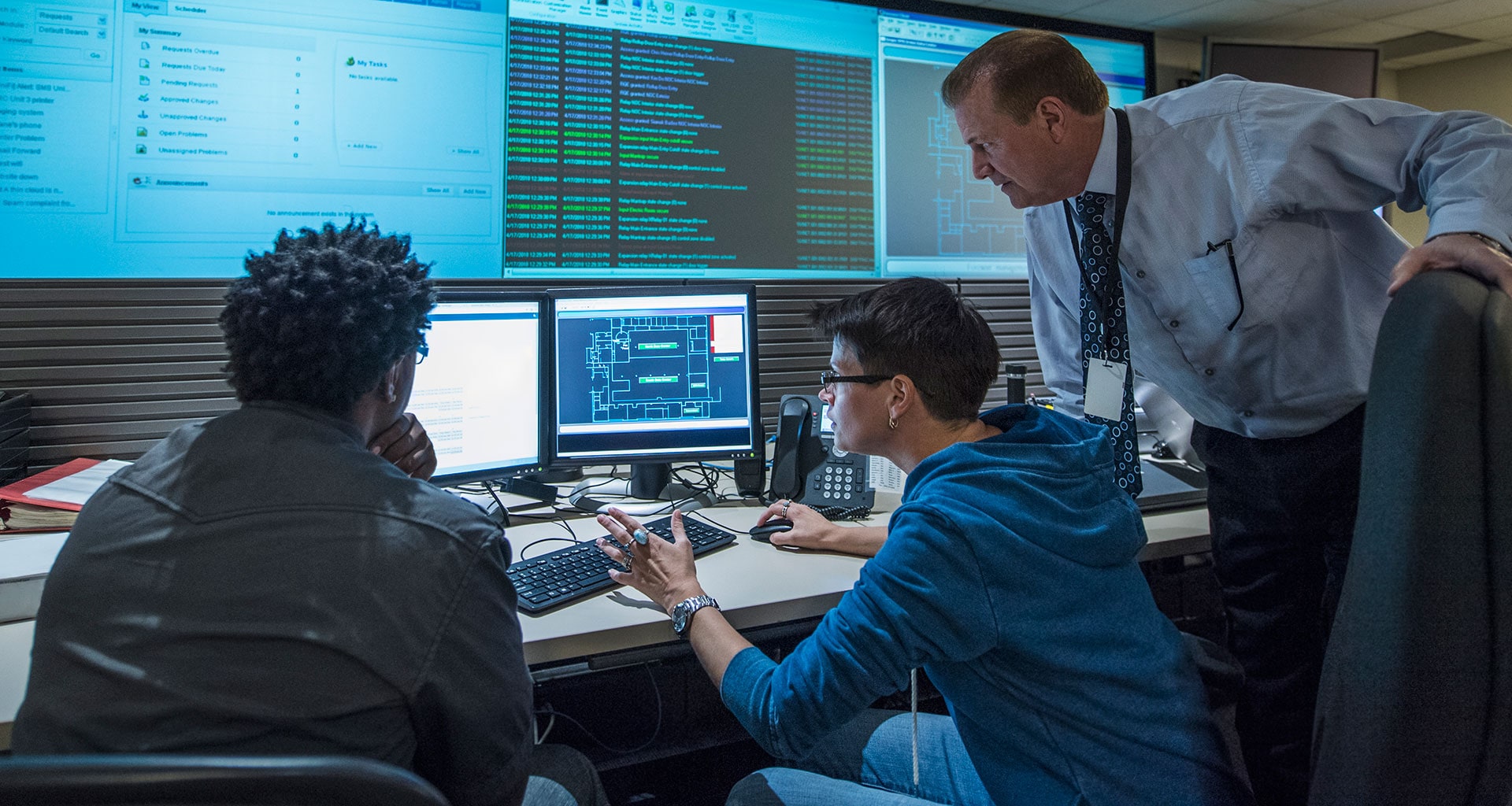
The digital economy is no longer a future concept; it is the current reality of the South African business landscape. As organizations across Gauteng, the Western Cape, and beyond accelerate their digital transformation, the demand for professionals who can bridge the gap between complex technology and business strategy has skyrocketed. Information Systems courses in South Africa offer a unique academic pathway for students who want to master both the “how” of technology and the “why” of business operations.
Unlike pure Computer Science, which focuses heavily on the underlying mathematical theory and software engineering, Information Systems (IS) is about the practical application of technology to solve organizational problems. Whether you are a matriculant looking for your first degree or a professional seeking to pivot into the tech sector, understanding the landscape of available qualifications is the first step toward a high-impact career.
Why Study Information Systems Courses in South Africa?
Choosing to pursue Information Systems courses in South Africa is a strategic move for several reasons. The country serves as the primary tech hub for the African continent, hosting major data centers for global giants like Amazon Web Services (AWS), Microsoft, and Google. This creates a robust ecosystem where IS graduates are highly valued.
1. The Bridge Between Business and Tech
Many companies struggle with a “language barrier” between their technical teams and their management teams. Information Systems graduates act as the translators. By studying IS, you learn how to analyze a business process—such as a retail supply chain or a banking app—and determine exactly what software, hardware, and data structures are needed to make it more efficient.
2. Versatile Career Paths
The versatility of an IS qualification is unmatched. Graduates are not confined to a single role. Depending on your focus, you could move into:
-
Business Analysis: Identifying business needs and determining solutions.
-
Systems Auditing: Ensuring that a company’s digital infrastructure is secure and compliant.
-
Data Analytics: Turning raw data into actionable insights for CEOs.
-
Project Management: Leading teams to deliver complex IT projects on time and within budget.
3. Strong Earning Potential
Because Information Systems sits at the intersection of two critical fields—Business and IT—graduates often command higher starting salaries than those in general administrative or purely technical entry-level roles. In the South African context, where there is a significant “skills gap” in the digital sector, being a qualified IS professional puts you in a strong position for salary negotiations.
Best Information Systems Courses in South Africa
South Africa is home to world-class institutions that offer accredited and internationally recognized qualifications. Here is a detailed look at some of the top-tier Information Systems courses in South Africa currently available for the 2026 academic year.
1. University of Cape Town (UCT) – Department of Information Systems
UCT consistently ranks as one of the premier destinations for IS studies in Africa. Their Department of Information Systems, housed within the Faculty of Commerce, offers a range of programs that are deeply integrated with industry needs.
-
Bachelor of Commerce (BCom) in Information Systems: This is a three-year degree that focuses on how to manage and utilize information technology in a corporate environment. Students study modules like systems analysis, design, and even basic programming, but always within the context of business management.
-
Bachelor of Business Science (BBusSc) in Information Systems: This is a four-year “honours-level” degree that provides a more intensive focus on management and advanced IS topics. It is ideal for students who aspire to executive leadership roles like Chief Information Officer (CIO).
2. University of Johannesburg (UJ) – Academy of Computer Science and Software Engineering
In the latest 2026 global subject rankings, the University of Johannesburg emerged as a leader in Computer Science and Business disciplines. Their Information Systems offerings are known for being forward-thinking and technically robust.
-
BCom in Information Systems: UJ’s program is designed to produce graduates who can manage the entire lifecycle of an information system, from initial conception to quality assurance. The curriculum is frequently updated to include emerging trends like Artificial Intelligence (AI) and the Internet of Things (IoT).
-
Advanced Diploma in Business Information Systems: For those who already have a diploma and want to upgrade their qualification to a degree level, this is an excellent bridge.
3. University of Pretoria (UP) – Faculty of Engineering, Built Environment, and IT
The University of Pretoria offers a specialized Bachelor of Information Technology (BIT) in Information Systems. This program is unique because it is designed to be highly multidisciplinary.
Students at UP benefit from exposure to the “Informatics” philosophy, which treats information, technology, and people as a single interconnected system. This holistic approach is highly effective for solving real-world problems in the South African public and private sectors.
4. UNISA – School of Computing
For many South Africans, full-time on-campus study is not an option. UNISA provides the most flexible Information Systems courses in South Africa through its distance learning model.
The BSc in Computing with a focus on Information Systems allows students to work while they study. While distance learning requires significant self-discipline, UNISA’s curriculum is comprehensive, covering database management, operating systems, and the social aspects of computing.
5. Private Institutions and Specialized Bootcamps
Beyond traditional universities, private colleges like Varsity College, Rosebank College, and specialized providers like WeThinkCode or HyperionDev offer pathways into IS.
-
Varsity College (IIE): Offers a Bachelor of Commerce in Information Systems which is highly regarded for its practical, job-ready approach.
-
Specialized Certifications: For those already in the field, pursuing a CISA (Certified Information Systems Auditor) or CRISC (Certified in Risk and Information Systems Control) through ISACA is often considered the “gold standard” for career advancement in South Africa.
What to Expect in the Curriculum
When you enroll in Information Systems courses in South Africa, your timetable will likely be a blend of technical labs and business lectures. You aren’t just learning to code; you are learning to solve problems.
Typical modules include:
-
Systems Analysis and Design: Learning how to map out a new software system before a single line of code is written.
-
Database Management: Understanding how to store and retrieve massive amounts of data efficiently and securely.
-
IT Project Management: Learning the frameworks (like Agile or Scrum) used to lead tech teams.
-
Cybersecurity and Governance: Protecting an organization’s digital assets and ensuring they follow legal regulations like POPIA (Protection of Personal Information Act).
Comparison: Information Systems vs. Computer Science
One of the most common questions students ask is whether they should choose Computer Science or Information Systems.
| Feature | Computer Science (CS) | Information Systems (IS) |
| Focus | How computers work, software engineering, and algorithms. | How to use technology to improve business performance. |
| Math Level | Very high (Calculus, Linear Algebra). | Moderate (Statistics, Business Math). |
| Typical Career | Software Developer, AI Researcher. | Business Analyst, IT Manager, Systems Auditor. |
| Outcome | Building the tools. | Implementing the tools in an organization. |
How to Choose the Right Course for You
Selecting the right program among the many Information Systems courses in South Africa depends on your personal career goals and current situation.
-
Check Accreditation: Ensure the degree is recognized by the South African Qualifications Authority (SAQA) and the Council on Higher Education (CHE).
-
Industry Connections: Look for universities that have “Career Days” or partnerships with companies like Standard Bank, Vodacom, or Naspers. These connections often lead to internships.
-
Technical vs. Managerial: If you love coding, look for an IS degree within a Science faculty (BSc). If you are more interested in leadership and strategy, look for one in a Commerce faculty (BCom).
The landscape of Information Systems courses in South Africa is diverse and full of opportunity. Whether you choose the prestigious halls of UCT, the innovative environment at UJ, or the flexibility of UNISA, you are investing in a career that is central to the future of the global economy.
Information Systems is more than just a degree; it is a mindset that combines technical proficiency with strategic thinking. As South Africa continues to grow as a digital powerhouse, the individuals who can navigate both the server room and the boardroom will be the ones leading the way. Start your journey today by researching the specific entry requirements for these top institutions and prepare to become a vital part of the fourth industrial revolution.
Ready to start? Contact the admissions offices of these universities or visit their open days to find the perfect fit for your professional future.