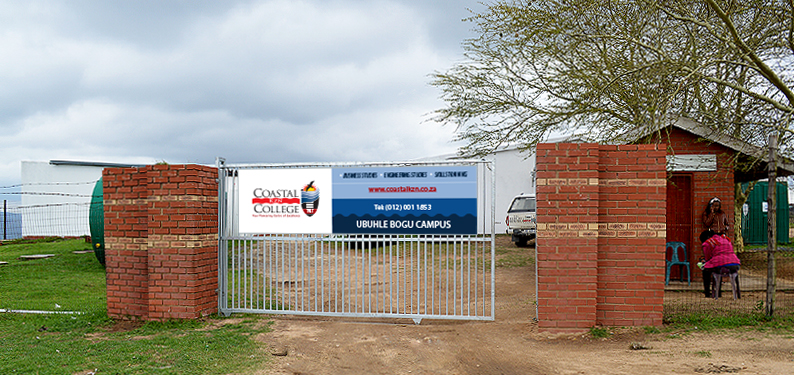
If you’re looking for practical, career-oriented education in KwaZulu-Natal, understanding the Coastal TVET College List of courses and fees structure is your essential first step. As the largest Technical and Vocational Education and Training (TVET) college in the province, Coastal KZN TVET College serves a vast community, offering nationally recognized qualifications designed to bridge the gap between learning and earning[citation:4]. This guide provides a clear, detailed breakdown of what the college offers and how to plan your educational investment.
Introduction to Coastal KZN TVET College
Coastal KZN TVET College was formed from the merger of several historic technical colleges and has grown into a pivotal institution for skills development in the region[citation:4]. With its central administration in KwaMakhutha and a catchment area stretching from north of Durban down the South Coast, the college caters to a diverse student body[citation:4]. Its mission focuses on delivering responsive programs that address both student ambitions and the socio-economic needs of the broader community, making it a cornerstone for vocational training in KwaZulu-Natal[citation:4].
Why Choose Coastal TVET College for Your Studies?
Choosing where to pursue your vocational training is a significant decision. Coastal TVET College stands out for several compelling reasons that align with the needs of modern learners and the job market.
Industry-Aligned, Practical Education
The college’s programs are not purely theoretical. They are structured to provide hands-on skills that employers actively seek. With a national shortage of qualified artisans in fields like engineering, construction, and hospitality, the college’s curriculum is tailored to make graduates job-ready from day one[citation:7]. This focus on practical competency over abstract theory is a defining feature of the TVET educational pathway.
Pathways to In-Demand and Lucrative Careers
TVET qualifications can lead directly to stable and rewarding careers. For instance, trades such as electricians, plumbers, welders, and automotive mechanics are consistently highlighted as scarce skills in South Africa[citation:7]. These professions offer competitive earning potential, with qualified artisans’ salaries ranging significantly based on experience and specialization[citation:7]. Coastal TVET College provides the foundational and advanced training required to enter these high-demand fields.
Affordability and Financial Support
Compared to university education, TVET colleges offer a more accessible financial model[citation:2][citation:7]. Coastal TVET College participates in the National Student Financial Aid Scheme (NSFAS), which can cover tuition, accommodation, transport, and other costs for qualifying students[citation:2][citation:3]. For those who may not qualify for full bursaries, the college provides structured payment plans, making education more manageable[citation:1][citation:3].
A Legacy of Community Impact
With a history of serving adult learners, out-of-school youth, and industry employees, the college has deep roots in the community[citation:4]. This experience translates into an understanding of local economic needs and a proven track record of empowering students from varied academic and professional backgrounds to improve their prospects.
Coastal TVET College List of Courses and Fees Structure
Now, let’s explore the core of the Coastal TVET College List of courses and fees structure. The college primarily offers qualifications through three streams: National Certificate Vocational (NCV) programs, NATED / Report 191 programs, and Occupational/Skills courses. Each has a distinct purpose and fee model.
1. National Certificate Vocational (NCV) Programs
NCV programs are ideal for students who have completed Grade 9 or equivalent. They are full-time, three-year qualifications from Levels 2 to 4 (NQF Levels 2-4) that combine theory with practical training. A key feature is the requirement to take seven subjects: three fundamental subjects (like Language and Mathematics) and four vocational subjects specific to your field[citation:6].
The fees for NCV programs are typically annual. It’s important to note that fees can vary, and engineering-related fields often have higher costs due to workshop and equipment requirements. Below is a representation of the NCV program costs based on historical data, which serves as a useful reference for understanding the fee landscape.
| NC(V) Programme | Annual Tuition Fee (Reference) |
|---|---|
| Primary Agriculture | R 18,062 |
| Engineering and Related Design | R 13,698 |
| Hospitality | R 12,808 |
| Civil Engineering and Building Construction | R 10,584 |
| Electrical Infrastructure Construction | R 10,441 |
| Information Technology and Computer Science | R 10,305 |
| Tourism | R 9,770 |
| Management | R 7,872 |
| Finance, Economics and Accounting | R 7,521 |
| Education and Development | R 7,322 |
| Marketing | R 6,714 |
| Office Administration | R 6,661 |
Table: Historical NCV program fees for reference[citation:1]. Current fees may vary.
2. NATED / Report 191 Programs
NATED programs are post-matric (Grade 12) qualifications. They are trimester-based and are structured across different levels:
- N1-N3: These are engineering studies certificates (e.g., Civil, Electrical, Mechanical).
- N4-N6: These are higher-level certificates and diplomas in both Engineering and Business Studies. To obtain a National Diploma, students must complete N4-N6 theoretical studies and then 18-24 months of relevant practical experience.
Fees for NATED programs are often charged per trimester. Payment requirements differ between Engineering and Business streams. For example, engineering students may need to pay the full trimester fee upfront, while business students might have the option of a deposit and payment plan[citation:1][citation:3].
| NATED Programme (N4-N6) | Annual Fee (Full Year) | Per Trimester Fee |
|---|---|---|
| Hospitality and Catering Services | R 9,443 | R 2,092.50* |
| Tourism | R 9,201 | R 4,600.50 |
| Hair Care | R 8,232 | R 4,116.00 |
| Educare | R 5,084 | R 2,542.00 |
| Engineering (Civil/Electrical/Mechanical) | R 4,943 | R 1,648.00 |
| Business Management, Financial Management, etc. | R 4,185 | R 2,092.50 |
Table: Historical NATED program fees for reference[citation:1]. *Note: Some per-trimester fees are calculated as 50% of the annual fee, while others (especially those with practical components) have a different structure.
3. Skills and Occupational Programmes
For those seeking specific, shorter-term training to upgrade skills or enter a trade quickly, the college offers a variety of skills courses. These are typically shorter in duration (e.g., 56 hours to 6 months) and highly focused[citation:1].
- Examples include: Cabinet Making, Basic and Advanced Electricity, Plumbing, Welding, Carpentry, Bricklaying, Motor Mechanics, Haircare, Beauty, and Computer Literacy[citation:1].
- Fee Structure: Fees for these courses vary widely based on length and materials. Historical examples range from around R1,034 for a short course like Sewing Basic Phase 1 to approximately R10,314 for a full-time trimester in Sewing[citation:1]. Prospective students are advised to contact their chosen campus directly for the latest fees on these flexible offerings[citation:1].
Understanding Fees, Payment, and Financial Aid
Navigating the financial aspects of your studies is crucial. Here’s what you need to know about costs beyond tuition, payment rules, and available support.
Additional Costs to Budget For
When planning your finances, consider these potential additional expenses, which are common across TVET colleges[citation:2][citation:8]:
- Registration Fee: A once-off fee payable at enrolment, often estimated between R250 and R500[citation:8].
- Learning Materials: This can include textbooks, workbooks, and stationery, potentially adding R500 to R1,000 to your annual costs[citation:8].
- Protective Clothing: Essential for many engineering and construction workshops.
- Examination Fees: Some programs may have separate exam fees, estimated at R200 to R500[citation:8].
Payment Policies and Plans
Coastal TVET College has clear payment policies[citation:1][citation:3]:
- For NCV & Occupational Programs: Students not funded by NSFAS must pay a minimum deposit (historically 60% at registration) and then enter a formal payment arrangement for the balance[citation:3].
- For NATED Engineering: Non-NSFAS students typically must pay the full trimester fee on registration day[citation:1][citation:3].
- For NATED Business & General Studies: Non-NSFAS students may pay a deposit (e.g., 60%) at registration with a plan for the remainder[citation:3].
The college emphasizes that all students are personally liable for their tuition fees and must sign an acknowledgement of debt if fees are not paid in full upfront[citation:1][citation:3].
Financial Aid: The NSFAS Bursary Scheme
The National Student Financial Aid Scheme (NSFAS) is the primary source of financial support for eligible TVET students. It is a bursary, not a loan, meaning funded students do not have to repay the money[citation:3].
Eligibility: To qualify, you must be a South African citizen, demonstrate financial need, show academic potential, and be registered or intending to register for an NCV or NATED program[citation:3]. Funding is not automatic and is subject to availability[citation:3].
Application & Documentation: Students apply online via the NSFAS portal. Required documents usually include certified copies of your ID, your parents’/guardians’ IDs and proof of income, proof of address, and, if applicable, death certificates or affidavits[citation:3].
Continued Funding (Progression Rule): Bursary renewal is not guaranteed. To continue receiving funding, students must meet academic progression criteria, such as passing a required number of subjects (e.g., 3 out of 4 for Report 191, or 5 out of 7 for NCV)[citation:3]. Students who repeat a level or switch programs (“program hopping”) may lose their financial aid eligibility[citation:3].
Understanding the Coastal TVET College List of courses and fees structure empowers you to make an informed decision about your future. The college provides a viable and respected pathway to gaining practical skills in sectors vital to South Africa’s economy.
Read Also
- Central Johannesburg TVET College List of Courses and Fees Structure
- Capricorn TVET College Courses and Fees
- Buffalo City TVET College Online Application
- List of Courses Offered at Buffalo City TVET College and Fees Structure