Category: Universities

  • Fidelity Services Group Learnerships 2026/2027: How to Apply

    Fidelity Services Group Learnerships 2026/2027: How to Apply

    For many young South Africans, the journey from education to employment is often hindered by a single obstacle: a lack of professional work experience. Theoretical knowledge gained in the classroom is essential, but without practical application, graduates can find themselves in a cycle of rejection based on entry-level roles requiring experience they do not have. Learnerships were designed specifically to address this gap, offering a structured bridge between learning and earning. If you are based in Gauteng and looking for a way to kickstart your career, the Fidelity Services Group Learnerships 2026 offer a tangible path forward. This programme is not just about shadowing colleagues; it is a formal structure designed to equip unemployed youth with nationally recognized skills and real-world workplace exposure. This article provides a detailed, factual look at what this opportunity entails, who qualifies, and exactly how you can submit a competitive application before the 13 March 2026 deadline.

    What is the Fidelity Services Group Learnership 2026?

    The Fidelity Services Group Learnerships 2026 programme is a structured workplace intervention aimed at unemployed individuals between the ages of 18 and 35. Unlike a short-term internship, this is a 24-month commitment where participants gain in-depth, practical experience within one of South Africa’s largest private security providers. The core purpose of the programme is to provide successful candidates with substantial workplace experience. This duration allows learners to move beyond basic tasks and truly integrate into the professional environment, developing competencies that are immediately transferable to the job market. While the specific daily tasks (“key performance areas”) are determined based on where a candidate is placed within the company, the overall goal is consistent: to build a foundation of professional skills, discipline, and industry-specific knowledge.

    About Fidelity Services Group

    Understanding the company behind the opportunity is crucial for any applicant. Fidelity Services Group is not a small, localized operation; it is a market leader in the security and risk management sector in Southern Africa. The company provides integrated solutions that span the security spectrum, including:
    • Armed response and rapid reaction services
    • Guarding and loss prevention
    • Cash-in-transit logistics
    • Electronic security systems and monitoring
    • Fire and safety solutions
    With a national footprint serving residential, commercial, and industrial clients, Fidelity Services Group places a strong emphasis on technology, ethical business practices, and the continuous development of its human capital [citation:4][citation:8]. For a learner, having this brand name on their CV signals to future employers that they have been trained to a high standard in a demanding and professional environment.

    Programme Overview: Location and Duration

    When planning your application, it is important to consider the logistics. This particular intake of the Fidelity Services Group Learnerships 2026 is specifically focused on the Gauteng region.
    • Locations: Opportunities are available in Roodepoort, Florida, Helderkruin, Midrand, and the surrounding areas.
    • Duration: The programme runs for 24 months, providing an extended period of learning and skill development.
    • Closing Date: Applications close on 13 March 2026 .
    It is also worth noting that while the primary focus is on the general learnership, Fidelity Services Group occasionally advertises specialized roles, such as the Sales Administrator Learnership also based in Midrand. While the general learnership application deadline is in March, always check the specific closing dates for any specialized roles you may be interested in, as they can differ.

    Minimum Requirements for Applicants

    Meeting the minimum requirements is the first step to being considered. The company has set clear criteria to ensure candidates can handle the demands of the workplace.

    Basic Eligibility

    • Citizenship: You must be a South African citizen.
    • Age: Applicants must be between 18 and 35 years old.
    • Education: A completed Grade 12 / Matric certificate is mandatory.
    • Background Check: All applications are subject to criminal checks. A clear criminal record is essential for a role in the security industry.

    Skills and Competencies

    Beyond the basic requirements, Fidelity looks for individuals with a specific set of soft skills that indicate they are ready for a professional environment:
    • Language Proficiency: A strong command of the English language, both verbal and written, is necessary for clear communication and report-writing.
    • Administrative Ability: You should possess strong administrative and organizational skills, with the ability to work independently and manage tasks professionally.
    • Interpersonal Skills: The role requires liaising with personnel at all levels, so good interpersonal and communication skills are a must.
    • Attitude: The ideal candidate is highly motivated, enthusiastic, willing to follow instructions, and capable of performing under pressure.

    How to Apply for Fidelity Services Group Learnerships 2026

    The application process for the Fidelity Services Group Learnerships 2026 is straightforward but requires attention to detail. Incomplete applications are often the primary reason candidates are rejected before their skills are even evaluated.

    Required Documentation

    Prepare the following documents before you begin your application. Ensure that your copies are certified if requested, though it is good practice to have them ready.
    • An updated and professional Curriculum Vitae (CV).
    • A certified copy of your South African ID.
    • A copy of your SARS document (proof of registration with the tax authority).
    • Certified copies of your qualifications, including your Matric certificate.

    Submission Instructions

    Unlike many large corporations that use online application portals, this specific learnership requires submission via email.
    • Email Address: Send your application to PhilippineS@fidelity-services.com.
    • Professionalism: Treat your email as a formal cover letter. Use a clear subject line (e.g., “Application for Fidelity Learnership 2026 – [Your Name]”) and write a brief, polite message in the body of the email to introduce yourself and attach your documents.

    What You Gain from a Learnership

    Participating in a learnership offers benefits that go beyond a monthly stipend. It is an investment in your future employability.
    • Structured Workplace Experience: You receive 24 months of verifiable experience, which is often the missing piece on many young job seekers’ CVs.
    • Earn While You Learn: Unemployed learners receive a monthly allowance (stipend) to cover basic costs like transport and food, allowing you to focus on your training.
    • Nationally Recognized Qualification: Upon successful completion, you receive an official certificate indicating the area of competence you have developed. This qualification is recognized across South Africa.
    • Industry Exposure: You gain insight into the private security industry, a critical and growing sector of the South African economy.

    How Learnerships Work

    Understanding the structure of a learnership can help you prepare for what lies ahead. A learnership is a contractual agreement involving three parties: the learner, the employer (Fidelity Services Group), and a training provider. This contract must be registered with the relevant Sector Education Training Authority (SETA), which ensures the programme meets industry standards. During the 24 months, you will split your time between theoretical classroom learning and practical on-the-job training. You will be assessed throughout the programme, not just with a final exam, to ensure you are competently acquiring the required skills.

    Important Considerations and Feedback

    It is important to approach this opportunity with realistic expectations. While learnerships significantly improve your chances of employment, completion does not guarantee a permanent job with the company. However, many learners are hired by the companies where they trained, and even if not, the qualification makes you a far stronger candidate in the open job market. Fidelity Services Group supports fair practice and transformation. While preference is given to existing employees where applicable, appointments are made on merit, and historically disadvantaged candidates and black female candidates are encouraged to apply. If you do not receive any feedback within 10 working days after the closing date of 13 March 2026, you should regard your application as unsuccessful.

    Frequently Asked Questions (FAQs)

    Is the Fidelity Services Group Learnership paid?

    Yes, unemployed learners participating in a registered learnership are entitled to a monthly stipend to help cover living expenses. The exact amount is not specified in the advert and depends on the level of the learnership.

    Can I apply if I live outside the listed Gauteng areas?

    The opportunity is based in specific areas (Roodepoort, Florida, Helderkruin, Midrand). If you live further away, you should carefully consider your transport options and mention your willingness and ability to commute in your application.

    Do I need a driver’s license?

    The minimum requirements listed in the main learnership advert do not include a driver’s license. However, for specific roles like the Sales Administrator position, it is not listed as a requirement either, though being technologically adept with MS Office is essential.

    Is this only for security guard work?

    Not necessarily. While Fidelity is a security company, the administrative and organizational skills required suggest that learners could be placed in various support functions, such as office administration, coordination, or sales support, depending on the business’s needs at the time of placement. The Fidelity Services Group Learnerships 2026 represent a significant chance for unemployed youth in Gauteng to break into the formal economy. By combining theoretical knowledge with 24 months of practical experience at a top-tier security firm, participants can build a solid foundation for a future career. If you meet the requirements and are prepared to commit to a two-year learning journey, do not delay. Prepare your CV, gather your ID and qualifications, and draft a professional email. Submit your application to PhilippineS@fidelity-services.com before the closing date on 13 March 2026. This could be the step that changes the trajectory of your professional life.
  • University of Limpopo (UL) Fee Structure 2026

    University of Limpopo (UL) Fee Structure 2026

    Planning for higher education involves many critical decisions, and understanding the costs involved is one of the most important steps. For anyone considering the university of limpopo (UL) fee structure 2026, this guide provides a clear, comprehensive overview of what to expect. We will explore the various costs associated with studying at UL, from initial application fees to tuition and payment methods.

    Choosing the right university is a significant milestone. Beyond academic reputation and campus life, having a transparent understanding of the financial commitment helps students and their families plan effectively for the journey ahead.

    Introduction to the University of Limpopo (UL)

    The University of Limpopo, situated in the heart of Mankweng, Limpopo Province, stands as a beacon of higher education and innovation in South Africa . With its two main campuses—the Turfloop Campus and the Medunsa Campus—UL offers a diverse range of academic programmes designed to prepare students for successful careers . Accredited by the Department of Higher Education and Training (DHET), the university is known for its commitment to fostering knowledge and supporting learners from various backgrounds .

    Why Choose to Study at the University of Limpopo (UL)?

    Before delving into the specifics of the university of limpopo (ul) fee structure 2026, it is worth understanding what makes UL a compelling choice for higher education. The institution is not just about lectures and examinations; it is about building a foundation for the future.

    Academic Excellence and Programme Diversity

    The University of Limpopo provides a wide spectrum of academic offerings. Prospective students can explore popular programs such as the Bachelor of Medicine and Bachelor of Surgery (MBChB), Bachelor of Laws (LLB), Bachelor of Education (BEd), and Bachelor of Science in Agriculture . In addition to these degrees, UL also offers various certificates, diplomas, and postgraduate qualifications across disciplines like health sciences, law, education, and agriculture . This diversity allows students to find a path that aligns with their passions and career goals.

    Student Support and Campus Life

    Learning extends beyond the classroom at UL. Students benefit from access to state-of-the-art libraries and online learning platforms, supported by academic advisors who guide them through their studies . The vibrant campus life is designed to be inclusive, providing a supportive environment where students from diverse backgrounds can thrive.

    Strategic Location

    With its physical address at the intersection of R71 Tzaneen Road and University Street in Polokwane, the university is accessible and deeply integrated into the local community . This location offers students a unique blend of academic focus and cultural exposure.

    University of Limpopo (UL) Fee Structure 2026

    Understanding the university of limpopo (ul) fee structure 2026 is essential for a smooth registration process. The fees cover a range of services and are determined by the university’s governing council. It is important for students to note that the institution reserves the right to change fees without prior notice, although such changes are subject to approval by the Governing Council .

    Generally, the fees can be categorized into two main types: application fees and tuition fees.

    1. Understanding the Application Fee for 2026

    Before a student can register, they must first apply and be accepted. The application process requires a non-refundable fee. For the 2026 academic cycle, the University of Limpopo has set the following application fees :

    • South African Applicants: R200.00

    • International Applicants: R750.00

    This fee is mandatory for all first-time and returning applicants and must be paid before the application can be processed . It is crucial to attach the proof of payment to the application form, as failure to do so may render the application invalid .

    How to Pay the Application Fee

    To ensure your application is processed without delay, follow the prescribed payment methods for the application fee. The banking details for this specific purpose are as follows :

    Detail Information
    Bank Name Standard Bank
    Branch Name Polokwane Square
    Account Number 030131405
    Branch Code 051001
    Reference Applicant’s ID / Passport Number

    When making the deposit, using the applicant’s ID or passport number as a reference is vital for the university to allocate the payment correctly . Cash payments are generally not accepted, so bank transfers or deposits are the recommended methods .

    2. Tuition Fees for Undergraduate and Postgraduate Programmes

    The tuition fee is the core component of the university of limpopo (ul) fee structure 2026. This is the amount payable for instruction in your chosen program. It is important to understand that tuition fees vary significantly depending on the faculty and the specific program of study .

    For instance, a student enrolled in the Bachelor of Medicine and Bachelor of Surgery (MBChB) program will have a different fee structure compared to a student in the Bachelor of Education (BEd) program, due to the differing nature of resources and training involved . The university’s official fees booklet provides a comprehensive breakdown, covering tuition, course materials, and other associated costs .

    Because these figures are specific and subject to change, the university administration has made it easy for students to access their personalized fee information.

    How to Access Your Specific Fee Structure

    The official and most accurate way to view the university of limpopo (ul) fee structure 2026 for your specific program is through the UL website. Here is a simple guide to finding the information :

    • Step 1: Visit the official University of Limpopo website at https://www.ul.ac.za/ .

    • Step 2: Navigate the menu to find the “Fees” or “Student Fees” section. This is often located under the “Current Students” or “Admissions” tab .

    • Step 3: Look for the link to the “Fees Brochure,” “Fees Booklet,” or “Tuition Fees Structure for 2026” . This document is typically available for download in PDF format .

    • Step 4: If you are a returning student, you can also log into the student portal to view your detailed fee statement.

    Alternatively, the university’s Financial Aid Department can provide full fee information and answer any specific queries you may have .

    3. Banking Details for Tuition Fee Payments

    Once you are registered, paying your tuition fees requires using the correct university bank account. It is critical to distinguish between the application fee bank account and the tuition fee bank account. For all tuition fee payments, accommodation, and other study-related costs, the following banking details apply :

    Detail Information
    Account Name University of Limpopo
    Bank Standard Bank
    Account Number 330040006
    Branch Polokwane
    Branch Code 052548
    Swift Code SBZAZAJJ (for International Deposits)

    Students are advised to use the Standard Bank M65 deposit slips or ordinary deposit slips, which can be obtained from any Standard Bank branch or at the Turfloop Campus Student Finance Section .

    4. Payment Methods and Policies

    The University of Limpopo offers several convenient methods for fee payment, accommodating the different needs of its student body. According to the university’s guidelines, fees may be paid using the following methods :

    • Debit Cards: These payments are typically accepted only if you register in person at the university .

    • Credit Cards: UL accepts Visa and MasterCard. The cardholder’s signature and all required particulars must be supplied on the registration form .

    • Bank Deposits and Electronic Funds Transfer (EFT): This is a common method for South African banks. It is crucial that all information on the deposit slip is complete and accurate. If any detail is incorrect, the transaction may be delayed or not processed, which can take up to two working days to reflect . The student’s ID number should be used as a reference to ensure proper allocation of funds .

    Important Payment Policies to Remember

    Adhering to the university’s financial policies is just as important as making the payment itself. Here are key points to keep in mind regarding the university of limpopo (ul) fee structure 2026 :

    • Payment Deadlines: Fees should be paid on time, preferably before the beginning of each semester. Adequate and acceptable payment arrangements must be made at the time of registration.

    • Consequences of Non-Payment: Failure to pay fees within the specified period may result in the withdrawal of registration. The university reserves the right not to render services to students with outstanding balances .

    • Refund Policy: Generally, fees paid are non-refundable. If a student withdraws or leaves the college without permission, the fees paid will not be refunded . Specific terms and conditions for refunds are applied in accordance with university policies .

    • Identity Cards: Students will be issued non-transferable identity cards. Loss of these cards must be reported immediately to the police and the registrar of students .

    Navigating the financial aspects of tertiary education requires careful attention to detail. The university of limpopo (ul) fee structure 2026 is designed to be transparent, allowing students to understand their financial obligations from the outset. From the initial application fee of R200 for South Africans to the various tuition costs that differ by program, being informed is the first step toward a successful academic year.

  • How to Check Your UNISA Application Status for 2026: A Step-by-Step Guide

    How to Check Your UNISA Application Status for 2026: A Step-by-Step Guide

    Applying to the University of South Africa (UNISA) is a significant step toward advancing your education and career. As the largest open distance learning institution in Africa, UNISA receives hundreds of thousands of applications each year. After the anticipation of submitting your application for the 2026 academic year, the next logical step is to track its progress. Knowing how to check your UNISA application status is crucial for planning your next moves, whether that involves accepting an offer, submitting outstanding documents, or considering alternative study paths. This guide provides a detailed, step-by-step walkthrough on how to track your application for the 2026 intake. We will cover the official methods, explain what different status messages mean, and outline what actions you need to take to secure your place at UNISA.

    Why Study at UNISA in 2026?

    Before diving into the status check process, it helps to understand the environment you are hoping to join. UNISA has a rich history dating back to 1873 and has perfected the model of open distance learning (ODL). This model is designed to fit around your life, not the other way around. Whether you are a working professional, a parent, or someone living in a remote area, UNISA offers the flexibility to study from anywhere. The university offers a diverse range of programs, from higher certificates and diplomas to undergraduate degrees and extensive postgraduate options, including Honours, Master’s, and Doctoral degrees. For 2026, UNISA has maintained its commitment to accessibility, allowing students to tailor their studies to their personal and professional goals. By choosing UNISA, you are opting for a learning method that emphasizes self-discipline and offers a wealth of support services to help you succeed.

    Understanding the UNISA Application Process for 2026

    To effectively track your application, you must first understand the journey it takes. The application process is not instantaneous; it involves several stages of verification and assessment.

    The Assessment and Selection Procedure

    Once you submit your online application, UNISA does not simply process it on a first-come, first-served basis. Instead, each application undergoes a formal evaluation. The university assesses your application based on several key criteria:
      • Academic Admission Requirements: They verify if your qualifications meet the minimum requirements for the specific program you applied for.
      • Points Score: For undergraduate qualifications, UNISA often uses an Admission Points Score (APS) system to rank applicants.
      • Available Space: Ultimately, even if you meet the requirements, an offer depends on the number of available spaces for that particular qualification. This is why it is possible to meet the criteria but still not receive an immediate offer.
      • Research Suitability (Postgraduate): For Master’s and Doctoral degrees, the assessment also includes the viability of your intended research and the availability of supervisors within your chosen department.
    Because of this detailed selection process, feedback is not immediate. According to the official UNISA FAQ for undergraduate qualifications, you should expect to receive feedback on your application roughly four to six weeks after the closing date for applications, not from the date you submitted. For some postgraduate programs, the process can take up to three months.

    How to Check Your UNISA Application Status for 2026

    UNISA has made it straightforward to track your application online. You will not need to call or visit a regional office for this basic information. All communication regarding your application outcome will be channeled through the official website and your email.

    Step 1: Gather Your Necessary Information

    Before you log in, make sure you have the following details handy:
      • Student Number: This is the 8-digit number you received when you first applied. If you are a first-time applicant, this number was generated during the application process. If you are a returning student, you will use your existing student number.
      • Personal Information: You may need your full name, surname, and date of birth or ID/passport number to verify your identity.

    Step 2: Navigate to the Official Status Check Portal

    The most reliable way to check your status is through the official UNISA website. Avoid third-party sites that may have outdated information.
      • Open your web browser and go to the official UNISA website: www.unisa.ac.za.
      • Navigate to the “Apply for admission” section. From there, look for a link that says “Application Status” or check your “myUnisa” dashboard. The direct path is often found under the ‘Apply’ menu on the main website.

    Step 3: Enter Your Details and View Your Status

    Once you are on the application status page:
      • Enter your student number and your full surname as it appears on your ID.
      • You may also be prompted to enter your date of birth or ID number for an extra layer of security.
      • Click the “Submit” or “Check Status” button.
      • The system will then display the current status of your application.
    It is a good practice to take a screenshot of this page for your records, especially if the status requires you to take immediate action.

    Alternative: Check Your Email

    UNISA communicates important updates via email. It is vital that you check the email account you used during your application regularly.
      • First-time applicants: Check the email address and cellphone number you provided on your application form.
      • Previously registered students: UNISA will primarily communicate with you via your official myLife e-mail account. Make sure you can access it.
    Sometimes, an SMS notification will alert you to check your email for a more detailed message.

    Decoding Your UNISA Application Status

    When you check your UNISA application status, you will see one of several standard messages. Understanding what these mean will help you respond appropriately.
    Status Message What It Means Action Required
    Application in Progress Your application has been received and is currently being assessed by the relevant college. No decision has been made yet. No immediate action. Continue to monitor the portal and your email for updates.
    Incomplete Application You are missing one or more compulsory documents, or a document did not upload correctly. This could include your ID, academic records, or proof of payment. Log in immediately to the application portal. You will usually have a limited time (e.g., 10 working days from submission) to upload the outstanding documents. Failure to do so will result in your application being declined.
    Provisionally Accepted / Offer Made Congratulations! You meet the requirements and have been offered a space, pending final checks or completion of certain steps. You must accept or decline this offer within the prescribed period—usually 10 working days from the date of the offer.
    Unsuccessful / Rejected Your application was not successful. This could be because you did not meet the minimum admission requirements, or because the program was full. Read the feedback letter carefully. You may have the option to appeal the decision or explore alternative study options.
    Common UNISA application statuses and their meanings.

    What to Do After Receiving an Offer

    If you are fortunate enough to see “Provisionally Accepted” or “Offer Made” when you check your UNISA application status, your journey is not over. You need to secure your spot.

    Step 1: Complete the First-Year Experience MOOC (If Applicable)

    If you are a first-time Unisa applicant, you cannot accept your offer immediately. You must first complete the First-Year Experience MOOC (FYE MOOC). This is a free online course (UOL009-FYE101_2024) designed to introduce you to studying at Unisa. You will only be able to proceed to Step 2 after finishing the last activity of this MOOC.

    Step 2: Accept or Decline the Offer

    Once you have completed the MOOC (or if you are a returning student), go to www.unisa.ac.za/acceptoffer.
      • Time is of the essence: You have 10 working days to make your decision. If you do not accept within this time, Unisa reserves the right to withdraw the offer and give the space to another applicant.
      • Choose Wisely: If you applied for more than one qualification and received multiple offers, you may only accept one. Once you accept an offer for a specific qualification, the others will automatically fall away. You cannot change your mind after accepting, so choose the program that best fits your goals.

    Navigating an Unsuccessful Application

    A rejection can be disappointing, but it is not the end of the road. When you check your UNISA application status and find it is unsuccessful, read the accompanying letter from UNISA carefully. It often contains valuable information about your options.

    The Appeals Process

    You have the right to appeal the decision, but only under specific circumstances:
      • You believe the university made a mistake: For example, if your final marks were incorrectly captured.
      • You have new documents: If you have improved your final school results or have a new qualification that could change the outcome, you may submit an appeal.
    Appeals must be submitted through the formal UNISA appeals process. Detailed information on how to appeal can be found on the UNISA website.

    Alternative Study Options

    If your application was declined because you did not meet the minimum requirements, consider these pathways:
      • Recognition of Prior Learning (RPL): If you are 23 years or older and have relevant work experience, you may be considered for admission through RPL, even if you don’t meet the formal academic requirements.
      • Higher Certificates: These are often one-year programs that can serve as a stepping stone to a diploma or degree. They have lower APS requirements and can help you build the foundational knowledge needed for higher-level study.
    Staying proactive about your application is the best way to ensure you don’t miss critical deadlines. By following the steps outlined above, you can easily check your UNISA application status for 2026 and understand exactly what comes next. Whether you are accepting an offer, uploading a missing document, or preparing an appeal, taking timely action is essential. The journey to higher education requires patience and attention to detail. Use the official UNISA website as your primary source of information, keep a close eye on your email inbox (especially your myLife account if you are a returning student), and respond to any requests from the university promptly. With the right approach, you will be well on your way to joining the UNISA community for the 2026 academic year. Read Also
  • University Of South Africa UNISA Fee Structure for 2026

    University Of South Africa UNISA Fee Structure for 2026

    Planning your finances is a crucial step when preparing for higher education. For students considering distance learning, the University Of South Africa UNISA Fee Structure is often a deciding factor. As the largest open distance learning institution in the continent, UNISA provides educational opportunities to thousands of students both in South Africa and abroad.

    Understanding the costs involved helps you budget effectively and avoid registration delays. The 2026 academic year brings specific fee structures for undergraduate qualifications, honours degrees, and postgraduate diplomas. This guide provides a clear, detailed breakdown of what you can expect to pay, when payments are due, and how to complete your transactions correctly.

    Unlike traditional universities, UNISA operates on a module-based fee system. This means you pay per module rather than a set annual tuition fee, offering flexibility to manage your study load and spread the cost according to your financial situation .

    Why Study at UNISA

    Before examining the specific numbers, it is worth considering what makes UNISA a unique educational environment. For many, the appeal lies in its accessibility. You do not need to relocate or attend daily lectures, making it possible to balance work, family, and studies .

    The institution is designed for self-motivated individuals. It offers a wide range of accredited qualifications across various fields, from Humanities and Law to Science and Engineering. Because the University Of South Africa UNISA Fee Structure is module-based, you have control over your academic pace. You can register for fewer modules if your budget is tight or take a full load if you wish to complete your degree faster.

    Furthermore, studying via Open Distance e-Learning (ODeL) reduces indirect costs. You save on commuting, on-campus accommodation, and other incidental expenses associated with attending a residential university. The funds you save can then be allocated toward your prescribed textbooks or a reliable internet connection, which are essential for your studies.

    University Of South Africa UNISA Fee Structure for 2026

    The fees for 2026 are structured according to your level of study—undergraduate or honours—and the specific subject group of your chosen modules. Fees are generally divided into two main categories: undergraduate studies (usually first-year to third-year level) and honours & fourth-year studies .

    General Payment Rules for 2026

    There are a few universal rules that apply to all students registering for 2026. First, a minimum amount is payable at registration. This must be received by UNISA before the closing date for your specific module or qualification; otherwise, your registration will not be processed .

    Second, all fees must be paid into the university’s official bank accounts using your correct student number and an allocation code as a reference. If the reference is incorrect, the payment may be delayed, which could jeopardize your registration .

    Finally, note that miscellaneous fees—such as those for study material delivery or foreign student levies—are also payable at registration where applicable .

    Undergraduate Fee Structure for 2026

    For undergraduate students (typically higher certificate, diploma, and degree students not yet at honours level), the cost is determined by the subject category. The tables below outline the prescribed fees per module type for the 2026 academic year .

    1. Subjects in Education; Law; Psychology; and Public Management and Services

    If you are pursuing a qualification in these fields, your fees fall into this category. The pricing varies depending on whether you take a semester module or a year module.

    • Half Module (Semester 1 or 2): R1,145.00

    • Module / Paper (Semester 1 or 2): R2,290.00

    • Module (Semester 1 or 2): R4,455.00

    • Year Module: R4,455.00

    2. Subjects in Business Economics and Management Studies; Communication; Computer Science; Languages; Social Sciences

    This category covers a large number of popular qualifications. The fees are slightly adjusted compared to the Law and Education group.

    • Half Module (Semester 1 or 2): R1,130.00

    • Module / Paper (Semester 1 or 2): R2,240.00

    • Module (Semester 1 or 2): R4,370.00

    • Year Module: R4,370.00

    3. Subjects in Architecture; Engineering; Mathematics and Statistics

    Students in these technical fields will find their fees listed here. These modules often require more specialized materials.

    • Half Module (Semester 1 or 2): R1,100.00

    • Module / Paper (Semester 1 or 2): R2,230.00

    • Module (Semester 1 or 2): R4,335.00

    • Year Module: R4,335.00

    4. Subjects in Agriculture; Health Professions; Life and Physical Sciences

    The fees for science and health-related qualifications are structured to accommodate the nature of these rigorous programs.

    • Half Module (Semester 1 or 2): R1,060.00

    • Module / Paper (Semester 1 or 2): R2,130.00

    • Module (Semester 1 or 2): R4,135.00

    • Year Module: R4,135.00

    Honours and Fourth-Year Fee Structure for 2026

    Once you progress to honours level or fourth-year modules, the fee scale increases to reflect the advanced nature of the study material and the higher credit values. The University Of South Africa UNISA Fee Structure for 2026 at this level is also grouped by subject discipline .

    1. Subjects in Education; Law; Psychology; Public Administration

    • Half Module (Year): R1,640.00

    • Module (Semester 1 or 2): R3,275.00

    • Module / Paper (Semester 1 or 2): R6,440.00

    • Year Module / Paper (36 credits): R9,505.00

    2. Subjects in Economics; Management; Communication; Computer Science; Philosophy

    • Half Module (Year): R1,560.00

    • Module (Semester 1 or 2): R3,140.00

    • Module / Paper (Semester 1 or 2): R6,115.00

    • Year Module / Paper (36 credits): R8,945.00

    3. Subjects in Engineering; Architecture; Mathematics; Statistics

    • Half Module (Year): R1,560.00

    • Module (Semester 1 or 2): R3,140.00

    • Module / Paper (Semester 1 or 2): R6,115.00

    • Year Module / Paper (36 credits): R8,945.00

    4. Subjects in Agriculture; Visual & Performing Arts; Health Professions

    • Half Module (Year): R1,560.00

    • Module (Semester 1 or 2): R3,140.00

    • Module / Paper (Semester 1 or 2): R6,115.00

    • Year Module / Paper (36 credits): R8,945.00

    Key Payment Dates for 2026

    It is not enough to simply pay the required amount; you must pay it by the correct deadline. UNISA has a staggered payment system to help students manage their cash flow. The “minimum amount payable on registration” must be in the university’s account by the registration closing date. After that, the balance is split into installments .

    For semester modules, payments are typically split between registration and a due date halfway through the semester. For year modules, the payment plan extends further into the year.

    • 31 March 2026: First installment due for specific year modules.

    • 15 May 2026: Second installment due for year modules; also a cutoff for semester module payments.

    • 15 August 2026: Final installment due for many year modules.

    Miscellaneous and Additional Fees

    Beyond tuition, there are other costs to consider. These are often overlooked by first-time students but are essential for a smooth academic journey .

    • Application Fee: For the 2026 academic year, the online application fee is approximately R160.00. This fee is non-refundable, even if your application is unsuccessful .

    • Supplementary Exams: If you need to write a supplementary, special, or aegrotat exam, the fee is R355.00 per study unit.

    • Remarking of Papers: Requesting a remark of an examination script costs R615.00 per script.

    • Access Card (Smart Card): New students requiring a physical access card will pay R90.00. This card is activated automatically for returning students who already have one .

    • Foreign Student Levy: International students are subject to an additional levy.

      • Category A (Africa): R3,905.00 per year module / R1,950.00 per semester module.

      • Category B (Rest of the World): R7,470.00 per year module / R3,730.00 per semester module .

    How to Pay Your Fees in 2026

    UNISA operates as a cashless institution. You cannot pay fees in cash at any UNISA office. All payments must be made via the approved banking channels .

    Online Credit Card Payments

    The fastest method is using the official UNISA web payment link. UNISA accepts Visa and MasterCard. This is a real-time transaction, so your fees are allocated to your student account instantly .

    Bank Deposits and EFT

    You can deposit funds at FNB or ABSA branches, or use Electronic Funds Transfer (EFT). When doing so, the reference field must be completed with your 8-digit student number, a space, and the specific allocation code .

    • Study Fees: [Student Number] 5400374721

    • Application Fee: [Student Number] 5370810030

    • SBL Student Fees: [Student Number] 3000774039

    • Library Fees: [Student Number] 5400374225

    • Access Card: [Student Number] 5400315164

    Important Banking Details

    If you are paying via EFT, here are the relevant account details :

    FNB Account (for student deposits)

    • Account Name: Unisa Student Deposits

    • Account Number: 627 9963 0382

    • Account Type: Cheque

    • Branch Code: 210554

    ABSA Account

    • Account Name: Unisa Student Deposit

    • Account Number: 4097930634

    • Account Type: Cheque

    Planning your studies at UNISA for 2026 requires a clear understanding of the financial commitment involved. The University Of South Africa UNISA Fee Structure is designed to be flexible, allowing you to pay per module and in installments. However, it demands careful attention to detail.

  • UNISA Courses and Requirements for 2026

    UNISA Courses and Requirements for 2026

    Choosing the right qualification is a significant step toward shaping your future career. For prospective students looking at the 2026 academic year, the University of South Africa (Unisa) remains a top choice for flexible, quality higher education. As the largest open distance learning institution in Africa, Unisa provides access to a vast array of studies, from higher certificates to doctoral degrees. This guide provides a detailed overview of the unisa courses and requirements for 2026, helping you navigate your options and prepare a successful application .

    Understanding what you want to study is only half the process; knowing what is required to get there is crucial. Whether you are a matriculant, a working professional looking to upskill, or someone returning to education, this article breaks down the qualifications, admission criteria, and application processes in a clear, structured way.

    Why Choose to Study at Unisa in 2026?

    Before diving into the specific unisa courses and requirements, it is helpful to understand what makes the institution unique. Unisa operates on an open distance e-learning (ODeL) model. This means you are not required to attend daily classes on a physical campus. Instead, you receive study materials online, engage with tutors through digital platforms, and manage your study schedule independently .

    This model offers distinct advantages:

    • Flexibility: You can study from anywhere in South Africa or abroad while balancing work and family commitments.

    • Wide Range of Choices: With over 3,500 module offerings, students can find programs across many fields, including commerce, science, education, and law .

    • Affordability: Tuition fees are generally lower than traditional residential universities, and you save on travel and accommodation costs.

    • Support Systems: Despite being a distance learning institution, Unisa provides extensive student support through online discussion forums, regional centers, and academic guidance .

    Because space in certain programs is limited, meeting the unisa courses and requirements for your chosen field does not automatically guarantee admission. The university uses a selection process to manage capacity and ensure quality .

    Unisa Courses and Requirements for 2026: Qualification Levels

    Unisa structures its qualifications across several levels. Your choice will depend on your previous education and career goals. Below is an exploration of the primary categories, the general unisa courses and requirements, and examples of available programs.

    Higher Certificates

    Higher Certificates are typically one-year programs (NQF level 5) designed to provide foundational knowledge in a specific field. They are ideal for students who may not meet the entry requirements for a full degree or diploma but wish to start their tertiary education journey. They can also act as a pathway into higher-level studies .

    General Requirements:
    A National Senior Certificate (NSC) with a minimum achievement level as specified per qualification (usually a pass in the language of instruction). Alternatively, a Senior Certificate (pre-2009) may be accepted.

    Available Courses for 2026:

    • Higher Certificate in Accounting Sciences (98201) .

    • Higher Certificate in Criminal Justice (90006) .

    • Higher Certificate in Education (90093) .

    • Higher Certificate in Law (98751) .

    • Higher Certificate in Mathematics and Statistics (90129) .

    • Higher Certificate in Social Auxiliary Work (90011) .

    Diploma Programmes

    Diplomas are career-focused qualifications that usually take three years to complete. They blend theoretical knowledge with practical skills, preparing students directly for the workplace or for further advanced diploma studies .

    General Requirements:
    A National Senior Certificate (NSC) with a diploma endorsement, meeting the specific subject and level requirements for the chosen field.

    Available Courses for 2026:

    • Diploma in Human Resource Management (98211) .

    • Diploma in Information Technology (98806) .

    • Diploma in Law (98750) .

    • Diploma in Policing (98220) .

    • Diploma in Tourism Management (98223) .

    • Diploma in Engineering (various specializations such as Civil, Mechanical, Electrical) .

    Undergraduate Bachelor Degrees

    Bachelor’s degrees are professional or formative qualifications (NQF level 7 or 8) that provide in-depth knowledge in a discipline. These typically take three to four years to complete and are required for most professional careers and postgraduate study .

    General Requirements:
    A National Senior Certificate (NSC) with a degree endorsement, meeting the specific Admission Point Score (APS) and subject requirements for the specific degree.

    Available Courses for 2026:

    • College of Accounting Sciences:

      • Bachelor of Accounting Sciences in Financial Accounting (98302) .

      • Bachelor of Accounting Sciences in Taxation (98318) .

    • College of Business and Economics:

      • Bachelor of Commerce in Business Management (98310) .

      • Bachelor of Commerce in Human Resource Management (98307) .

      • Bachelor of Commerce in Financial Management (98306) .

    • College of Education:

      • Bachelor of Education in Foundation Phase Teaching (90102) .

      • Bachelor of Education in Intermediate Phase Teaching (90103) .

      • Bachelor of Education in Senior Phase and Further Education and Training Teaching (90104) .

    • College of Human Sciences:

      • Bachelor of Arts (99311) .

      • Bachelor of Arts in Communication Science (98051) .

      • Bachelor of Arts in Criminology (98681) .

    • College of Science, Engineering and Technology:

      • Bachelor of Science (General) .

      • Bachelor of Information Technology .

    Postgraduate Studies: Honours and Postgraduate Diplomas

    For students who have completed an undergraduate degree, Unisa offers a range of postgraduate certificates, diplomas, and Honours degrees. These programs deepen expertise and are often required for entry into master’s programs .

    General Requirements:
    An appropriate bachelor’s degree (or equivalent) with a specified minimum average pass mark. Admission is often competitive and depends on the availability of supervisors or space .

    Available Courses for 2026:

    • Postgraduate Certificate in Education (PGCE) in various teaching subjects (90148) .

    • Honours degrees in various disciplines like African Languages, Economics, and Psychology .

    • Postgraduate Diploma in Accounting Sciences (98231) – often referred to as CTA1 .

    Master’s and Doctoral Degrees

    These are high-level research qualifications. A Master’s degree (NQF level 9) involves coursework and a dissertation or a full research dissertation. A Doctorate (NQF level 10) requires a thesis that makes a significant original contribution to knowledge .

    General Requirements:

    • Master’s: A relevant Honours degree or a postgraduate diploma. You must submit a research outline that aligns with the university’s research focus areas .

    • Doctoral: A relevant Master’s degree. You must demonstrate the ability to conduct independent research.

    Important Notes for 2026:

    • Applications for Master’s and Doctoral qualifications typically open from 2 September to 21 November 2025 .

    • You may only apply for one qualification at this level. Ensure you meet the strict requirements before applying .

    • For the College of Science, Engineering and Technology, you may need a letter of permission from the department before submitting your application .

    The Application Process for 2026

    Understanding the process is just as important as knowing the unisa courses and requirements. For the 2026 academic year, applications are strictly online.

    Key Dates to Remember

    • Undergraduate Qualifications (Higher Certificate, Diploma, Degree): Applications open August 2025 and close October 2025 .

    • Honours Degrees & Postgraduate Diplomas: Applications open August 2025 and close October 2025 .

    • Master’s & Doctoral Qualifications: Applications open 2 September 2025 and close 21 November 2025 .

    • Late Applications: Some undergraduate qualifications may reopen for late applications between November and December 2025, but spaces are very limited .

    How to Apply

    1. Visit the Official Website: Go to the Unisa official website (www.unisa.ac.za) .

    2. Check Your Qualification: Verify that you meet the specific unisa courses and requirements for your chosen program.

    3. Prepare Your Documents: Scan the following documents (PDF format, under 2MB):

      • A copy of your school qualifications (e.g., NSC).

      • A copy of your ID or valid passport.

      • If you completed tertiary studies elsewhere, you need your official academic record.

      • For international students, a SAQA evaluation may be required .

    4. Pay the Application Fee: A non-refundable fee of approximately R140.00 is required .

    5. Apply Online: Create an account (or log in), fill in the application form, and upload your documents.

    6. Accept Your Offer: If successful, Unisa will send you an offer. You must accept it within the given time frame to secure your place .

    Selection and Admission

    It is important to note that meeting the minimum unisa courses and requirements does not guarantee a space. Unisa uses a selection process because the number of applications often exceeds available spaces. They assess your final marks and your academic history. If you are applying for a postgraduate program, the viability of your research proposal and supervisory capacity are also considered .

    Conclusion

    The range of unisa courses and requirements for 2026 reflects the university’s commitment to providing accessible, diverse, and high-quality education. Whether your goal is to enter the workforce with a diploma in Tourism Management, teach the next generation with a Bachelor of Education, or contribute to research with a Master’s in Economics, Unisa offers a pathway.

    Success lies in preparation. Review the admission requirements carefully, gather your documents early, and submit your online application before the closing dates. By doing so, you take a decisive step toward achieving your academic and professional goals with one of the most flexible and respected institutions in Africa.

    Frequently Asked Questions (FAQs)

    1. Can I apply for more than one course?
    Yes, for undergraduate qualifications, you may apply for a maximum of three qualifications, ranking them in order of preference. For Master’s and Doctoral qualifications, you may only apply for one .

    2. Does Unisa require matric?
    For most higher certificates, diplomas, and degrees, a National Senior Certificate (Matric) or equivalent is required. Unisa also offers Recognition of Prior Learning (RPL) in some cases for mature students who do not meet the formal requirements .

    3. What is the application fee for 2026?
    The online application fee is approximately R140.00 and is non-refundable .

    4. Is Unisa recognized internationally?
    Yes, Unisa is a reputable, accredited university, and many of its qualifications are recognized internationally. However, if you plan to work in another country, it is always advisable to check the specific professional registration requirements in that country .

    5. How will Unisa communicate with me?
    Unisa communicates primarily via email. It is vital to provide a valid email address and cellphone number and to check your messages regularly. If you are a previous student, they will use your myLife email address


    Read Also

  • UFS Late Application Opening Date for 2026 | Updated Guide

    UFS Late Application Opening Date for 2026 | Updated Guide

    The journey to higher education is often filled with anticipation, meticulous planning, and sometimes, unexpected hurdles. For many prospective students, the University of the Free State (UFS) represents a dream destination for academic growth and personal development. As we look toward the 2026 academic year, a common question arises among those who may have missed the initial application window: What is the ufs late application opening date for 2026?

    This is a critical question for anyone hoping to secure a spot at this prestigious South African institution. In the high-stakes environment of university admissions, timing is everything. Missing a deadline can feel like the end of the road, but often, universities provide alternative pathways for late entrants. However, it is crucial to distinguish between general information and the specific policies of UFS.

    In this comprehensive guide, we will navigate the intricacies of the UFS admissions cycle for 2026. We will explore the university’s official stance on late applications, provide clarity on the standard deadlines, and offer practical advice if you have missed the cut-off dates. Our goal is to provide you with accurate, up-to-date information so you can make informed decisions about your academic future without relying on rumors or outdated claims.

    Why Study at the University of the Free State?

    Before diving into the technicalities of application dates, it is worth understanding why so many students are eager to join the UFS Kovsie community. Choosing a university is a significant life decision, and UFS offers a compelling value proposition that extends beyond the classroom.

    UFS is not just one of the oldest universities in South Africa; it is an institution that has consistently evolved to meet the demands of a changing world. Its core philosophy of “Inspiring Excellence” is evident in its approach to teaching, research, and community engagement.

    Academic Excellence and Diversity

    UFS is structured into nine faculties, offering a wide array of undergraduate and postgraduate programs . Whether you are interested in the Health Sciences, Law, Economic and Management Sciences, Natural and Agriculture, or the Humanities, the university provides a rigorous academic environment designed to foster critical thinking. The faculty members are often leaders in their respective fields, ensuring that students are learning at the cutting edge of industry and academic standards .

    A Multi-Campus Experience

    One of the unique aspects of UFS is its multi-campus model, which includes the Bloemfontein Campus, Qwaqwa Campus, and South Campus . This structure allows students to choose an environment that suits their academic and social needs. The South Campus, for instance, is a hub for the University Access Programme (UAP), helping to bridge the gap for students who show potential but may not meet the direct entry requirements for mainstream degree programs .

    Student Life and Support

    At UFS, education extends beyond the lecture hall. The university promotes a vibrant student life with over 22 sport disciplines and numerous cultural and social societies . This holistic approach ensures that students develop leadership skills and lifelong friendships. Furthermore, the university has robust support systems, including financial aid offices and dedicated administrative staff, to help students navigate their university journey from application to graduation .

    Understanding these benefits highlights why securing a spot at UFS is highly competitive. It also underscores the importance of adhering to application timelines, as the demand for places in these quality programs is consistently high.

    Understanding the UFS Application Cycle for 2026

    To understand the concept of “late applications,” we must first establish what the “on-time” application period looks like. The University of the Free State operates on a structured timeline designed to manage the high volume of applications efficiently.

    For the 2026 academic year, the standard application cycle opened on 1 April 2025 . This marks the starting gun for prospective students to begin their journey. The general closing date for the majority of undergraduate programs, as well as applications from students transferring from other tertiary institutions, was set for 30 September 2025 .

    However, it is vital to note that UFS employs a system of differential closing dates. This means that not all programs close on the same day. Specific faculties, particularly those with high demand or selective admission processes, have earlier deadlines to allow for portfolio submissions or interviews.

    Key Program-Specific Deadlines

    If you are aiming for a program in the Health Sciences faculty, the timeline is significantly compressed. For instance, programs such as Medicine (MB ChB), Physiotherapy, Occupational Therapy, and Dietetics had a closing date of 31 May 2025 . Similarly, other selection programs like Nursing, Architecture, and Quantity Surveying closed on 31 July 2025 .

    International undergraduate students also had a specific deadline of 31 August 2025 to ensure sufficient time for credential evaluations and SAQA verification processes . There are even later dates for specific fields like Fine Arts (1 November) and University Access Programmes (30 November), but these are exceptions rather than the rule .

    This tiered system ensures that faculties can adequately review applications and manage the selection process without being overwhelmed right before the academic year starts.

    The Truth About the UFS Late Application Opening Date for 2026

    Now, we arrive at the central question of this post: What is the ufs late application opening date for 2026?

    Based on official communications and the university’s longstanding administrative practices, the answer is specific and requires careful attention. According to the information published by various faculties and the central admissions office, UFS has stated that late applications will not be considered for the 2026 academic year .

    This is a critical point of clarity. Unlike some universities that open a separate “late application” window after the main cycle closes, UFS appears to be adhering strictly to the published deadlines for this intake. For example, the Faculty of Law’s distance-learning programs explicitly note that applications close on 15 January 2026 and that “late applications will not be considered” . Similarly, the Faculty of Education has issued notices stating that no late applications or requests for review of denied applications will be accommodated .

    Therefore, if you are searching for a specific date on the calendar labeled “UFS Late Application Opening Date for 2026,” you are unlikely to find an official one. The university’s strategy focuses on encouraging prospective students to apply within the main window, which ran from April to September 2025 .

    Why UFS Discourages Late Applications

    Universities implement strict deadlines for several administrative and academic reasons. Firstly, it allows for thorough evaluation. Admission teams need adequate time to assess academic records, verify documents, and ensure that applicants meet the specific faculty requirements . Secondly, it is about resource allocation. Planning lectures, securing supervisors for postgraduate students, and allocating on-campus accommodation requires knowing how many students will be arriving . Finally, for competitive programs, there is simply a limit on available spaces. Once those spaces are filled through the standard application process, there is no room for latecomers .

    What to Do If You Missed the UFS Deadline

    If you have missed the UFS deadline for 2026, the situation is undoubtedly stressful, but it is not the end of your educational aspirations. Here are strategic steps you can take to navigate this setback.

    1. Contact the Admissions Office Directly

    While the official stance is that late applications are not accepted, policies can sometimes have nuances, especially for postgraduate programs or specific short learning courses that operate on a different cycle. Your first step should be to contact the UFS admissions office directly . Do not rely solely on third-party websites; go to the source. Use the official contact details:

    • Application Helpdesk: +27 51 401 9666

    • Email: studentadmin@ufs.ac.za

    • WhatsApp: 087 240 6370

    When you contact them, be polite, concise, and have your personal details ready. Inquire specifically about your intended program. While the answer may likely be negative, a direct conversation ensures you have exhausted all possibilities.

    2. Explore University Access Programmes

    If you are set on studying at UFS, investigate the University Access Programmes (UAP) offered primarily on the South Campus . These programs are designed for students who hold a National Senior Certificate but do not meet the direct entry requirements for a specific degree. While these programs have their own deadlines (often later in the year, such as November), they provide a valuable alternative route. Successful completion of a UAP can sometimes lead to admission into a mainstream degree program in the following year.

    3. Consider Alternative Institutions or Distance Learning

    The South African higher education landscape is rich with options. If UFS cannot accommodate a late application, other universities or private colleges may still have spaces available or operate on a trimester system that allows for mid-year entry. Additionally, UFS itself offers distance learning programs through specific schools, such as the School of Financial Planning Law, which may have different application cycles . Exploring these options can keep your academic journey on track without a full year’s delay.

    4. Prepare for the Next Application Cycle

    Sometimes, the most pragmatic step is to prepare for the next intake. Use the extra time to strengthen your application. If your Grade 12 results were the issue, consider rewriting subjects. If you are a postgraduate student, use the year to gain relevant work experience or refine your research proposal. When the applications open for the 2027 academic year (typically around April 2026), you will be ready to submit your documents on day one .

    Navigating university admissions requires diligence, foresight, and access to accurate information. Regarding the ufs late application opening date for 2026, the evidence points to a firm conclusion: UFS is not officially accommodating late applications for this academic cycle, having closed its main application gates on 30 September 2025 for most programs .

    Read Also

  • How to Check UFS Application Status 2026/2027: Step-by-Step Guide

    How to Check UFS Application Status 2026/2027: Step-by-Step Guide

    Applying to a university is a significant milestone, and after submitting your application to the University of the Free State (UFS) for the 2026/2027 academic year, the next logical step is monitoring its progress. The waiting period can be filled with anticipation, but the university provides a straightforward online system to keep you informed.

    Understanding How to Check UFS Application Status is crucial for prospective students. It ensures you don’t miss important updates, such as requests for additional documents or an official admission offer. This guide provides a clear, step-by-step walkthrough of the process, explains the various status messages you might encounter, and offers practical advice to navigate the admissions cycle smoothly. The University of the Free State, with its main campus in Bloemfontein and additional campuses in Qwaqwa and South Campus, handles thousands of applications each year, making it essential to know exactly where you stand in the process .

    Why Choose the University of the Free State?

    Before diving into the technicalities of the status check, it is worth understanding the institution you hope to join. The University of the Free State (UFS) is recognized as one of the leading higher education institutions in South Africa . Its reputation extends beyond the borders of the Free State province, contributing significantly to academic discourse and research nationwide .

    UFS is not a monolithic campus; it operates as a multi-campus university, offering students a choice of environments. The Bloemfontein Campus serves as the primary and oldest campus, rich in history dating back to 1904. For those looking for a different setting, the Qwaqwa Campus provides a distinct academic experience . The university is structured into several faculties, including Economic and Management Sciences, Education, Health Sciences, Law, Natural and Agricultural Sciences, the Humanities, and Theology, ensuring a wide array of program choices for both undergraduate and postgraduate students .

    Furthermore, the university emphasizes a streamlined administrative process. For the 2026 academic year, UFS has reinforced its commitment to a fully online registration system. This means that once admitted, you can complete your registration remotely without needing to visit the campus in person, provided you meet all the requirements and deadlines . This modern approach makes managing your enrollment more accessible and efficient.

    What Happens After You Apply?

    To effectively monitor your application, it helps to understand the lifecycle it goes through at the university. After you hit “submit” on your online application, your file enters a processing pipeline.

    Initially, you should receive an acknowledgment from the university, typically containing a reference number or your official student number. This confirms that your application is in the system . From there, your documents and academic records are queued for evaluation by the respective faculty. It is important to remember that admission is not guaranteed simply by meeting the minimum requirements. Space availability within specific programs is limited, and meeting the criteria places you in a competitive pool of applicants . The status check portal is the window through which you can watch your progress through this evaluation phase.

    How to Check UFS Application Status 2026/2027: The Step-by-Step Process

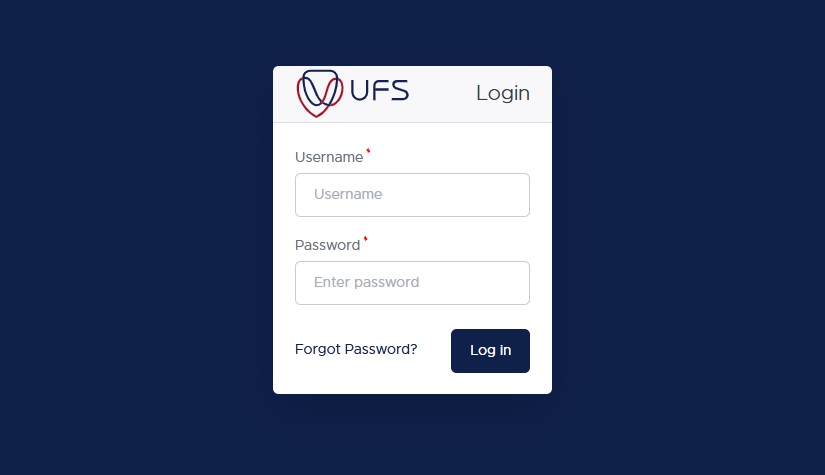
    The university utilizes an online portal, often referred to as the Student Self-Service portal (powered by Oracle PeopleSoft), for all application-related tracking . Here is the detailed process for checking your status.

    Step 1: Locate the Official Status Check Portal

    The first and most important rule is to ensure you are on the official university website to avoid scams or phishing attempts. UFS will never ask for payment to check your status . You can access the status check by navigating to the main UFS website (www.ufs.ac.za) and looking for the “Students” section or a direct link to “Student Self-Service.”

    Alternatively, the direct portal is often accessible via:

    • https://myapplication.ufs.ac.za

    Bookmark this page to make regular checks easier.

    Step 2: Gather Your Login Credentials

    To log in, you will need specific information that was provided to you during or immediately after your application . Have the following ready:

    • Student Number or Applicant Number: This is usually provided in the acknowledgement email or SMS you received after applying.

    • Password: The password you created during the online application process.

    If you are a new applicant who has lost this information, do not panic. Use the “Forgot Password” or “Forgot Username” links available on the login page to reset your credentials .

    Step 3: Navigate to the Application Status Section

    Once logged in, the dashboard may present several options. Look for the following sections to find your status:

    • Student Centre

    • Admissions

    • View Application Status

    Clicking on these links will bring up the current status of your application for the 2026/2027 intake. The interface is designed to be user-friendly, displaying your progress clearly .

    Step 4: Interpret the Status Message

    The portal will display a specific status. It is vital to read this carefully, including any accompanying notes or messages. These notes often contain direct instructions on what you need to do next . The following section of this article breaks down what these common terms mean.

    Understanding UFS Application Status Messages

    When you log in, you will encounter specific terminology regarding your application. Here is a detailed explanation of what each of these statuses typically means and what action, if any, is required from you .

    Application Received / Submitted

    • What it means: Your application forms and fee (if applicable) have successfully made it into the UFS system. This is the initial confirmation that your documents are in the queue.

    • What to do: No immediate action is needed. However, you should ensure that your contact details (email and phone number) are correct so the university can reach you. You can verify these in the portal.

    Under Review / In Progress

    • What it means: The faculty or admissions office has begun actively assessing your academic results and supporting documents against the admission requirements for your chosen program. This stage can take several weeks, depending on the volume of applications .

    • What to do: Patience is key here. Refrain from sending multiple follow-up emails, as this can slow down the process. Only take action if the university contacts you directly.

    Awaiting Documents / Requires Action

    • What it means: Your application is on hold because something is missing. This could be your final Grade 11 results, a certified copy of your ID, a academic transcript (for transfer students), or a certificate of conduct from a previous institution . For international students, this might include a USAf Certificate of Exemption .

    • What to do: This status requires immediate attention. Log in to the portal to see exactly which documents are outstanding. Prepare the certified copies and upload them as instructed as soon as possible to prevent your application from being delayed or withdrawn.

    Provisionally Accepted / Conditional Offer

    • What it means: This is positive news. It means you meet the minimum academic requirements for the program, but your admission is conditional based on outstanding items. This is very common for students who are still in Grade 12 and have applied with their Grade 11 results. The condition is usually the successful completion of Grade 12 with specific results .

    • What to do: Read the conditions carefully. As soon as your final results are released, you must upload them to the portal or submit them to the university to convert this status to a final offer.

    Accepted / Admitted

    • What it means: Congratulations! You have been officially offered a place at UFS for the 2026 academic year. The university has reviewed your final results and confirmed that you meet all criteria .

    • What to do: You must formally accept this offer. Log in to the portal and follow the prompts to accept the place before the specified deadline. Failure to accept on time could result in the offer being withdrawn and given to another applicant . After accepting, you will receive guidance on registration, which includes making the required prepayment at least five working days before your registration date .

    Waitlisted

    • What it means: You meet the qualifications for the program, but the class is currently full. You have not been denied; rather, you are in line to be admitted if a spot opens up (for example, if another accepted student declines their offer) .

    • What to do: Decide if this is your top choice. If you would still attend if a spot opens, follow any instructions provided to remain on the list. It is also wise to consider your other options or accept offers from other universities while you wait.

    Unsuccessful / Denied

    • What it means: Your application was not successful. This could be because you did not meet the specific admission points score for that program, the program reached capacity with higher-scoring applicants, or your subject choices did not align with the faculty requirements .

    • What to do: While disappointing, this is not the end of your educational journey. You can explore alternative programs at UFS that may have lower entry requirements, or consider applying to other universities through the Central Applications Clearing House (CACH) for other available opportunities .

    Important Considerations for Specific Applicant Groups

    The application and status-checking process is largely the same for everyone, but certain groups of applicants should pay attention to specific details.

    Undergraduate vs. Postgraduate Applicants

    Both undergraduate and postgraduate applicants use the same online portal to check their application status. Whether you are applying for a Bachelor’s degree or a Master’s, the login process with your student number and password remains identical .

    International Applicants

    If you are an international student, your application status might read “Conditional Offer” for a longer period. This is often pending the evaluation of your foreign qualifications. You may need to obtain a Universities South Africa (USAf) Certificate of Exemption if you do not have a South African National Senior Certificate. Keep a close eye on your status for requests regarding this documentation .

    Transferring Students

    If you are transferring from another tertiary institution in South Africa, your status might switch to “Awaiting Documents” if the university has not received your official academic record and certificate of conduct from your previous school. It is your responsibility to ensure these documents are submitted to UFS to clear your status .

    What to Do After Acceptance: Preparing for Registration

    Seeing “Accepted” on your status is a major achievement, but it requires immediate action to secure your spot. The University of the Free State has moved to a fully online registration model for 2026, meaning no walk-in registrations will be permitted .

    1. Accept Your Offer: Log in to the self-service portal and formally accept the admission offer. This is a non-negotiable step.

    2. Check Registration Dates: UFS communicates key dates via SMS and email. Be aware of the registration period, which typically includes deadlines for paying prepayment fees. Note that the registration period ends on specific dates, such as February 10th for some intakes, and all prepayment fees must be paid several working days before your registration .

    3. Plan Your Modules: Before registering, check the module and venue timetables to avoid clashes in your schedule .

    4. Arrange Accommodation and Funding: If you indicated on your application that you need on-campus housing or financial aid (like NSFAS), ensure your contact details are up to date so the relevant departments can reach you .

    Troubleshooting Login Issues and Staying Informed

    Even with a straightforward system, technical issues can arise. If you find yourself locked out or unable to see your status, consider the following steps.

    I Forgot My Password

    This is the most common issue. On the login page for the Student Self-Service portal, click the “Forgot Password” link. Follow the prompts to reset it, usually via your registered email address. If you no longer have access to that email, you will need to contact the IT helpdesk or admissions office directly .

    Portal Shows an Error or Won’t Load

    Try these quick fixes:

    • Switch Browsers: Sometimes the portal is optimized for specific browsers like Chrome or Firefox. Try a different one.

    • Clear Cache: Your browser’s cache might be loading an old version of the page. Clear your browsing data and try again.

    • Try at Different Times: The portal may experience high traffic during business hours or right after final exam results are released. Trying late in the evening or early in the morning might yield better results.

    When to Contact the University

    If you have tried the above steps and your status hasn’t changed in a very long time, or you believe there is an error, it is time to contact the administration. Use the official channels only :

    • General Enquiries: StudentAdmin@ufs.ac.za or call +27 51 401 9666.

    • Technical Support: For password or login issues, you might need the student desk at +27 51 401 2442 or studentdesk@ufs.ac.za .

    • Health Sciences: For faculty-specific queries regarding Health Sciences, use fhsapplications@ufs.ac.za.

    Important Security Note: Be vigilant. UFS will never ask for payment to check your status, nor will they send official offers via random WhatsApp messages. Always ensure you are on the official www.ufs.ac.za domain .

    Conclusion

    Navigating the university admissions process requires attention to detail and proactivity. Knowing How to Check UFS Application Status for the 2026/2027 academic year empowers you to take control of this journey. By regularly logging into the official UFS Student Self-Service portal, you can stay informed about your application’s progress, respond quickly to requests for documents, and meet critical deadlines for accepting offers.

    Whether your status reads “Under Review,” “Provisionally Accepted,” or the much-desired “Accepted,” each stage provides valuable information. Use this guide to interpret those messages and take the appropriate next steps. The path to joining the University of the Free State community is a structured one, and by following these guidelines, you ensure that you do not miss a single opportunity to secure your place for the 2026 academic year.

    Read Also

  • University of the Witwatersrand Fee Structure and Cost 2026/2027

    University of the Witwatersrand Fee Structure and Cost 2026/2027

    We present a comprehensive and authoritative guide to the University of the Witwatersrand fee structure and cost, designed to provide clarity and precision for prospective students, parents, and sponsors. The University of the Witwatersrand, widely known as Wits University, stands among the most respected public research universities in South Africa, renowned for academic excellence, innovation, and global recognition.

    Understanding the cost of studying at Wits University is essential for effective financial planning. Tuition fees vary by faculty, qualification level, residency status, and course load, while additional charges apply for registration, accommodation, and student services. This article details all major cost components with structured accuracy.

    Wits University Tuition Fee Structure

    The tuition fee structure at Wits University is calculated per academic year and differs significantly depending on the program of study. Fees are set annually and approved by the university council, ensuring alignment with academic resources and institutional sustainability.

    Undergraduate Tuition Fees

    Undergraduate fees are determined by course credits and faculty-specific rates. On average, undergraduate tuition ranges as follows:

    • Humanities and Social Sciences: ZAR 45,000 – ZAR 60,000 per year

    • Commerce, Law, and Management: ZAR 55,000 – ZAR 70,000 per year

    • Science and Health Sciences: ZAR 65,000 – ZAR 85,000 per year

    • Engineering and Built Environment: ZAR 75,000 – ZAR 95,000 per year

    Programs with laboratory, clinical, or technical components attract higher fees due to specialized equipment, supervision, and facilities.

    University of the Witwatersrand Fee Structure and Cost

    Postgraduate Tuition Fees

    Postgraduate fees are influenced by research intensity, supervision requirements, and program duration. The general cost ranges include:

    • Honours Degrees: ZAR 40,000 – ZAR 65,000 per year

    • Master’s Degrees (Coursework): ZAR 55,000 – ZAR 90,000 per year

    • Master’s Degrees (Research): ZAR 35,000 – ZAR 70,000 per year

    • Doctoral (PhD) Degrees: ZAR 25,000 – ZAR 50,000 per year

    Certain professional postgraduate programs, particularly in Business Administration, Health Sciences, and Engineering, command higher tuition due to industry alignment and advanced academic resources.

    International Student Fee Structure

    International students are subject to a differentiated fee structure. Tuition costs are generally two to three times higher than local fees, reflecting non-subsidized funding models.

    • Undergraduate International Fees: ZAR 120,000 – ZAR 180,000 per year

    • Postgraduate International Fees: ZAR 100,000 – ZAR 200,000 per year

    Additionally, international students are required to pay:

    • International levy

    • Compulsory medical aid

    • Administrative and registration charges

    Registration and Academic Levies

    All students must pay a registration fee at the beginning of each academic year. This fee confirms enrollment and grants access to academic systems.

    • Registration Fee: ZAR 5,000 – ZAR 10,000

    • ICT and Library Levy: Included in annual tuition

    • Student Services Levy: Mandatory

    These levies support digital learning platforms, library resources, academic advising, and student wellness services.

    Accommodation Costs at Wits University

    Wits University offers both on-campus and off-campus accommodation options. Residence placement is competitive and prioritized for first-year and postgraduate students.

    On-Campus Residence Fees

    • Single Room (Catered): ZAR 45,000 – ZAR 65,000 per year

    • Single Room (Self-Catered): ZAR 35,000 – ZAR 55,000 per year

    • Shared Accommodation: ZAR 30,000 – ZAR 45,000 per year

    Residence fees typically include utilities, internet access, and security, while catered residences also cover meal plans.

    Off-Campus Living Costs

    Students opting for private accommodation near the Johannesburg campuses should budget:

    • Rent: ZAR 4,000 – ZAR 8,000 per month

    • Utilities and Internet: ZAR 800 – ZAR 1,500 per month

    • Transport: ZAR 500 – ZAR 1,200 per month

    Additional Study-Related Costs

    Beyond tuition and accommodation, students should plan for essential academic and living expenses:

    • Textbooks and Study Materials: ZAR 3,000 – ZAR 7,000 annually

    • Laboratory and Clinical Fees: Faculty-specific

    • Fieldwork and Research Costs: Program-dependent

    • Graduation Fees: ZAR 1,000 – ZAR 2,500

    These costs vary by discipline and academic level.

    Payment Methods and Fee Deadlines

    Wits University provides flexible fee payment options to accommodate diverse financial circumstances:

    • Full upfront payment

    • Semester-based installments

    • Monthly payment plans (subject to approval)

    Failure to meet payment deadlines may result in financial penalties, restricted registration, or academic holds.

    Financial Aid, Bursaries, and Scholarships

    We emphasize that Wits University administers a robust financial support ecosystem. Eligible students may access:

    • NSFAS funding for qualifying South African undergraduates

    • Merit-based scholarships

    • Faculty-specific bursaries

    • Postgraduate research grants

    • External sponsorships

    Timely application and compliance with funding requirements are critical for approval.

    Why Understanding the Wits Fee Structure Matters

    A detailed understanding of the University of the Witwatersrand fee structure and cost empowers students to make informed academic decisions. Transparent financial planning ensures uninterrupted studies, optimal resource allocation, and long-term academic success at one of Africa’s premier institutions.

    We have outlined the full cost framework associated with studying at Wits University, covering tuition fees, accommodation, levies, and ancillary expenses. With its world-class reputation and diverse academic offerings, Wits University represents a strategic investment in higher education. Accurate budgeting and early financial planning remain essential for maximizing this opportunity.

    Read Also

  • Full Guide to Univen Online Application 2026/2027

    Full Guide to Univen Online Application 2026/2027

    We present a comprehensive and authoritative guide to the Univen Online Application 2026/2027, crafted to support prospective students seeking admission to one of South Africa’s respected public institutions. The University of Venda (Univen) offers a wide range of undergraduate and postgraduate programmes designed to meet national development priorities and global academic standards. This guide delivers clear, accurate, and structured information to ensure a seamless application experience for the 2026/2027 academic year.

    About the University of Venda (Univen)

    The University of Venda is located in Limpopo Province and is known for its strong focus on science, engineering, education, management sciences, agriculture, and health sciences. Univen emphasizes research-driven teaching, community engagement, and innovation, making it an excellent destination for students aiming for academic excellence and practical relevance.

    UNIVEN 2026 Applications Are Now Open · Varsity Wise🎓

    How to Apply Online at Univen for 2026/2027

    https://formspal.com/pdf-forms/other/university-of-venda-registration/university-of-venda-registration-preview.webp
    https://cdn.briefly.co.za/images/1120/47411fae96825474.jpeg?v=1

    We outline the exact steps to complete the Univen online application successfully:

    1. Visit the official Univen website

    2. Navigate to the Online Application Portal

    3. Create a student profile using a valid email address

    4. Select the academic year 2026/2027

    5. Choose your preferred qualification and faculty

    6. Complete all personal and academic details accurately

    7. Upload required supporting documents

    8. Review and submit the application

    9. Save or print the confirmation page for reference

    Accuracy and completeness are critical to avoid delays or rejection.

    Required Supporting Documents

    Applicants must upload clear and certified copies of the following:

    • South African ID or passport (international students)

    • Latest Grade 11 results or Grade 12 certificate

    • Academic transcripts (for transfer/postgraduate applicants)

    • Proof of application fee payment (if applicable)

    All documents should be uploaded in PDF format and must be legible.

    Application Fees and Payment Information

    Univen may require a non-refundable application fee, payable via bank deposit or electronic transfer. The exact amount and banking details are provided on the official application portal. Proof of payment must be uploaded to validate the application.

    Acceptance, Registration, and Orientation

    Successful applicants receive a formal offer letter, which must be accepted within the stipulated timeframe. Registration is completed online, followed by an orientation programme introducing students to academic systems, campus facilities, and student support services.

    Why Choose Univen for 2026/2027

    • Accredited qualifications recognized nationally and internationally

    • Affordable tuition fees

    • Strong research and innovation focus

    • Supportive learning environment

    • Strategic location in Limpopo Province

    We emphasize the importance of early preparation, accurate documentation, and strict adherence to deadlines. The Univen Online Application 2026/2027 provides a gateway to quality higher education and meaningful career pathways.

    Read Also

  • Univen Application Opening Date & Closing Date for 2026 Intake

    Univen Application Opening Date & Closing Date for 2026 Intake

    The University of Venda (Univen) is one of South Africa’s most prestigious higher education institutions, attracting thousands of aspiring students each year. A key concern for prospective applicants is knowing the official Univen application opening and closing dates for the 2026 intake. In this comprehensive guide, we provide detailed, up-to-date information, including important timelines, application requirements, eligibility criteria, and helpful advice to ensure your application is successful.

    Overview of Univen’s 2026 Intake Application Period

    Every academic year, Univen opens its application portal well in advance to allow students ample time to prepare and submit their applications. For the 2026 academic year, the University of Venda has announced the following key dates:

    • Application Opening Date: March 2, 2025

    • Application Closing Date: September 30, 2025

    These dates apply to both undergraduate and postgraduate programs, giving prospective students nearly seven months to complete the application process.

    The extensive application window is designed to accommodate all applicants, including those needing additional time to gather documents, apply for financial aid, or meet specific faculty requirements.

    Univen Application Opening Date & Closing Date

    Understanding the Importance of Application Dates

    It cannot be overstated how crucial it is to submit your application on time. Late submissions at Univen are typically not accepted, and missing the closing date may delay your academic journey by a full year. To avoid this:

    • Mark the opening and closing dates on your calendar.

    • Start your application as early as possible.

    • Regularly check Univen’s official website for updates or changes to deadlines.

    Meeting the deadline ensures that your application is reviewed in time for selection and potential financial aid consideration.

    Tips to Ensure Successful Application Submission

    Start Early

    Begin preparations weeks or even months before the application period opens to gather all required documents and information.

    Double-Check All Entries

    Incorrect or incomplete information can halt your application. Review everything before submission.

    Monitor Application Status

    Regularly log into the Univen portal to see if additional documents are requested.

    Prepare for Financial Aid

    If you need funding, apply to the National Student Financial Aid Scheme (NSFAS) or other bursaries early, as these also have strict deadlines.

    Attend Open Days

    Univen hosts open days and informational sessions—attend these to clarify questions and receive guidance from admissions officers.

    Getting your Univen application in on time for the 2026 intake is the first step toward achieving your academic ambitions. With the application opening on March 2, 2025, and closing on September 30, 2025, there is ample time to prepare and submit a strong application. Ensure you have all necessary documents ready, stay informed about specific program requirements, and follow each step meticulously for the best chance of acceptance.

    Frequently Asked Questions (FAQs)

    Q: Can I apply after the closing date?

    No. Applications received after the September 30, 2025 deadline are usually not accepted unless under exceptional circumstances.

    Q: Is there an application fee?

    Yes, most applicants are required to pay a non-refundable application fee upon submitting their form.

    Q: When will I hear back from Univen?

    Response times vary, but applicants typically receive updates within 6–8 weeks of applying.

    Q: What if I don’t meet the minimum entry requirements?

    There may be alternative options such as bridging programs or foundation courses, depending on your academic profile.

    Read Also

WhatsApp Channel Join Now!