Category: Education

  • SITA Work Integrated Learning (WIL) Programme 2026: How to Apply

    SITA Work Integrated Learning (WIL) Programme 2026: How to Apply

    The transition from academic theory to professional practice is a critical step for students in technical fields. Recognizing this need, the State Information Technology Agency (SITA) has opened applications for its SITA Work Integrated Learning (WIL) Programme 2026. This initiative is specifically designed for South African students who require hands-on, practical workplace exposure to fulfill the requirements of their tertiary qualifications .

    For students enrolled in ICT and related corporate support disciplines, this programme offers a formal setting to apply knowledge gained in the classroom. Participants are placed within SITA’s business units, where they engage with real-world projects and gain insight into the digital transformation efforts driving the South African public sector .

    This article provides a detailed, factual overview of the SITA Work Integrated Learning (WIL) Programme 2026. It covers the programme’s structure, eligibility criteria, available opportunities across various provinces, and the application process, ensuring you have the necessary information to apply confidently.

    What is the SITA Work Integrated Learning Programme?

    The Work Integrated Learning (WIL) programme at SITA is distinct from a general internship. It is a structured intervention aimed at students whose curriculum mandates a period of in-service training . Unlike learnerships that result in a trade qualification, WIL is a component of a formal degree or national diploma. Its primary purpose is to allow students to log the required practical hours and demonstrate competence in a workplace environment to graduate .

    SITA, as the IT service provider for the South African government, provides a unique environment for this learning. Participants are not merely observing; they are integrated into teams working on IT infrastructure, software development, cybersecurity, and governance, depending on their field of study. The programme runs for a duration of 12 months and offers a monthly stipend of R5,500 to cover basic expenses during the training period .

    Why the SITA WIL Programme Matters for Your Qualification

    For many students, securing a placement that accepts the specific requirements of their academic institution can be challenging. The SITA Work Integrated Learning (WIL) Programme 2026 removes this uncertainty by offering a formal agreement between a major state agency and the student.

    Participating in this programme offers specific advantages that go beyond simply ticking a box for graduation:

    • Structured Mentorship: Participants are assigned to experienced professionals who guide them through daily tasks, code reviews (for developers), network configurations (for engineers), or audit procedures (for finance students). This ensures that the learning outcomes align with both SITA’s standards and the student’s academic needs .

    • Exposure to Public Sector IT: SITA manages a vast and complex digital ecosystem for the government. Students gain experience working with systems at scale, which is a different challenge from small business environments. This provides a deep understanding of how technology serves public administration .

    • Compliance and Graduation: The primary goal is to help you complete your qualification. By providing the necessary experiential learning, the programme ensures you meet the practical requirements set by your university or university of technology .

    Fields of Study and Disciplines Accepted

    The SITA Work Integrated Learning (WIL) Programme 2026 is broad in its scope, accommodating not only pure technology roles but also the corporate functions that support a large IT agency. Applications are invited from students registered at recognized tertiary institutions in the following disciplines :

    • Information Technology (Software Development, Network Engineering, Technical Support)

    • Computer Science (Algorithms, Data Structures, System Architecture)

    • Information Systems (Business Analysis, Systems Analysis)

    • Cybersecurity and Information Security

    • Data Science and Data Analysis

    • Graphic Design (specifically for digital and UI/UX roles)

    • Finance and Financial Management

    • Supply Chain Management

    • Internal Audit

    • Human Resources

    • Office Administration

    It is important to note that your qualification must explicitly state that Work Integrated Learning (or Experiential Learning) is a compulsory module for completion. General graduates who have already finished their studies without this requirement may not be eligible for this specific stream .

    Eligibility Criteria: Who Should Apply?

    Before preparing your documents, it is essential to ensure you meet the baseline criteria established by SITA. The agency adheres to strict employment equity and qualification verification processes. To qualify for the SITA Work Integrated Learning (WIL) Programme 2026, you must satisfy the following conditions :

    1. Citizenship and Age: You must be a South African citizen currently between the ages of 18 and 35.

    2. Employment Status: You must be currently unemployed. The programme aims to provide opportunities to those not currently engaged in full-time work.

    3. Academic Registration: You must be registered at a recognized and accredited South African institution of higher learning (such as a University or University of Technology).

    4. Compulsory WIL Component: Your qualification must require Work Integrated Learning as a non-negotiable component for graduation. This is usually verified through an official letter from your institution.

    5. Residential Preference: While not a strict requirement for all posts, preference is often given to applicants who reside within the province where the position is based .

    In line with SITA’s Employment Equity Plan, preference will be given to people living with disabilities, as well as White, Coloured, and Indian applicants to ensure diverse representation within the agency .

    Provincial Breakdown and Available Positions

    The SITA Work Integrated Learning (WIL) Programme 2026 has confirmed vacancies across four provinces. This geographic spread allows students to apply for placement in their home region, reducing the financial burden of relocation. A total of 30 vacancies are available, distributed as follows :

    Gauteng (Pretoria)

    The head office in Pretoria hosts the largest variety of corporate and technical roles.

    • Internal Audit: 3 Positions

    • Finance: 2 Positions

    • Supply Chain Management: 2 Positions

    • Office Administration: 1 Position

    • Financial Management: 1 Position

    • Computer Science / Information Systems: 2 Positions

    KwaZulu-Natal

    • Information Communication Technology (ICT): 2 Positions

    Limpopo

    Limpopo has the highest concentration of vacancies for this cycle, specifically in technical and creative fields.

    • ICT / Graphic Design / Computer Science / Business Analysis: 16 Positions

    Eastern Cape

    • Supply Chain Management: 1 Position

    Applicants should pay close attention to the specific reference number for their desired post. For the 2026 cycle, the reference number is often listed as Internships 001/2025/26 .

    The Application Process: Step-by-Step

    Applying for the SITA Work Integrated Learning (WIL) Programme 2026 requires attention to detail. SITA has a digital application process that varies slightly by province. Follow these steps to ensure your application is considered:

    Step 1: Prepare Your Documents (For Shortlisting)
    While the initial application might not require attachments, you should have certified copies ready. These will be requested from shortlisted candidates :

    • Certified copy of your South African ID.

    • Certified copy of your academic transcripts/statement of results.

    • An official letter from your tertiary institution confirming that you require WIL placement to complete your qualification. This letter should state the duration of the required training.

    Step 2: Locate the Correct Application Link
    Applications are submitted via online forms. Using the correct link for your province is crucial.

    • Gauteng (Pretoria): Use the specific online form for Pretoria. For queries: GPinternship@sita.co.za

    • KwaZulu-Natal: Use the specific online form for KZN. For queries: KZNinternship@sita.co.za

    • Eastern Cape: Use the specific online form for EC. For queries: ECinternship@sita.co.za

    • Limpopo: Use the specific online form for Limpopo. For queries: PKinternship@sita.co.za

    Step 3: Submit Before the Deadline
    The closing date for applications is 06 March 2026 . Late submissions are not accepted. Given the number of vacancies (30), it is advisable to submit your application as early as possible to avoid last-minute technical issues.

    Important Considerations and Conditions

    Understanding the terms of the programme helps set realistic expectations. Here are key points to keep in mind regarding the SITA Work Integrated Learning (WIL) Programme 2026:

    • Stipend: Participants receive R5,500 per month. This is not a salary but a stipend to cover transport and meals during the 12-month program .

    • Communication: Due to the high volume of applications, SITA will only contact shortlisted candidates. If you do not hear from them within three months of the closing date, you should regard your application as unsuccessful .

    • Background Checks: Appointment is subject to a positive security clearance, verification of your qualifications, and reference checks. Providing false information will lead to immediate disqualification .

    • Foreign Qualifications: If you studied outside South Africa, your qualification must be evaluated by the South African Qualifications Authority (SAQA) before applying .

    • No Agencies: Applications submitted through recruitment agencies will not be considered. You must apply directly via the official channels .

    How to Strengthen Your Application

    Competition for placements within SITA is high. To increase your chances of being selected for the SITA Work Integrated Learning (WIL) Programme 2026, consider the following practical advice:

    1. Tailor Your CV: Highlight projects, modules, or part-time work that align with the specific role you are applying for. If you are applying for a Software Development role, list the programming languages you have learned. For Finance roles, detail your proficiency with accounting software or principles.

    2. Verify Your Institutional Letter: Ensure the letter from your university is on official letterhead, signed, and dated. It must clearly state that you need WIL to graduate. Generic letters requesting “any opportunity” are less effective than those specifically stating the requirement for experiential learning.

    3. Research SITA’s Mandate: Familiarize yourself with SITA’s role in government. Understanding that they handle critical infrastructure like e-Government services, networks, and data centers shows initiative during potential interviews .

    4. Apply for the Correct Province: Ensure the field you are studying matches the vacancies listed for that province. For example, applying for a Graphic Design position in Gauteng would be incorrect, as those 16 roles are located in Limpopo .

    The SITA Work Integrated Learning (WIL) Programme 2026 represents a significant opportunity for students who need to complete their qualifications through practical experience. It bridges the gap between the classroom and the corporate world, offering a structured environment where academic knowledge is tested and refined against real-world government technology challenges.

    With 30 vacancies spread across Gauteng, KwaZulu-Natal, Limpopo, and the Eastern Cape, the programme provides access to mentorship in fields ranging from cybersecurity and software development to finance and supply chain management. For the successful candidate, it is more than just a 12-month stint; it is the final piece of the academic puzzle and a foundational step toward a career in South Africa’s public sector digital landscape.

    If you meet the eligibility criteria and your qualification requires workplace exposure, preparing your documents and submitting your application before the 06 March 2026 deadline is a prudent step toward securing your professional future.

  • Takealot Graduate Internships 2026 Application Guide | How to Apply

    Takealot Graduate Internships 2026 Application Guide | How to Apply

    Starting a career in South Africa’s fast-paced e-commerce sector can feel like a significant step, especially when you are transitioning from academic theory to practical, real-world work. For graduates looking to build a solid foundation, structured work experience is invaluable. The Takealot Graduate Internships 2026 presents a formal pathway for recent graduates to gain that experience with the country’s leading online retail group.

    This guide provides a comprehensive overview of the internship programme. You will find information on what the programme entails, why it could be the right move for your career, the various fields you can apply for, and a step-by-step breakdown of the application process. The aim is to give you a clear, factual, and actionable resource to help you navigate your application.

    Introduction to the Takealot Graduate Internships 2026

    The Takealot Group is a dominant force in the South African digital economy, operating prominent platforms such as takealot.com, Mr D, and Takealot Fulfilment Solutions (TFS) . Given its scale—serving millions of customers—the group requires a steady influx of talented individuals who can contribute to its dynamic and hyper-growth environment .

    The Takealot Graduate Internships 2026 is more than just a temporary work placement. It is a structured programme designed to bridge the gap between academic study and professional employment. Interns are not merely observers; they become active participants in their respective teams, working on real projects, supporting daily operations, and learning the intricacies of a major e-commerce business . The programme is spread across the group’s various businesses, offering exposure to different facets of the operation, from logistics and marketing to technology and finance .

    Positions are typically based in the group’s main hubs, such as Cape Town and Johannesburg, where interns work alongside experienced professionals in a collaborative, output-focused environment .

    Why Apply for the Takealot Graduate Internships?

    Deciding which internship to apply for requires careful consideration of what you will gain from the experience. The Takealot programme offers several distinct advantages that can significantly impact your career trajectory.

    Exposure to a Market Leader

    Takealot is not a small, unknown entity; it is South Africa’s favourite online store . By interning here, you gain experience within a company that operates at a massive scale. You will learn how systems, processes, and teams work together to serve over 2.5 million active shoppers . This experience carries significant weight on your CV and sets you apart in the job market.

    Structured Learning and Mentorship

    One of the core components of the internship is the emphasis on learning. The programme provides access to resources that facilitate continuous professional development. Interns have access to online learning platforms such as Udacity, Coursera, and MyAcademy to upskill in technical and soft skills . Furthermore, you are paired with experienced mentors who provide guidance, feedback, and support, helping you navigate the workplace and your career path .

    A Path to Permanent Employment

    The Takealot Group prefers to promote from within . The internship serves as a prolonged interview, allowing the company to assess your skills, work ethic, and cultural fit. For high-performing interns, this often leads to offers for permanent, full-time roles within the group once the internship concludes .

    A Supportive Work Culture

    The environment at Takealot is described as entrepreneurial, collaborative, and non-hierarchical . Interns are encouraged to share their ideas and take ownership of their work. The company also supports employee well-being by offering benefits like confidential counselling, legal advice, financial guidance, and social events to foster team cohesion .

    Takealot Graduate Internships 2026 Application Guide

    Navigating the application process for a large company like Takealot requires preparation and attention to detail. This section breaks down everything you need to know to submit a strong application for the Takealot Graduate Internships 2026.

    Step 1: Understanding the Eligibility Criteria

    Before you begin your application, it is essential to ensure you meet the basic requirements for the programme. The criteria vary depending on the specific internship you are applying for.

    General Educational Requirements

    The Takealot Group offers opportunities for graduates from various educational backgrounds. Broadly, these fall into two categories:

    • University Graduates: For most specialist roles, you will need a Bachelor’s Degree in a relevant field. This applies to positions in Marketing, Finance, Data Analytics, Law (LLB), Commerce, and Engineering .

    • TVET / N6 Graduates: The group also runs dedicated programmes for students who have completed their N6 qualification through a TVET college. These are typically in fields like Marketing, Supply Chain and Logistics, and Human Resources .

    Specific Departmental Requirements

    The Takealot Graduate Internships 2026 covers a wide spectrum of business functions. It is important to match your qualification to the correct internship stream. Here are some examples based on available listings:

    Internship Stream Typical Qualification Required Focus Area
    Commerce & Marketing BCom / Diploma in Marketing, Advertising, Business Brand management, advertising campaigns, CRM, market research
    Technology & Engineering BEng / BSc in Industrial, Mechanical, or Software Engineering Process optimization, software development, product management
    Supply Chain & Logistics Degree / N6 in Supply Chain, Logistics, Transport Economics Distribution centre ops, inventory, procurement, outbound planning
    Finance & Risk BCom in Finance, Accounting, Risk Management Financial analysis, admin management, security compliance
    Creative Degree / Diploma in Graphic Design, Copywriting, Journalism Content creation, design assets, copywriting for campaigns

    Skills and Attributes

    Beyond your formal qualifications, Takealot looks for candidates with a specific set of skills. These include:

    • Communication: Strong written and verbal skills are essential for collaboration .

    • Analytical Ability: The ability to interpret data and contribute to decision-making is highly valued .

    • Proactive Mindset: The company seeks individuals who are hands-on, take ownership, and are not afraid to share their ideas .

    • Technical Literacy: Proficiency in the Microsoft Office Suite (Excel, Word, PowerPoint) or Google Workspace is a standard requirement .

    Step 2: Preparing Your Application Documents

    Once you have confirmed your eligibility, the next step is to gather and prepare the necessary documentation. A complete and well-organized application makes a professional impression.

    Essential Documents Checklist

    Ensure you have the following documents ready, preferably as PDF files:

    1. Updated Curriculum Vitae (CV): Your CV should be concise, well-formatted, and tailored to highlight your education, any part-time work experience, and relevant skills. For creative roles, include a link to your online portfolio .

    2. Certified Academic Transcripts: You will need full transcripts of your academic record from your university or college.

    3. Certified Qualification Certificates: Copies of your degree or N6 certificate.

    4. Certified Copy of Your South African ID: This is a non-negotiable requirement for all local applicants .

    5. Motivation Letter: This is your chance to stand out. Explain why you are interested in the specific internship, what you can bring to the team, and how it fits into your career goals. Mention your passion for e-commerce if it is relevant .

    Step 3: The Online Application Process

    Takealot manages its recruitment through an official online portal. You will need to submit your application digitally.

    Where to Apply

    All applications for the Takealot Graduate Internships 2026 must be submitted online via the Takealot careers page or the specific job boards they use, such as Greenhouse . Avoid applying through third-party sites without following the official link, as your application may not be received.

    Application Tips

    • Apply Early: Internships at major companies attract a high volume of applications. Positions may close early once a sufficient number of applicants have been received, so do not wait until the deadline .

    • Follow Instructions Carefully: Pay close attention to the details in the job posting. Some roles may ask for specific information or a portfolio, while others may not.

    • Check Your Documents: Before clicking submit, double-check that you have attached all the required documents and that they are clear and legible.

    Step 4: The Selection and Interview Process

    After you submit your application, it will be reviewed by the recruitment team. If your qualifications and experience match what they are looking for, you will be contacted for the next stage.

    What to Expect

    The selection process can vary depending on the team, but it often includes:

    • Initial Screening: A phone or video call to discuss your background, motivations, and availability .

    • Formal Interview: An in-depth interview, which may be conducted in person or via video call. You will likely meet with the hiring manager and potentially other team members. They will ask about your studies, your understanding of the role, and how you would handle certain situations.

    • Portfolio Review / Challenge: For marketing and creative roles, you may be asked to present your portfolio or complete a small case study or campaign challenge to demonstrate your skills .

    Interview Preparation

    • Research the Company: Understand what Takealot, Mr D, and TFS do. Familiarity with their platforms and services shows genuine interest.

    • Know Your CV: Be prepared to discuss anything you have included in your CV or motivation letter.

    • Prepare Questions: Interviews are a two-way street. Prepare thoughtful questions about the team, the projects you might work on, and the learning opportunities available.

    The Takealot Graduate Internships 2026 offers a robust entry point for graduates eager to build a career in e-commerce, technology, logistics, marketing, or finance. It combines practical, hands-on experience with structured learning and mentorship within one of South Africa’s most successful digital companies. The potential for career growth, coupled with a supportive and dynamic work culture, makes this programme a worthwhile pursuit for motivated graduates.

    If you meet the eligibility requirements for your chosen field, take the time to prepare your documents carefully and submit a complete application through the official channels. This could be the first step toward a rewarding career with the Takealot Group.

  • First National Bank (FNB) Graduate Programme 2026: Full Guide

    First National Bank (FNB) Graduate Programme 2026: Full Guide

    The First National Bank (FNB) Graduate Programme 2026 represents a significant entry point into the financial services sector for ambitious graduates in South Africa. As one of the country’s oldest and most established financial institutions, FNB offers a structured path for final-year students and recent graduates to transition from academic life into meaningful, full-time careers.

    This programme is not merely an internship or a temporary placement. It is designed as a permanent employment opportunity from day one, allowing successful candidates to integrate into specific business units across the bank’s extensive retail and commercial banking segments . For the 2026 cycle, FNB is looking for individuals who are not just academically proficient but also demonstrate a capacity for innovative thinking and a genuine interest in solving complex problems within the banking and technology landscape.

    This guide provides a detailed, factual overview of what candidates can expect, the requirements needed to apply, and how this programme fits into a long-term career trajectory at FNB.

    Why Consider the First National Bank (FNB) Graduate Programme?

    Choosing the right graduate programme is a critical career decision. The First National Bank (FNB) Graduate Programme 2026 offers distinct advantages that set it apart from standard entry-level roles. Understanding these benefits can help applicants see the long-term value beyond the initial job posting.

    Permanent Employment from the Start

    One of the most notable features of this opportunity is the nature of the contract. Unlike many graduate programmes that offer fixed-term contracts lasting 12 to 24 months, FNB integrates its graduates into the workforce as permanent employees immediately . This provides a sense of job security and commitment from the employer, allowing graduates to focus on their performance and development without the immediate pressure of contract renewal.

    Structured Learning and Real-World Application

    The programme is built on a hybrid model that combines full-time work with continuous learning. Graduates are expected to perform in their designated roles while also participating in monthly training sessions . Furthermore, the curriculum includes an action learning project. This requires graduates to collaborate on solving actual business challenges, ensuring that theoretical knowledge is tested against the realities of the banking environment.

    Exposure to Diverse Business Areas

    FNB’s structure is vast, and the graduate programme reflects this diversity. Depending on their qualifications and the bank’s requirements, graduates may find themselves working in teams focused on credit analytics, product development, customer experience, fraud and risk analysis, or financial management . This exposure is invaluable for young professionals who are still defining their career paths, as it allows them to experience different facets of banking before specializing further.

    Understanding the First National Bank (FNB) Graduate Programme 2026 Structure

    To apply successfully, it is important to understand how the First National Bank (FNB) Graduate Programme 2026 is structured. The programme is designed to be robust and demanding, aiming to build well-rounded professionals who can contribute to the bank’s innovative culture.

    Core Responsibilities and Daily Work

    Graduates are not relegated to observational roles. From the outset, they are expected to contribute actively to their teams. Responsibilities typically include delivering service excellence by understanding customer needs and contributing to innovative solutions. On a daily basis, graduates are tasked with efficient planning, accurate record-keeping, and timely completion of tasks to support overall team success .

    Innovation is a key pillar of the FNB culture. Graduates are encouraged to participate actively in brainstorming sessions and to collaborate with colleagues on creative solutions that align with broader business objectives . This level of engagement helps foster a sense of ownership and purpose from the very beginning of their careers.

    Focus on Professional Development

    The programme places a strong emphasis on self-driven growth. While the bank provides the tools and opportunities, graduates are expected to take charge of their professional development. This involves completing training assignments, attending workshops, and proactively seeking out experiences that build competencies aligned with FNB’s values . This structure helps cultivate a mindset of continuous improvement, which is essential in the fast-evolving financial services industry.

    Eligibility and Academic Requirements

    The First National Bank (FNB) Graduate Programme 2026 has specific eligibility criteria designed to identify candidates who possess the necessary academic grounding and analytical mindset to succeed in a complex banking environment.

    Fields of Study

    FNB typically seeks candidates from specific academic disciplines that align with the bank’s operational needs. While the bank values diversity in thought, there is a clear preference for quantitative and analytical degrees. Successful applicants are often completing their final year in fields such as Actuarial Science, Mathematics, Statistics, Engineering, Physics, Information Systems, Computer Science, Chemistry, or Data Science . For roles focused more on commerce, degrees in finance, accounting, or related fields within the commerce faculty are relevant.

    Academic Performance and Mindset

    Applicants must demonstrate strong academic results. An academic transcript is a non-negotiable component of the application, serving as the primary evidence of the candidate’s capability to handle complex information . Beyond grades, FNB looks for an analytical and numeric mindset. The ability to apply logical thinking to solve problems is considered essential, as graduates will be expected to handle data-driven tasks and contribute to strategic discussions.

    Important Dates for the 2026 Cycle

    Timing is critical for this application. Based on the information available for the 2026 intake, the application window is specific, and late submissions are generally not accepted.

    • Application Deadline: 31 August 2026 .

    • Feedback Timeline: Candidates can expect final feedback on the selection process to be communicated in November 2026 .

    Applicants should note that there are distinct programmes within FNB, such as the Private Banking and Advisory Graduate Academy, which may have different deadlines (e.g., November 2025) and are focused on FAIS-accredited qualifications . It is crucial to read the specific job requisition ID carefully before applying.

    How to Strengthen Your Application

    Given the competitive nature of the First National Bank (FNB) Graduate Programme 2026, candidates need to present themselves as well-rounded professionals, not just high achievers academically.

    Prepare Your Documentation

    The application process requires attention to detail. Ensure that your academic transcript is uploaded and clearly legible. Since the bank supports the recruitment and advancement of individuals with disabilities, candidates may voluntarily disclose this information to enable the bank to make necessary accommodations, with the assurance that this information will be kept confidential .

    Demonstrate Alignment with FNB Values

    In your application and interviews, focus on demonstrating how your personal values align with the bank’s culture. FNB places a high premium on innovation, customer centricity, and practical problem-solving. Instead of simply listing your grades, provide examples of times you have taken initiative, solved a complex problem, or worked collaboratively on a project. The bank is looking for graduates who can think critically and adapt to change.

    Understand the Business

    Take the time to research FNB’s position in the market. Understanding its role within the FirstRand Group and its reputation for digital innovation can help you tailor your responses. Showing that you understand where the bank is headed, rather than just where it has been, can set you apart from other candidates.

    Employment Equity and Inclusion

    FNB, as part of the FirstRand Group, operates in accordance with a formal Employment Equity plan. All appointments for the First National Bank (FNB) Graduate Programme 2026 will be made in line with this plan, which aims to create a diverse and representative workforce .

    The bank actively supports the recruitment and advancement of individuals with disabilities. This commitment to inclusion means that the recruitment process is designed to be fair and accessible. Candidates with disabilities are encouraged to apply and may voluntarily disclose their status. This disclosure is used solely to facilitate fair recruitment and to provide appropriate support, and it is kept confidential unless disclosure is required by law .

    The First National Bank (FNB) Graduate Programme 2026 offers a substantial opportunity for final-year students in quantitative and commercial fields to launch their careers with a permanent position at a leading financial institution. By combining full-time work with structured learning and innovation projects, the programme provides a solid foundation for long-term professional growth.

    For graduates who are analytical, driven, and ready to contribute to real business outcomes, this programme is a viable pathway into the banking sector. With the application deadline set for 31 August 2026, prospective applicants should use the coming months to prepare their documents, reflect on their career goals, and ensure they meet the specific academic requirements.

    Taking the time to submit a complete and thoughtful application could be the first step toward a rewarding career with one of South Africa’s most innovative banks.

    Frequently Asked Questions

    Q1: Is the First National Bank (FNB) Graduate Programme 2026 a permanent position?
    A: Yes, all roles on this specific graduate programme are offered as permanent positions from the start, not as fixed-term contracts .

    Q2: What qualifications are needed for the FNB Graduate Programme?
    A: Applicants must be in their final year of study or have recently completed a degree in relevant fields, particularly within BSc and Commerce faculties, such as Actuarial Science, Engineering, Computer Science, or Data Science .

    Q3: When does the application for the FNB Graduate Programme 2026 close?
    A: The application deadline for the main programme is 31 August 2026, with final feedback expected in November 2026 . Note that specialized programmes like the Private Banking Academy may have different deadlines

  • Clicks Youth Employment Learnerships 2026 Western Cape | How to Apply

    Clicks Youth Employment Learnerships 2026 Western Cape | How to Apply

    The retail sector remains one of South Africa’s most reliable entry points for young people entering the workforce. For unemployed youth in the Western Cape, the Clicks Youth Employment Learnerships 2026 provide a structured pathway to gain both practical experience and a formal qualification. This initiative by Clicks Group is designed to bridge the gap between being a job seeker and becoming a employable candidate in the Fast-Moving Consumer Goods (FMCG) sector .

    Applications for this programme are currently open, with a closing date set for 23 February 2026 . This article provides a detailed, factual overview of what the learnership entails, the eligibility criteria, and how interested individuals can submit their applications.

    What the Clicks Youth Employment Learnership Offers

    The Clicks Youth Employment Learnerships 2026 in the Western Cape is more than just a temporary job; it is a fixed-term contract that integrates education with practical work . Participants are placed in a retail store where they are exposed to the daily operations of a leading health and beauty retailer.

    The core objective of the programme is to develop foundational retail skills. Learners will split their time between classroom-based instruction and on-the-job training . This dual approach ensures that theoretical knowledge is immediately reinforced by real-world application, whether it is understanding customer service principles or operating a point-of-sale system.

    Upon successful completion of the programme, participants are awarded an NQF Level 2 Checkout Operator occupational qualification . This is a nationally recognised credential that signifies competence in retail operations, making graduates more attractive to potential employers across the industry.

    Why This Programme Matters for Western Cape Youth

    Youth unemployment in South Africa often stems from a lack of experience rather than a lack of ability. Many young people have passed matric but struggle to find an employer willing to provide that crucial first opportunity. The Clicks Youth Employment Learnerships 2026 directly addresses this challenge .

    By participating, individuals gain verifiable work experience with a reputable brand. This experience is invaluable. It provides a reference for future job applications and demonstrates to other employers that the candidate has been vetted, trained, and has practical exposure to a professional environment .

    Furthermore, the programme contributes to a broader sense of economic participation. For young people in the Western Cape, this is a chance to build confidence, develop a work ethic, and understand the dynamics of the FMCG industry, which is a major employer in the region.

    Detailed Programme Structure and Learning Outcomes

    Understanding the structure of the Clicks Youth Employment Learnerships 2026 helps potential applicants see the long-term value. The programme is not merely about staffing a store; it is about developing a skilled individual.

    Classroom-Based Learning

    The theoretical component covers the fundamentals of the retail trade. Learners are introduced to:

    • Customer Service Excellence: Understanding how to engage with customers professionally and handle queries effectively .

    • Retail Operations: Learning about stock management, merchandising, and the importance of store layout .

    • Compliance and Safety: Gaining knowledge of health and safety standards within a retail environment.

    • Product Knowledge: Familiarisation with the health, beauty, and general merchandise categories that Clicks is known for .

    This phase ensures that when learners step onto the shop floor, they understand the “why” behind the store’s procedures.

    Practical In-Store Training

    The hands-on component is where theoretical knowledge is tested. Under the guidance of experienced store managers and staff, learners will:

    • Operate checkout systems and handle financial transactions accurately .

    • Assist with customer queries at the point of sale.

    • Participate in daily store routines, including opening and closing procedures.

    • Learn how to work effectively within a team to achieve store goals .

    This combination of learning and doing ensures that graduates are work-ready, possessing skills that are immediately transferable to other roles in the retail and supply chain sectors.

    Eligibility Criteria for Applicants

    To be considered for the Clicks Youth Employment Learnerships 2026 in the Western Cape, applicants must meet specific minimum requirements. These criteria ensure that the opportunity is directed toward the intended demographic and that candidates are prepared for the learning environment.

    • Citizenship: Must be a South African citizen .

    • Age: Applicants must be between 18 and 29 years old .

    • Education: A key requirement is that candidates must have passed Matric (Grade 12) .

    • Employment Status: Applicants must be currently unemployed. The programme is designed as an entry point for those not working .

    • Programme Exclusivity: Candidates must not be registered on any other Learnership or Skills Programme at the time of application .

    In addition to the formal requirements, Clicks looks for individuals with strong communication skills and the ability to work in a team. A willingness to learn is essential, as the programme requires active participation in both training and store activities .

    The Application Process

    Applying for the Clicks Youth Employment Learnerships 2026 requires attention to detail. The process is managed online, and candidates should ensure they follow the steps correctly to avoid disqualification.

    Step 1: Prepare Your Documents
    Before starting the online application, gather the necessary documents. You will typically need a certified copy of your ID, a certified copy of your Matric certificate, and an updated CV that highlights any voluntary work or leadership roles you have held .

    Step 2: Complete the Online Application
    Applications are submitted through the official Clicks Group careers portal. When applying, you will need to quote the specific listing reference for the Western Cape programme: click_023785 . Ensure all the information you provide is accurate and matches your ID document.

    Step 3: Submit Before the Deadline
    The deadline for applications is 23 February 2026 . It is advisable to submit your application well in advance of this date to avoid any last-minute technical issues with the website.

    If you encounter problems with your application, support is available. You can contact the technical support team at 010 140 3099 or via email at clickssupport@pnet.co.za for assistance with registration or document uploads .

    What Happens After Completion?

    Graduates of the programme leave with more than just a certificate. They possess a recognised NQF Level 2 qualification and practical experience in a fast-paced retail environment . This combination significantly enhances their employability.

    While completion of the learnership does not guarantee a permanent position at Clicks, it positions graduates favourably for future vacancies within the group. It also opens doors to other retailers in the FMCG sector. Many successful learners use this qualification as a stepping stone to roles such as:

    • Permanent Checkout Operator

    • Retail Sales Assistant

    • Customer Service Representative

    • Stock Merchandiser

    The skills acquired—such as communication, teamwork, and time management—are transferable and valued across various industries .

    The Clicks Youth Employment Learnerships 2026 in the Western Cape represent a significant opportunity for unemployed youth to gain a foothold in the formal economy. By combining classroom learning with practical experience in a leading retail chain, participants can build a foundation for a sustainable career.

    For those who meet the criteria—South African citizens aged 18 to 29 with a Matric certificate—this programme offers a chance to earn a recognised qualification while gaining valuable work experience. With the application deadline set for 23 February 2026, interested individuals are encouraged to prepare their documents and apply without delay to take the first step toward a future in the retail industry.

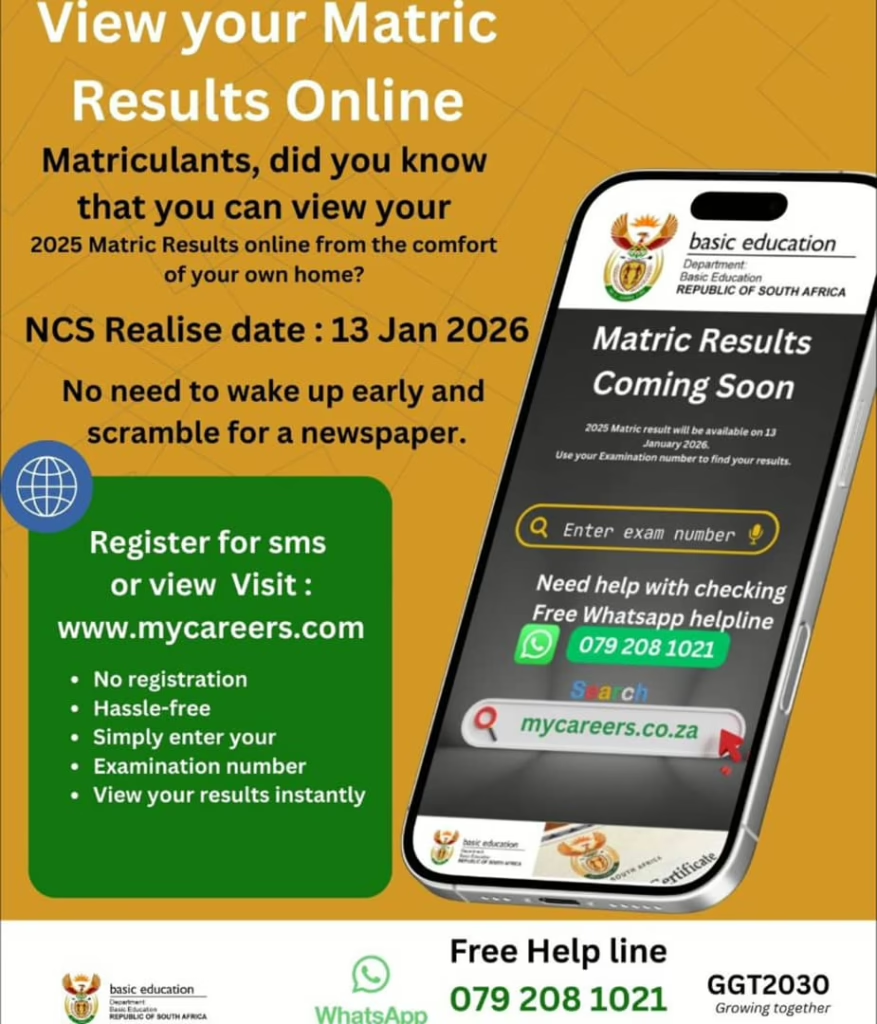
  • How to Chek Matric Results 2025/2026: How to Check Your NSC Results in South Africa

    How to Chek Matric Results 2025/2026: How to Check Your NSC Results in South Africa

    The South African Department of Basic Education (DBE) has officially confirmed the release timeline for the Matric Results 2025/2026, offering long-awaited clarity to thousands of learners, parents, educators, and institutions across the country. The announcement is especially important for candidates who sat for the National Senior Certificate (NSC) examinations and are now preparing for the next stage of their academic or professional journeys.

    Matric results play a decisive role in determining access to universities, TVET colleges, learnerships, and bursary opportunities. As a result, understanding when the results will be released and how to check them is essential for every candidate.

    This comprehensive guide covers everything you need to know about the Matric Results 2025/2026, including official release dates, checking methods, troubleshooting missing results, and frequently asked questions.

    Official Confirmation from the Department of Basic Education

    The Department of Basic Education has confirmed that the 2025 NSC examinations will conclude on 27 November 2025. Once the examinations end, a rigorous national process begins, which includes:

    • Marking of scripts

    • Internal and external moderation

    • Quality assurance and verification

    • Standardisation of results

    The Minister of Basic Education, Ms Siviwe Gwarube, confirmed that all systems are operating as planned. She reassured the public by stating that “the marking and verification processes remain firmly on track,” reinforcing confidence in the integrity of the 2025/2026 matric results.

    Countdown to the Matric Results 2025/2026 Announcement

    The official Matric Results 2025/2026 announcement is scheduled for 12 January 2026. This date marks the national release of overall performance statistics, pass rates, and provincial breakdowns.

    Individual candidate results will become available the following day, giving learners time to prepare their examination numbers and access methods.

    When Will Matric Results 2025/2026 Be Released?

    According to the Department of Basic Education, the release will happen in two official stages:

    Key Dates to Remember

    • 12 January 2026
      The Minister of Basic Education will formally announce the national outcomes of the 2025 NSC examinations.

    • 13 January 2026 (from 6:00 am)
      Individual candidates can access their matric results online, via SMS/USSD, or collect them from schools and examination centres.

    The DBE has cautioned that some results may not appear immediately due to technical exclusions or verification queries. This is a normal annual process and is handled through established follow-up procedures.

    Matric Results 2025/2026 and Examination Integrity

    The department also confirmed that the Matric Results 2025/2026 release will proceed as scheduled, despite a localised examination paper leak reported at a small number of schools in Pretoria.

    According to Minister Gwarube:

    • The incident involved seven schools

    • It was detected early and quickly contained

    • A National Investigative Task Team has been appointed

    She emphasised that the investigation will not delay marking or result verification, stating that built-in integrity checks within the national system remain fully operational.

    How to Check Matric Results 2025/2026

    Once the results are officially released, candidates will be able to access their National Senior Certificate (NSC) results through several approved channels. These options ensure accessibility for learners across South Africa, including those without reliable internet access.

    Important: Always keep your exam number ready. It is required for all result-checking methods.

    1. Collect Results from School or Examination Centre

    The most reliable method is to collect your official Statement of Results from the school or examination centre where you wrote your exams.

    Why this method matters

    • Schools receive official results directly from the DBE

    • Ideal if your results are temporarily unavailable online

    • Provides an official printed statement

    Important Notes

    • Results available from 13 January 2026

    • Bring identification if required

    • Arrive early to avoid long queues

    2. Check Matric Results 2025/2026 Online

    Online platforms remain one of the most popular methods for checking matric results.

    Where to check

    • Official Department of Basic Education website

    • Provincial education department websites

    Online access is expected to open from 6:00 am on 13 January 2026, though peak traffic may cause delays.

    Steps to Check Online

    1. Visit the official DBE or provincial education website

    2. Navigate to the NSC Results section

    3. Enter your exam number (and ID number if requested)

    4. Submit to view your results

    Some provinces operate independent portals that may perform better during high-traffic periods.

    3. SMS Matric Results Service

    For candidates without internet access, SMS remains a convenient option.

    How to Check via SMS

    • Open a new SMS message

    • Enter your 13-digit exam number

    • Send it to 45856

    Your results will be sent directly to your phone once released.

    Note: SMS charges may apply.

    4. Check Matric Results Using USSD

    USSD services allow candidates to check results on any mobile phone, even without data.

    USSD Steps

    • Dial *120*45856#

    • Follow on-screen prompts

    • Enter your exam number

    • View your results instantly

    This method is especially useful when websites experience slow loading times.

    What to Do If Your Matric Results Do Not Appear

    If your results are not immediately visible, do not panic. The DBE recommends the following steps:

    • Visit your school or examination centre

    • Contact your district or provincial education office

    • Submit a formal results query within 30 days

    Candidates should also verify that their names and ID numbers are correct on their statements and report any errors before 20 February 2026.

WhatsApp Channel Join Now!